



Shrink Carry On Volume 50–70% With Pump Integrated Bundle Wrapping
Bundle wrapping packing with pump-equipped vacuum bags reclaims luggage volume, not weight. That’s the entire trade-off in one sentence. The method squeezes bulky layers like sweaters and jackets down to a fraction of their size, which means a carry-on suddenly holds two to three times more clothing. It shines for family trips, winter travel, and long stays where you pack once. Just don’t expect the scale at check-in to notice.
TL;DR:
- Pump-equipped vacuum bags can reduce clothing volume by up to 50 to 70 percent, especially with bulky winter items like jackets and sweaters.
- Proper packing involves dry, clean clothes, flat folding, heavy items at the bottom, and testing for leaks before compression.
- Compression is highly effective for soft, lofty items but should be avoided with structured shoes, electronics, silk, or delicate dress shirts.
- Overpacking is common because compression reduces space, not weight, and items will still count toward airline weight limits.
- These bags are most beneficial for single-destination, long stays where packing once and unpacking once are priorities.
Table of Contents
- What Is Bundle Wrapping Packing, and When Should You Use a Pump-Equipped Bag?
- How Do You Pack a Bundle Using an Integrated-Pump Vacuum Bag?
- Which Clothes Compress Well, and Which Should Stay Out?
- Troubleshooting: Leaks, Wrinkles, and Airline Rules
- An Honest Take on Who Actually Needs This
- A Quick Look at Stoiq’s Pump-Integrated Bags and Bundles
- Sources
What Is Bundle Wrapping Packing, and When Should You Use a Pump-Equipped Bag?
In this guide, “bundle wrapping packing” refers specifically to vacuum-compression travel bags, not the fabric-folding technique that wraps clothes around a core to fight wrinkles. That’s a different method entirely. Here, the goal is air removal: seal your clothes inside an airtight bag, pull the air out, and watch the pile shrink to a fraction of its original bulk.
Not all vacuum bags work the same way. Roll-type bags need no accessories. You fold clothes inside, roll from the closed end, and push air out through a one-way valve, typically yielding 20 to 40 percent volume reduction. Hand-pump bags use a separate accordion pump you squeeze manually. Vacuum-cleaner bags rely on your household vacuum’s hose, powerful but useless once you’ve left home. Integrated-pump bags, Stoiq’s category, build a rechargeable pump directly into the bag, so compression often reaches 50 to 70 percent for bulky items without dragging a separate device through security.
Pump-equipped bags earn their keep in specific situations:
- Cramming bulky winter layers, down jackets, fleece, wool sweaters, into a carry-on that would otherwise demand a checked bag.
- Splitting one family’s clothing across multiple compressed bags instead of multiple suitcases.
- Single-destination trips where you pack once at home and unpack once at the hotel.
- Long stays (a month or more) where maximum density matters more than mid-trip flexibility.
Keep the core limitation in mind before you buy anything: compression changes volume, never mass. A wool sweater weighs the same whether it’s fluffy or flattened.
How Do You Pack a Bundle Using an Integrated-Pump Vacuum Bag?
The workflow is simple once you’ve done it twice, but skipping steps is where most people run into trouble.
- Prep your clothes. Make sure everything is clean and completely dry. Damp fabric trapped in an airless bag grows mildew fast, and that smell doesn’t come out easily.
- Choose the right bag size. Match bag dimensions to your carry-on’s interior, not the other way around. A bag too large just gets folded awkwardly.
- Fold, don’t roll, for vacuum bags. Rolling helps roll-type compression, but flat folding maximizes surface contact for pump-driven bags and reduces trapped air pockets.
- Load heavy and bulky items first. Put jeans, sweaters, and jackets at the bottom of the bag; keep anything delicate or crease-prone outside the compression bag entirely.
- Seal it fully. Run your finger along the zipper track twice. A partial seal is the single most common reason a bag won’t compress.
- Test before you trust it. Press down on the sealed bag and listen for hissing air. If it holds firm for a minute with no leaks, you’re set.
- Pump in short bursts. Run the integrated pump for ten to fifteen seconds at a time, checking seams as you go. Stop as soon as the bag feels compact but not rigid; over-compression stresses seams and deepens creasing rather than saving meaningfully more space.
- Stow with weight distribution in mind. Place compressed bags at the bottom of your carry-on, heaviest side toward the wheels, and keep quick-access items like chargers or a change of clothes near the top.
- Plan your mid-trip repack. Without a pump handy at your destination, a hand-roll compression bag or simply re-sealing and kneeling on the bag to push out air gets you most of the way back to your original packed size.
Pro Tip: Don’t run the pump until the bag feels like a brick. A little give in the fabric means less strain on the zipper and fewer permanent creases in your clothes.
Which Clothes Compress Well, and Which Should Stay Out?
Compression bags reward soft, lofty items and punish anything with structure. Down jackets, wool and synthetic sweaters, hoodies, towels, and kids’ clothing all compress dramatically because they’re mostly trapped air to begin with. Bulky casual clothing and bedding see the biggest space savings, while also picking up a secondary benefit: sealed bags double as odor containment for worn or dirty laundry.
Some items should never go anywhere near a vacuum bag:
- Structured shoes, which lose their shape under sustained pressure.
- Electronics, which have no business being squeezed at all.
- Memory-foam travel pillows or inserts, which may not fully rebound.
- Delicate suiting and dress shirts, better suited to a garment folder or packing cube than a vacuum bag.
- Anything that creases permanently under pressure, silk especially.
One more thing worth remembering: heavy items still count toward your airline’s weight limit no matter how flat you make them. Compression solves a volume problem, not a scale problem. And if you’re planning to bring anything home, leave one bag empty or hold back some headroom for souvenirs and laundry on the return leg.
Troubleshooting: Leaks, Wrinkles, and Airline Rules
Most complaints about vacuum bags trace back to one of three things: a bad seal, unrealistic wrinkle expectations, or confusion about what airlines actually check.
Testing for leaks is simple and worth doing before every trip, not just the first one. Seal the bag, pump it down, then leave it sealed for a few hours and check whether it stays compressed. If it’s puffed back up, inspect the valve for debris and run your fingers along the zipper and seams for a puncture or worn spot.
Wrinkle mitigation comes down to being selective. Compress the bulky, low-priority layers, jeans, sweatshirts, casual tees, and keep dress shirts and anything tailored in a separate garment fold. On arrival, a five-minute hang in a steamy bathroom undoes most of the creasing that compression causes.
Airline reality check: the TSA permits vacuum-compression bags through security screening without issue. Airlines don’t care about your packing method at all, only weight and dimensions at the gate.
Compression reduces volume; it does not change weight. A carry-on packed to the airline’s size limit can still get flagged for a weight overage if you’ve stuffed it with dense items.
When you don’t have access to a pump mid-trip:
- Fall back on a hand-roll compression bag as backup.
- Partially decompress by re-sealing and pressing air out manually.
- Redistribute overflow items into your personal item bag if your carry-on runs tight.
An Honest Take on Who Actually Needs This
Pump-integrated vacuum bags aren’t for everyone, and pretending otherwise does readers a disservice. If you’re hopping between three cities in five days, a lightweight hand-roll bag will serve you better since it needs no charging and repacks in seconds. Where integrated pumps earn their price is the single-destination trip: a two-week beach stay, a month working remotely, a family flying to one location with kids’ clothes to consolidate. Pack once at home, unpack once at the hotel, done.
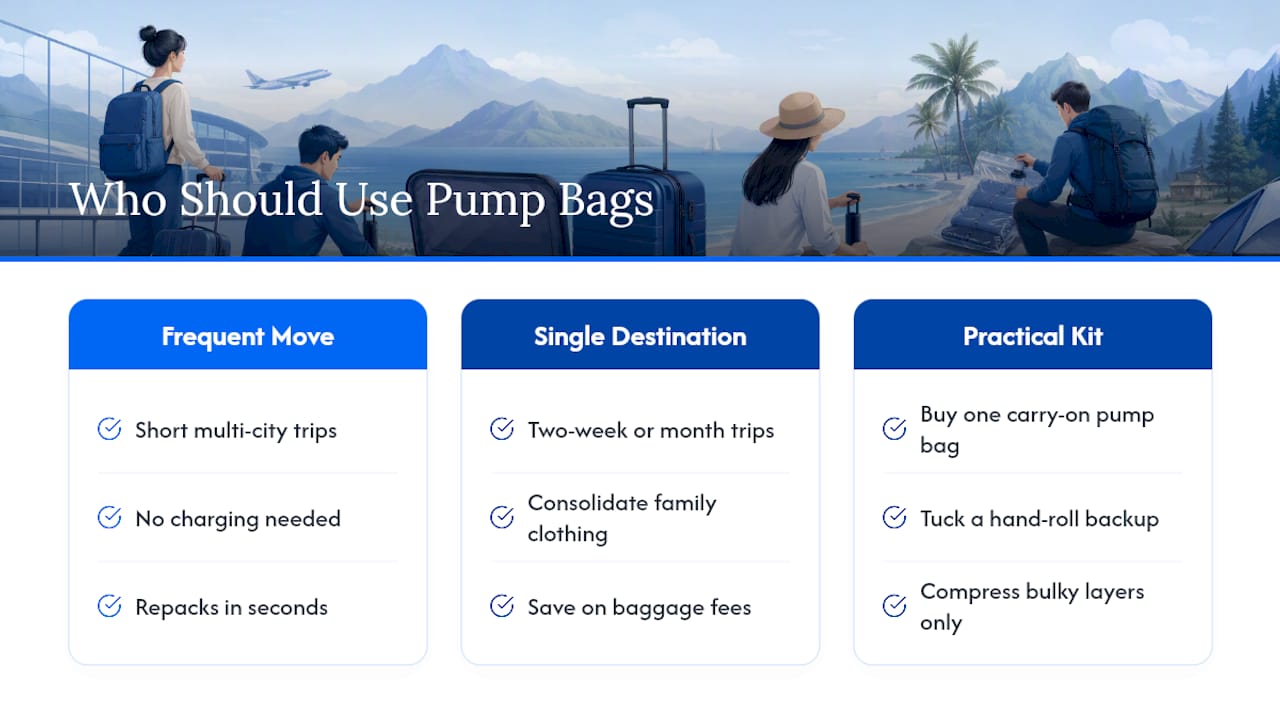
I’d also push back gently on the instinct to compress everything. Frequent travelers report that vacuum bags can tempt overpacking, squeezing in one more sweater simply because there’s room. Compress with intention: bulky casuals and layers, not your entire wardrobe.
Stoiq’s own numbers back the category up. Over 20,000 travelers have used its integrated-pump bags, with recurring feedback citing baggage-fee savings and simpler packing days. My practical advice: buy one carry-on–sized pump bag for your main trip, and keep a cheap hand-roll bag tucked in your suitcase as backup for the days the outlet’s dead or the pump’s not handy.
— Hugh
A Quick Look at Stoiq’s Pump-Integrated Bags and Bundles
Some compression bags are built around one idea: skip the separate pump entirely. Certain models come with a rechargeable USB-C pump sewn into the design, allowing users to seal, press a button, and watch clothes flatten without hunting for an accessory or a vacuum-cleaner hose.
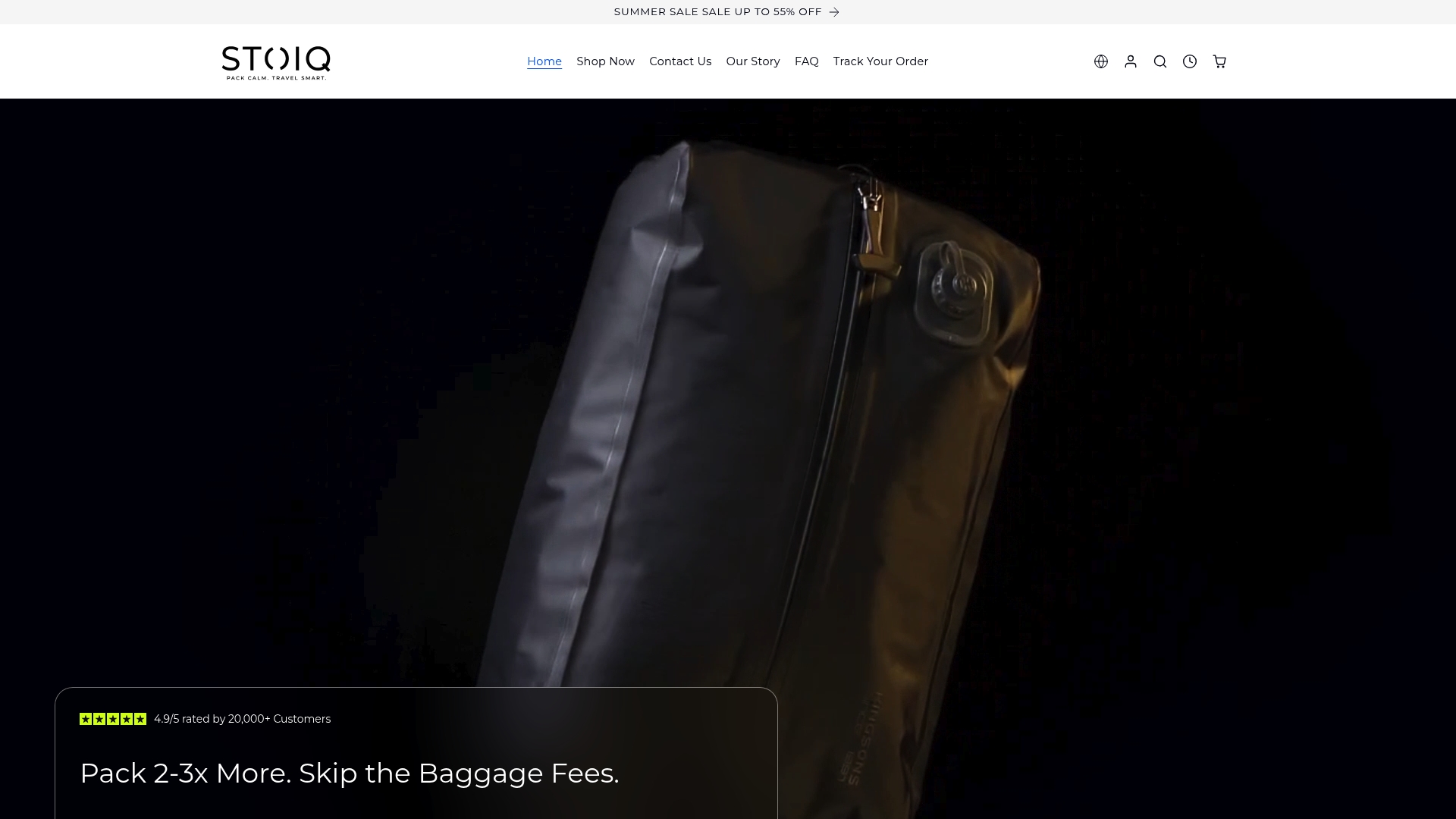
The lineup covers different travel profiles. The Stoiq Carry-On Solution 20L fits neatly into a standard carry-on for weekend or single-destination trips, while the Stoiq Carry-On Solution 25L suits travelers packing bulkier winter gear or slightly longer stays. Families or frequent flyers who want to consolidate more gear tend to gravitate toward The Carry-On Bundle, which pairs a compression backpack with a 25L bag for shared luggage across multiple people. If toiletries are your other packing headache, the Stoiq Toiletry Bag keeps that separate from your compressed clothing.
One reminder before you check out: none of this changes what the scale says at the airline counter. Compression buys you space, not a lighter suitcase. Browse the full Stoiq lineup and reviews to find the size that matches your next trip.
Sources
- Vacuum Compression Bags for Carry-On Travel: Do They Actually Help? | DIY Travel Store
- Do Vacuum Bags Work For Travel? Packing Tips & Tricks | WisePickers
- Best Vacuum Travel Bags for Savvy Travelers Who Pack Smart, Not More - Daily Dream Travel
- Are Vacuum Compression Bags Worth It for Travel? – GearApt
