



Shrink Volume, Not Weight: Compression Bag Space Savings for Travelers
Denser items compress far less, and every method has its own limits. The catch most people miss: volume drops, but weight barely moves. The sections below break down which items respond best, which methods deliver the most reliable results, and how to pack so you actually see those numbers in your own bag.
TL;DR:
- Compression bags mainly reduce volume by removing trapped air from lofted or knit materials, not by decreasing the item’s weight.
- Items like comforters, puffer jackets, and bulky sweaters compress widely, often in the 70 to 80% range, while dense objects like shoes or electronics do not compress at all.
- Vacuum or integrated pump bags achieve the deepest compression, but manual roll bags and compression cubes are more practical for casual or checked luggage use.
- Proper packing technique, including folding flat and sealing completely, is essential to maximize compression and prevent leaks over time.
- Compression primarily influences size, not weight, so travelers should weigh bags after compression to avoid overweight fees at checkpoints.
Table of Contents
- How Compression Bag Space Savings Actually Work
- Which Items Compress Well (and Which Don’t)
- Vacuum Bags, Roll Bags, or Compression Cubes: Which Method Wins?
- How to Pack for Maximum Compression
- Why Bag Material Determines How Long Compression Lasts
- Does Compression Change TSA Rules or Baggage Fees?
- Choosing the Right Compression Bag for Your Trip or Closet
- An Experienced Packer’s Take on Compression Bags
- Pack Smarter With Stoiq’s Integrated-Pump Travel Bags
- Sources
How Compression Bag Space Savings Actually Work
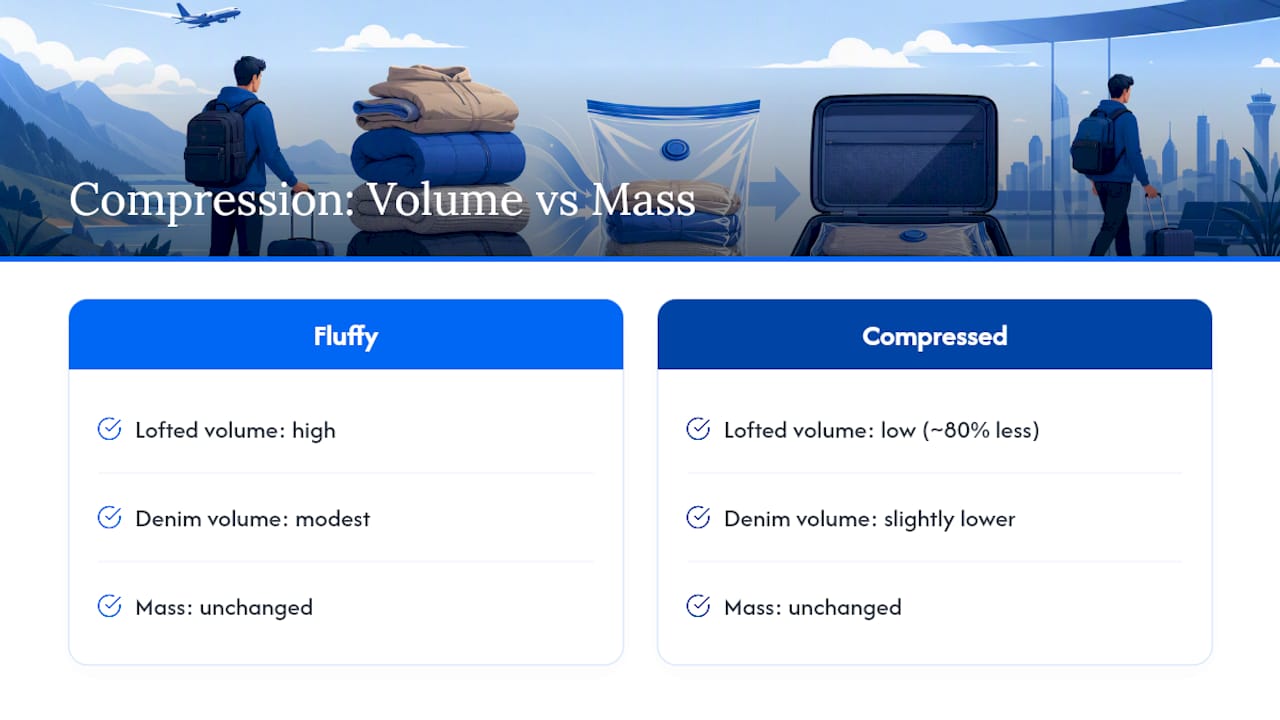
The physics behind compression bags is simpler than most product pages make it sound. Air trapped inside loose fibers, down clusters, and synthetic fill takes up far more room than the material itself. A vacuum bag or roll bag doesn’t shrink your sweater. It squeezes the air out from between the fibers and holds the material in that flattened state with an airtight seal.
Multiple product guides and testing sources point to that 80% figure specifically for comforters and puffer jackets, items built almost entirely from trapped air and loft. Squeezing the air out of a duvet, and there’s shockingly little material left. Squeeze the air out of a pair of jeans, and you’ll notice a much smaller change, because denim doesn’t hold much air to begin with.
This distinction matters when you’re evaluating any compression product’s marketing claims. The material’s air content, not the bag itself, sets the ceiling on what’s possible.
Here’s the part travelers routinely overlook: compression changes volume, not mass. A queen comforter weighs the same whether it’s fluffy or flattened into a 3 inch pancake. For closet and under-bed storage, that’s irrelevant. For carry-on travel, it changes everything, because airlines charge by weight for checked bags and by dimensions for carry-ons. Compression bags win you space in a carry-on’s fixed dimensions, but they won’t shave a single ounce off what you’re carrying. Keep that distinction in mind before you assume compression solves every packing problem at once.
Which Items Compress Well (and Which Don’t)
Not every item in your closet responds the same way to a vacuum seal, and knowing the difference before you pack saves you a lot of frustration at 11 p.m. the night before a flight.
Best candidates for compression:
- Comforters and duvets: These lose the most volume of any household item, often in the 70 to 80% range, since they’re mostly trapped air held in place by loft fibers.
- Puffer jackets and down vests: Similar story. Down clusters collapse dramatically under pressure and typically bounce back once unpacked, though repeated compression over years can reduce loft slightly.
- Bulky sweaters and fleece: Moderate to strong compression, generally in the 40 to 60% range, depending on knit thickness.
- Pillows: Compress well for storage, though foam pillows respond less dramatically than down or fiberfill ones.
Moderate performers:
- Folded cotton clothing (jeans, t-shirts, casual wear): Expect noticeable but modest gains, often 20 to 30%, since woven cotton holds less air than knit or down materials.
Poor candidates, and items to avoid compressing entirely:
- Dense items like books, shoes, and electronics don’t compress at all. You’re just wasting bag space trying.
- Structured or fragile items, including blazers, hats, and anything with rigid framing, can crease permanently or crack under vacuum pressure.
- Delicate fabrics like silk or embellished garments risk snagging on rough plastic or picking up permanent creases that don’t relax after unpacking.
If an item wouldn’t survive being sat on, it probably shouldn’t go in a compression bag.
Vacuum Bags, Roll Bags, or Compression Cubes: Which Method Wins?
Three main approaches dominate the compression bag category, and each fits a different travel style or storage need.
-
Vacuum bags with a separate device. These rely on a household vacuum cleaner, an electric pump, or a hand pump to pull air through a one-way valve. They deliver the deepest compression of any method, frequently hitting that 70 to 80% range on bulky items, but they require you to travel with (or borrow) a suction device, which isn’t always practical mid-trip.
-
Integrated pump bags. Bags with a built-in USB-C rechargeable pump remove the separate device entirely. You seal the bag, press a button, and the pump does the work in under a minute, no hunting for an outlet or a vacuum cleaner in a hotel room. For frequent travelers, this convenience factor often outweighs a marginal difference in maximum compression.
-
Roll or compression bags with no pump. These use manual pressure and roll closures instead of suction. They’re the most affordable option and require zero equipment, but they compress less efficiently. Testing from Wirecutter found pump-free compression bags reduce volume by around a third in typical use, solid for budget travelers, but well short of vacuum-level results.
-
Compression cubes. These use zippers and internal compartments rather than airtight seals. They’re the most durable and reusable option long-term, since there’s no valve to fail, but they trade some compression power for structure and organization.
For carry-on travel, integrated-pump bags or vacuum bags tend to win because you’re fighting for every cubic inch inside a fixed-size bag. For checked luggage, where weight matters more than volume, compression cubes or roll bags often make more sense since you’re not desperate to shrink bulk. For home storage under a bed or on a closet shelf, standard vacuum bags with a vacuum-cleaner attachment are usually the cheapest and most effective choice, since portability isn’t a factor. If you’re weighing compression bags against packing cubes specifically, the tradeoffs are worth comparing side by side before you buy either.
How to Pack for Maximum Compression
Getting the advertised space savings out of any compression bag comes down to technique as much as the bag itself. Skip a step, and you’ll leave air pockets that quietly eat back the space you thought you saved.
- Sort by bulkiness first. Group your softest, most air-filled items (sweaters, jackets, bedding) separately from dense items you won’t be compressing, following practical packing tips from How to Build a Travel Snack Bag for Business Trips.
- Fold rather than roll for vacuum bags. Flat folds distribute more evenly under suction than rolled bundles, which can create air pockets in the center.
- Pack heaviest and bulkiest items first, then layer lighter items on top before sealing.
- Seal the valve or zipper completely, checking for any gap, thread, or wrinkle caught in the seam. This is the single most common cause of failed compression.
- Remove air using your chosen method, whether that’s a vacuum cleaner nozzle, a hand pump, or an integrated pump button.
- Check for leaks after an hour. A bag that’s re-inflated even slightly has a seal problem worth fixing before your trip.
One detail that trips up first-timers: bigger isn’t always better. Packing one jumbo bag stuffed with everything usually compresses less efficiently than splitting the same items across two or three smaller bags, since an overloaded seal has to work harder and often loses suction faster. Smaller bags also make it easier to grab a single outfit without unpacking everything else, which matters more than people expect three days into a trip.
Pro Tip: Label each bag by outfit or day rather than by item type. You’ll unpack less and repack faster, since you’re not hunting through five bags to find matching layers.
Keep anything delicate or structured, like a blazer or a hat, out of the compression process entirely and pack it flat on top instead.
Why Bag Material Determines How Long Compression Lasts
The bag matters as much as the technique, and this is where cheap products quietly fail travelers. Reviewer testing from Travel + Leisure found vacuum travel bags compress quickly but may show minor air leakage over time, with material thickness and valve quality driving how long that seal actually holds.
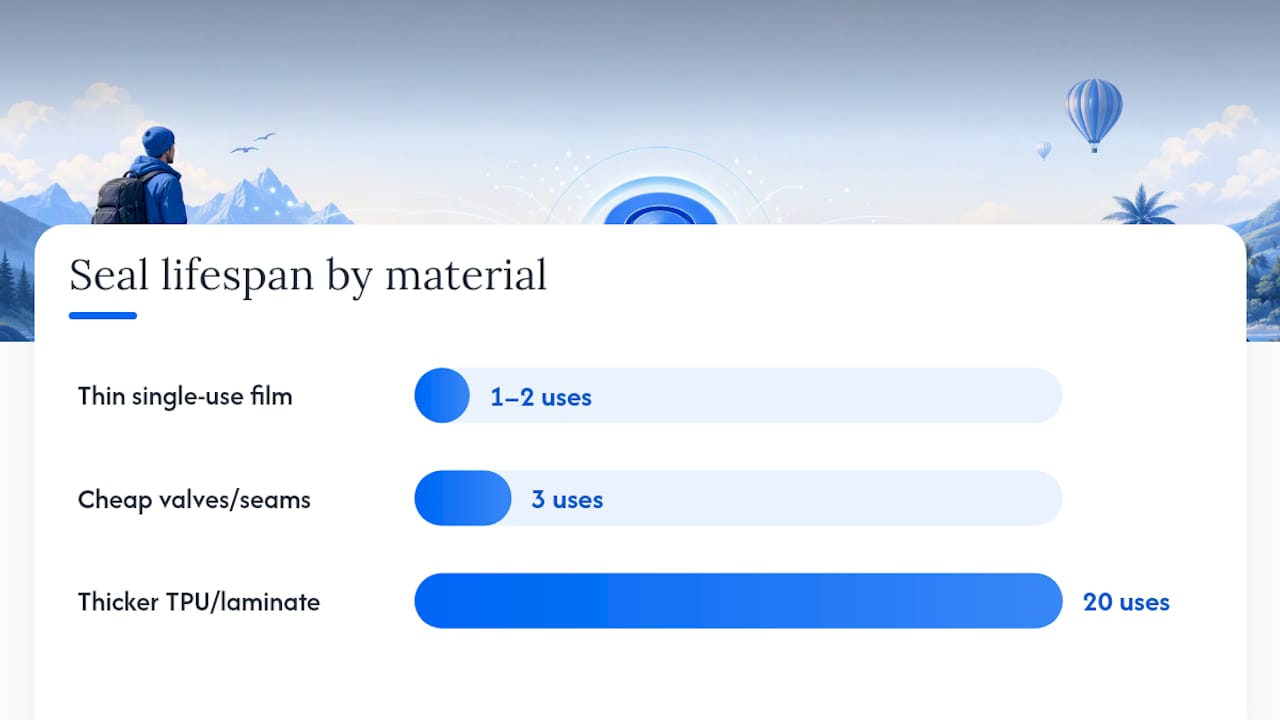
Thin, single-use plastic film is the most common culprit. It punctures easily against zippers, shoe soles, or a rough suitcase interior, and once it tears, the bag is done for good. Thicker TPU or nylon-laminate composites resist punctures far better and hold their airtight seal across dozens of trips instead of one or two.
A few buying cues separate a durable, reusable bag from a disposable one:
- Material weight and feel. A bag that feels flimsy or crinkly like a grocery bag likely is one; look for a noticeably thicker, more rubbery texture.
- Double-track or reinforced zip seals, which resist the gradual loosening that causes slow leaks.
- A one-way valve with a secure cap or slider, rather than a simple hole you fold over and clip.
- Reinforced seam stitching or welding at corners, since that’s where stress concentrates every time you sit on the bag to force air out.
Testing consistently points to valve quality and seam construction as the two features most worth paying for, since that’s where the cheapest bags fail first. A bag that holds its seal after 20 uses is worth more than one that compresses slightly better on day one and tears by trip three.
Does Compression Change TSA Rules or Baggage Fees?
Compression bags don’t get special treatment at airport security, and TSA agents can request that you open a sealed bag if it obstructs a clear X-ray image. This is common enough that it’s worth expecting rather than being surprised by at the checkpoint. Understanding the specific rules around vacuum-sealed luggage before you fly avoids an awkward repacking session in the security line.
The bigger trade-off travelers miss is weight versus volume. Compressing your bag makes it smaller, but it does nothing to reduce what it weighs, since volume and mass are entirely separate variables that compression only affects one of. This is exactly why compression bags shine for carry-on travel: airlines measure carry-ons by size, so shrinking your bag’s footprint genuinely helps you fit more inside the same allowed dimensions. For checked bags, most airlines charge by weight, so a compressed suitcase packed to the brim can still trigger overweight fees if you’ve simply used the extra space to cram in more stuff.
The fix is simple: weigh your bag after compressing, not before. Compression tempts you to overpack because everything suddenly fits, and that’s precisely when checked-bag surprises happen at the counter.
Choosing the Right Compression Bag for Your Trip or Closet
Matching the bag to the job matters more than chasing the single “best” product on the market. Run through this checklist before buying:
- Size range: A 20L bag suits a weekend carry-on; 25L or larger fits checked bags or seasonal closet storage.
- Material quality: Prioritize TPU or nylon laminates over thin single-use film, especially if you’re packing more than once or twice a year.
- Valve or pump type: Decide whether you want a manual hand pump, a hookup for your vacuum cleaner, or an integrated rechargeable pump that skips extra equipment entirely.
- Packability: For travel, the empty bag itself needs to fold small enough to justify the space it saves once it’s holding your clothes.
- Reusability: Reinforced seams and a secure valve cap mean the difference between a bag that lasts one trip and one that lasts years.
For anyone who travels more than occasionally, an integrated rechargeable pump changes the daily experience more than any spec sheet suggests. There’s no separate device to pack, no hunting for a vacuum cleaner in a hotel closet, just a button press and thirty seconds. A practical starter setup looks like one carry-on-sized bag for clothing, a smaller bag for a jacket or shoes, and a toiletry organizer that doesn’t need compression at all, just structure.
An Experienced Packer’s Take on Compression Bags
Most people overpack because they’re afraid of running out of an outfit, not because they actually need everything they bring. Compression bags don’t fix that instinct, but they buy you room to be wrong without paying for it in baggage fees.
The mistake I see constantly is travelers compressing everything into one giant bag and losing the ability to grab a single outfit without unpacking the whole thing. Splitting a 20L carry-on into two smaller integrated-pump bags, one for tops and layers, one for pants and a jacket, holds compression better and keeps mornings simple. That’s the trade most reviews skip over: the best compression setup isn’t the one with the highest percentage on a spec sheet. It’s the one you’ll actually use correctly on trip after trip, something reflected in feedback from travelers who’ve logged real mileage with these systems.
— Hugh
Pack Smarter With Stoiq’s Integrated-Pump Travel Bags
Stoiqstorage built its vacuum bags around the one complaint every compression bag owner eventually has: forgetting the pump, or not having one at all. Every Stoiq bag comes with a built-in USB-C rechargeable pump, so there’s no separate vacuum cleaner or hand pump to pack, just a bag that compresses itself in under a minute. Travelers often find they can pack significantly more into a carry-on compared to folding alone, according to feedback from many users who have used the system on real trips.
If you’re outfitting a single carry-on, the Stoiq Carry-On Solution 20L covers weekend trips and short flights. Frequent flyers who want a full setup should look at The Carry-On Bundle, which pairs a compression backpack with a 25L bag for maximum flexibility. Start with the 20L bag on your next trip and see how much extra room you actually get before you commit to anything bigger.
Sources
- The 4 Best Vacuum Bags for Travel, Tested and Reviewed
- How Do Vacuum Storage Bags Work? A Detailed Guide
- Do Space Saver Vacuum Bags Actually Work? A Complete Guide
