



20,000+ Travelers' Verdict: When Compression Bags Cause Wrinkles
Compression bags can cause wrinkles, but only under specific conditions: delicate fabrics, excessive pressure, or extended time compressed. Three factors decide the outcome: what the garment is made of, how hard you compress it, and how long it stays that way. For a short trip with casual garments like cotton tees and knits, light compression is generally acceptable. For silk, tailoring, or anything you’re storing for months, skip it.
TL;DR:
- Light compression is suitable for casual, knit fabrics like T-shirts and jeans, but stiff or delicate fabrics such as silk or tailored items risk wrinkles.
- Vacuum compression bags pose a higher risk of deep creases for wool, leather, or down garments, especially if used for long-term storage beyond a few weeks.
- Rolling clothes distributes pressure evenly and minimizes wrinkles for casual wear, while folding structured garments carefully reduces creasing.
- Using a garment folder for formal pieces and adding an air pocket for delicate items helps prevent wrinkles during compression.
- Unpacking clothes promptly and steaming or hanging them is the most effective way to remove wrinkles after travel.
Table of Contents
- Do Compression Bags Cause Wrinkles? The Mechanics Behind It
- Vacuum Bags, Compression Cubes, or Rolling: Which Wrinkles Least?
- Which Fabrics Wrinkle Most Under Compression?
- How to Pack With Compression Without Wrinkling Everything
- Does Short-Term Travel Wrinkle Clothes Differently Than Long-Term Storage?
- How to Get Wrinkles Out After You Land
- What 20,000+ Travelers Have Learned About Packing Smart
- When I Compress and When I Don’t
- Pack More, Wrinkle Less, With the Right Vacuum Bag
- Sources
Do Compression Bags Cause Wrinkles? The Mechanics Behind It
Wrinkles don’t come from compression itself. They come from what happens to a fold once pressure and time get involved. Three mechanical factors determine whether your clothes come out of a bag looking fine or looking like they slept in a suitcase for a week: fold location, pressure on those folds, and how much the garment shifts inside the bag during transit.
Fold location matters because a crease that lands across a stiff seam or a button placket sets harder than one across a soft, unstructured panel. Pressure matters because compression squeezes air out of the fibers, and fibers under sustained pressure gradually take the shape they’re forced into. Movement matters more than most travelers realize. When garments aren’t compressed at all, they slide around inside a suitcase every time it gets tossed onto a luggage cart or shoved into an overhead bin, and that friction creates its own randomly placed creases.
This is the part that surprises people: a small amount of compression often reduces wrinkles compared to lose packing, because it stops that internal shifting. Testing on casual garments backs this up. Wirecutter’s compression bag testing found that casual items generally hold up fine under short-term compression, while over-compressing or leaving things compressed too long is where the risk starts. The sweet spot is real, and it sits somewhere between “loose and sliding” and “vacuum sealed within an inch of its life.”
A quick comparison shows the pattern:
- A rolled cotton T-shirt under moderate compression: minimal creasing, because knit fabric flexes rather than folding into a hard edge.
- A folded dress shirt under the same pressure: visible creases across the chest and collar, because the fabric is stiffer and the fold lines are sharper.
- A rolled pair of jeans: almost no change, since denim resists deep creasing even under real pressure.
- A folded silk blouse: creases that can be tough to shake out without steam.
The fabric and the fold matter more than the compression level alone.
Vacuum Bags, Compression Cubes, or Rolling: Which Wrinkles Least?
Not every compression method behaves the same way, and picking the wrong one for the wrong garment is where most travelers run into trouble.
Vacuum or space bags pull nearly all the air out and pack items into the smallest possible footprint. That’s the biggest space win, but it’s also the highest wrinkle risk, especially for stiffer fabrics, because there’s no air cushion left to absorb pressure. StorageVault’s research on vacuum storage points to wool, leather, and down as the materials most likely to show deep, hard-to-reverse creasing under this kind of heavy, sustained compression.
Zip-style compression cubes sit in the middle. Squeeze out excess air through a one-way valve or a simple zip seal, and you get real space savings without vacuum-level pressure. The risk shows up specifically when travelers overfill them. TravelingLight’s testing found that overfilled cubes wrinkle clothes noticeably more than properly filled ones, and that rolling garments before loading them cuts creasing further.
Rolling without heavy compression is the lowest-risk option of the three. Rolled fabric distributes pressure across a curve instead of concentrating it along one sharp fold line, which is exactly why it’s the standard advice for T-shirts, athletic wear, and casual pants.
The smartest approach usually combines all three:
- Roll casual items first, then apply light to moderate compression.
- Reserve full vacuum compression for bulky, wrinkle-resistant pieces like sweaters or towels.
- Protect anything delicate with a small air pocket rather than compressing it directly against harder items.
Which Fabrics Wrinkle Most Under Compression?
Fabric composition decides more of the outcome than the packing method does. Some materials shrug off compression entirely. Others hold every fold you give them.
High-risk fabrics and garments:
- Silk and fine cotton dress shirts, which crease sharply and can be genuinely hard to smooth out without steam.
- Linen, which wrinkles almost on contact, compressed or not.
- Structured tailoring, including suit jackets and blazers with internal shoulder padding or canvassing that can deform under pressure.
- Leather, which can develop crease lines that don’t fully relax back out.
- Down insulation, since compressing a down jacket flattens the fill’s loft, and it may not bounce back the way it would after normal folding.
Low-risk fabrics:
- Knit fabrics like T-shirts, joggers, and casual dresses, which flex rather than crease.
- Heavier cottons like denim and canvas.
- Synthetics such as polyester and nylon blends common in athletic and travel wear.
- Merino wool base layers, which resist deep creasing far better than woven wool suiting.
The practical rule: pack suits and structured dresses flat, uncompressed, ideally in a garment folder. Never compress leather directly. Give down jackets room to breathe rather than squeezing them into the smallest possible bundle. Everything else on the low-risk list is fair game for moderate compression.
How to Pack With Compression Without Wrinkling Everything
Getting the space-saving benefit of compression without the creased-shirt regret comes down to technique, not luck.
- Roll-to-fit for casual items. Roll T-shirts, leggings, athletic gear, and knitwear tightly, then load them into your compression bag or cube. Rolling spreads pressure evenly instead of concentrating it along one line.
- Fold-to-fit for structured pieces. Fold dress shirts, blouses, and lightweight blazers to match the container’s actual dimensions rather than cramming them in oversized. TravelClothes’ packing guide notes that matching folds to the bag’s shape, rather than forcing extra folds to make something fit, is one of the simplest ways to cut creasing.
- Find the pressure sweet spot. Compress just enough to stop items from sliding around, and stop there. If you’re standing on the bag or fighting the zipper closed, you’ve gone past the point where compression helps.
- Use a garment folder for anything formal. A folder keeps a dress shirt or blouse in one clean fold instead of letting it crumple against everything else in your bag.
- Give delicate pieces an air pocket. Slip a silk item or fine knit into its own loosely sealed zip bag before it goes into your compressed cube. The trapped air cushions it from the pressure around it.
- Layer strategically. Put heavier, wrinkle-resistant items on the bottom of your suitcase and delicate, compression-sensitive pieces near the top, where they take the least crushing weight.
Pro Tip: Pack your one dressy outfit last and closest to the top of the case. It’ll take the least pressure during the flight, and you can pull it straight out and hang it up the moment you check into your hotel.
Does Short-Term Travel Wrinkle Clothes Differently Than Long-Term Storage?
A five-day work trip and six months in a closet put completely different stress on your clothes, and treating them the same is where people run into real damage instead of just wrinkles.
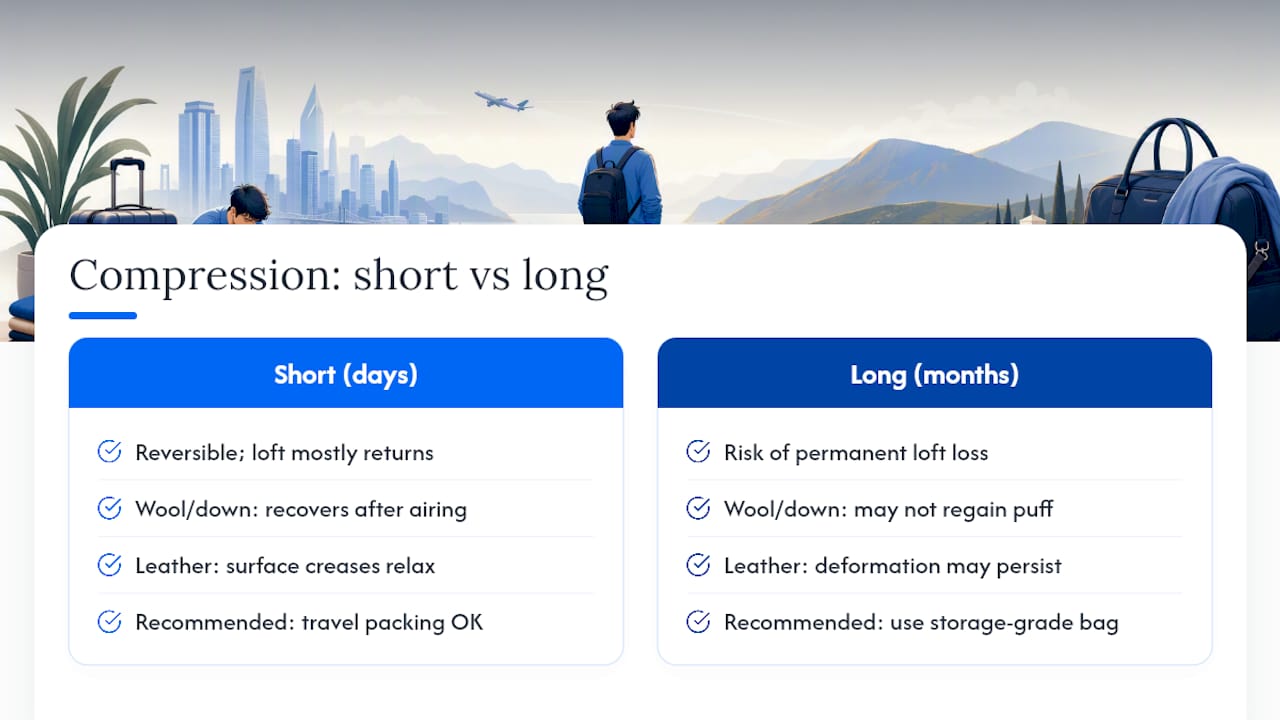
Fiber behavior changes with time. Wool and down rely on loft, the springy air pockets between fibers, to hold their shape and insulate. Compress them for a few days, and that loft mostly bounces back once they’re unpacked and given room to breathe. Compress them for months inside a sealed vacuum bag, and the fibers can lose that spring permanently, leaving a jacket that never quite puffs back up the way it used to. Leather behaves similarly. Short compression creates surface creases that relax with time and a little conditioning. Long-term compression can create deformation that doesn’t fully release.
Here’s the rule of thumb worth remembering: compression measured in days is almost always reversible for casual fabrics. Compression measured in months, especially inside a fully evacuated vacuum bag, carries real risk of permanent change, particularly for wool, leather, and down. If you’re packing for a trip, don’t think twice about moderate compression. If you’re clearing closet space for the off season, a vacuum bag built for storage duty is a different tool than one built for travel, and that distinction is worth respecting.
How to Get Wrinkles Out After You Land
Even careful packing sometimes leaves a few creases. The fix is usually faster than travelers expect.
- Hang everything immediately. Gravity does real work. A wrinkled shirt on a hanger overnight often looks noticeably better by morning with zero effort.
- Use bathroom steam. Run a hot shower with the door closed, hang your clothes nearby, and let the steam relax the fibers for 10 to 15 minutes.
- Pack a compact travel steamer. A battery-powered or small plug-in steamer works faster than the shower trick and is generally fine to carry on, since it’s a compact electronic device rather than a liquid. Check your carry-on rules before your flight if you’re unsure.
- Try a wrinkle-release spray as a lighter option. It won’t fix deep creases, but it works well on light rumpling from a long flight.
- Skip the hotel iron on delicate fabrics. Direct heat on silk or synthetic blends can scorch or shine the fabric. Steam is the safer default.
A small travel steamer earns its space in a carry-on for exactly this reason. It turns a 20-minute problem into a two-minute fix.
What 20,000+ Travelers Have Learned About Packing Smart
This brand builds vacuum compression bags with a built-in rechargeable pump, designed specifically for the travel use case, not long-term closet storage. That distinction matters based on everything above: a bag meant to compress your carry-on for a week behaves differently than one meant to flatten a comforter for six months in a bin.
Feedback from thousands of travelers points to the same pattern this article has laid out:
- Best suited for casual and bulky items: T-shirts, joggers, hoodies, towels, and workout gear compress well and travel clean.
- Not recommended for delicate or formal pieces: silk, tailored suits, and structured dresses still deserve a garment folder and a spot that avoids heavy pressure.
- Not built for extended storage: travel compression bags are engineered for days or weeks, not months of sealed pressure.
Pair a garment folder for your one nice outfit with vacuum compression bags for everything bulky and casual, and you get the space savings without the packing regret.
When I Compress and When I Don’t
My rule after enough trips: casual clothes get compressed, formalwear doesn’t. A dress shirt or blazer goes into a garment folder, uncompressed, near the top of the case. Everything else, tees, joggers, workout gear, gets rolled and compressed without a second thought. I also unpack the moment I arrive, because letting clothes hang for even a few hours does more for wrinkles than any packing trick. A small travel steamer handles whatever’s left.
— Hugh
Pack More, Wrinkle Less, With the Right Vacuum Bag
Stoiqstorage’s vacuum compression bags come with a built-in USB-C rechargeable pump, so you skip the separate hand pump entirely and compress your carry-on in under a minute. That’s the real advantage over a manual zip cube: less effort, more consistent pressure, and no extra gadget to pack.
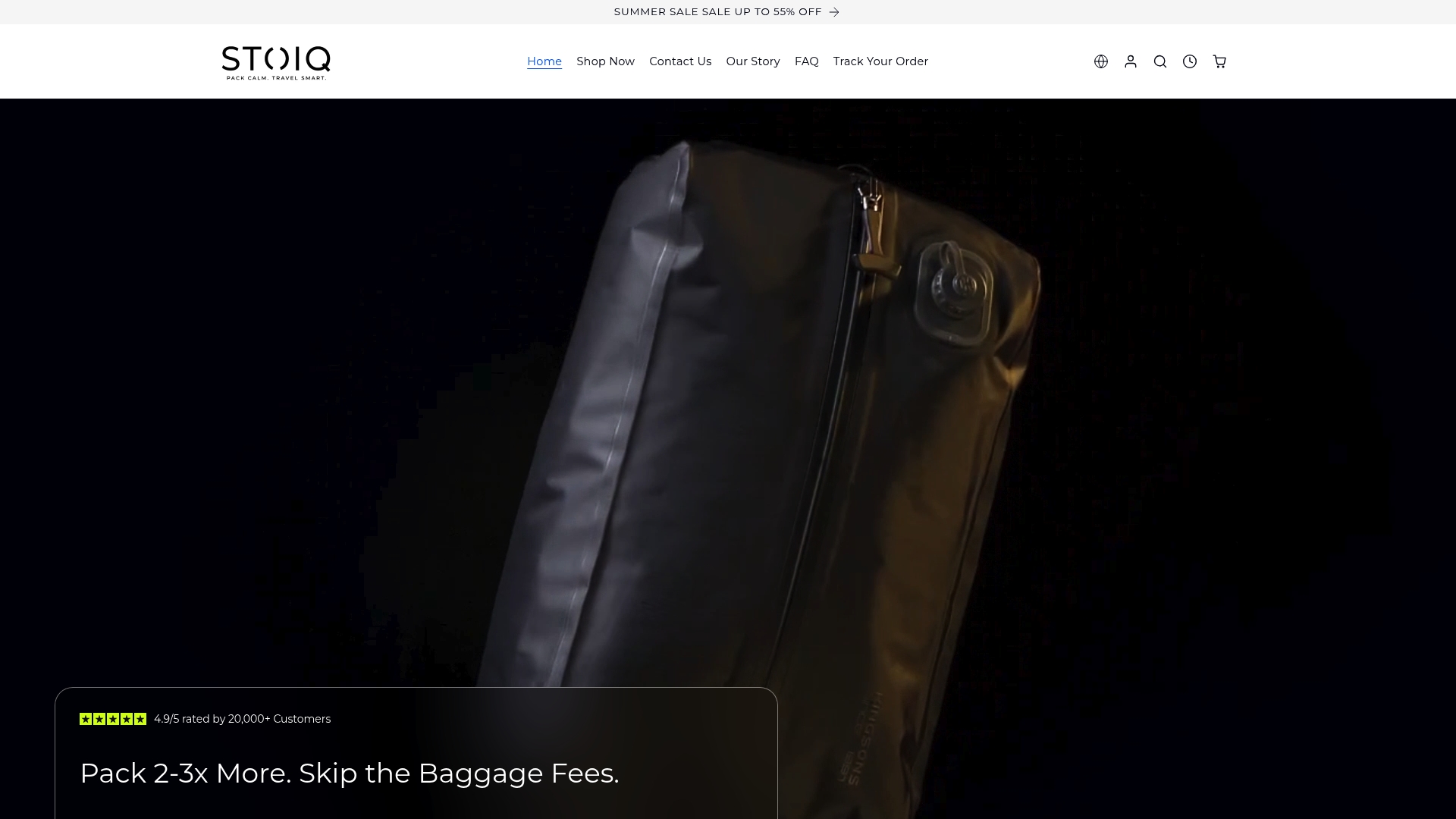
Following the guidance above, the 20L Carry-On Solution works best for exactly what it’s built for: rolled tees, joggers, workout gear, and bulky knitwear that can handle real compression without setting a crease. If you’re traveling with an outfit that needs to stay sharp, pack it uncompressed in a garment folder and save the vacuum bag for everything else. Travelers weighing a compression bag against a packing cube often find the built-in pump saves real packing time on top of the space it frees up. You can also browse what other travelers report after using Stoiq bags on real trips. Ready to see how much more fits in your carry-on? Check out the 20L Carry-On Solution and pack your next trip without the extra bag fee.
Sources
For more on compression trade-offs, see Wirecutter’s testing on which garments hold up best. The Manual’s hands-on comparison breaks down casual versus structured garments under pressure. For fabric care beyond travel, THE PRECIOUS LAMB’s folding guide covers how tight folds create lasting creases in everyday storage.
- The Most Affordable Packing Tool Is Also the Best | Reviews by Wirecutter
- Vacuum storage bags and fabric care | StorageVault
- Do compression packing cubes wrinkle clothes? | TravelingLight
- How to pack a suitcase to minimize wrinkles | TravelClothes
