



Pack for 24–48 Hours: Age by Age Family Packing Checklist for Parents
The best family packing checklist has three non-negotiables: a carry-on “day-one kit” with meds and a spare outfit per kid, a family first-aid pouch built around rehydration and fever relief, and a simple sorting system you set up before anyone starts folding. Work through a master category checklist first, then adjust it with the age-specific list for each child.
TL;DR:
- Pack a carry-on “day-one kit” with medications, a spare outfit, snacks, and essential documents to stay functional if checked luggage is delayed or lost.
- Adjust clothing and toiletry quantities based on each child’s age, with babies requiring more diapers and toddlers needing extra spill clothes.
- Use packing cubes and compression bags to save space efficiently, especially for bulky winter clothing or multiple kids’ outfits, and always label wet or soiled clothes separately.
- Prepare a customizable, age-specific checklist for the trip duration and destination, and verify all items the night before departure to avoid forgotten essentials.
- Include a medical-specific second checklist for allergies or sensory needs, and plan for laundry during extended trips to reduce overpacking.
Table of Contents
- Family Packing Checklist by Category
- What Changes by Age: Babies, Toddlers, Kids, and Teens
- The Carry-On Kit That Saves a Trip
- Packing Cubes, Rolling, and When Compression Bags Actually Help
- Customizing and Verifying Your Checklist Before You Leave
- Packing for Allergies, Sensory Needs, or Dietary Restrictions
- Doing Laundry on the Road Instead of Overpacking
- Keeping Kids Calm (and Helpful) During Packing
- A Few Rules I’ve Never Skipped Since Learning Them the Hard Way
- Fitting More Family Gear Into One Carry-On
- Sources
Family Packing Checklist by Category
Start with a category-by-category pass, then let each family member’s age narrow it down. This is the master version. Skim it once, check off what applies, and move on.
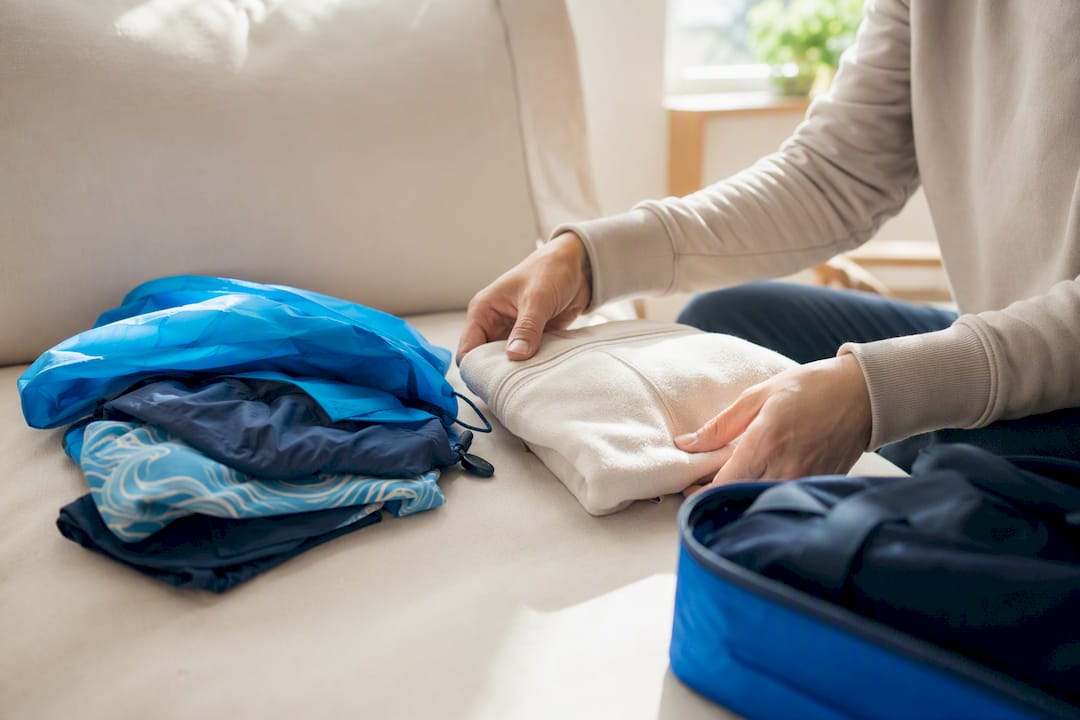
Clothing: Pack one outfit per day plus an additional spare outfit. Add a light layer for temperature swings even on warm-weather trips, and always bring a rain shell or poncho. If the destination has water access, one swimsuit that dries fast beats two that don’t.
Toiletries: Share what makes sense (one family-size shampoo, one sunscreen) and keep anything prescription-specific individually packed and labeled. The American Academy of Pediatrics recommends sunscreen for babies six months and older; for younger infants, lean on wide-brim hats and rash guards instead.
Documents: Bring IDs or passports, all confirmation numbers, insurance cards, and a paper copy of each child’s prescriptions in case a pharmacy visit becomes necessary far from home.
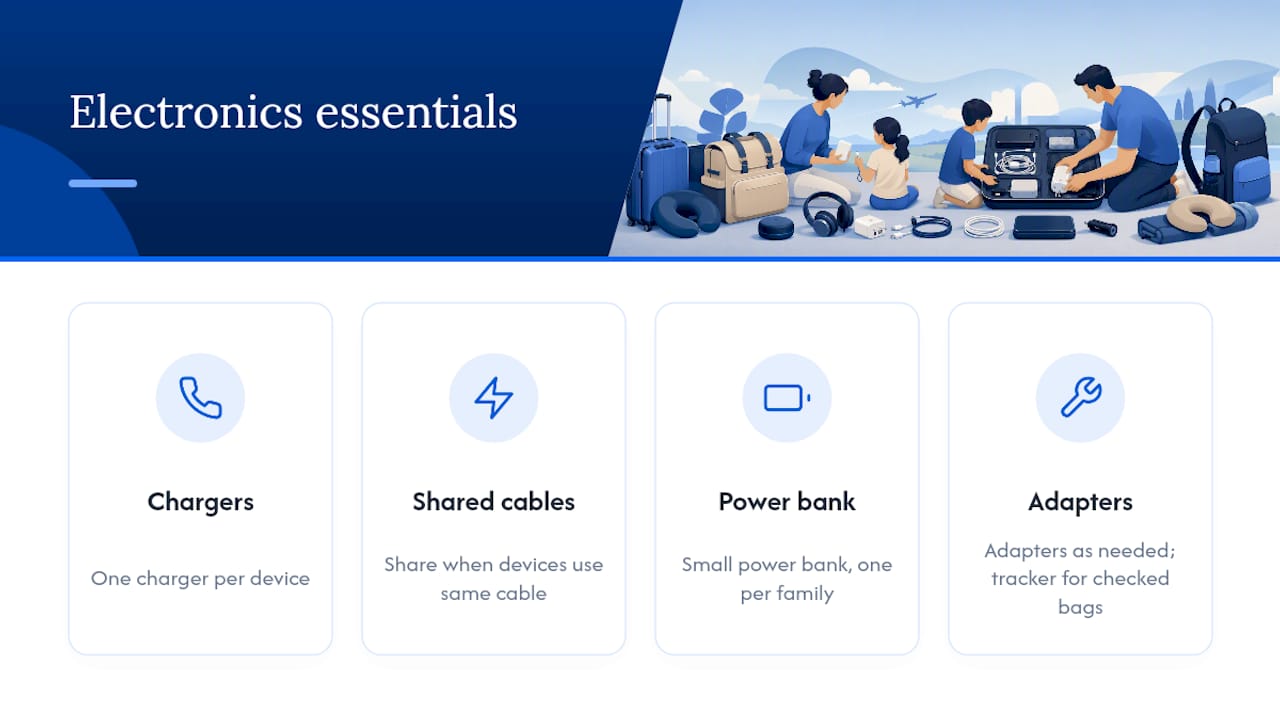
Electronics: Pack one charger per device (not per person, unless devices share a cable), a small power bank, any needed outlet adapters, and a luggage tracker if you’re checking a bag.
Meds and first aid: This is the category families most often underpack. Bring oral rehydration powder packets, a labeled note on your child’s antihistamine dosing confirmed with your pediatrician, acetaminophen or ibuprofen dosed for your child’s current weight, adhesive bandages, and a multipurpose emollient like Vaseline or Aquaphor.
Snacks and entertainment: Choose low-mess snacks that survive a warm backpack, a couple of small reusable containers, and exactly one comfort item per child rather than a rotating cast of toys.
Pediatrician-Backed Health Kit: Children’s Hospital of Philadelphia’s travel checklist for families singles out oral rehydration packets and Vaseline or Aquaphor as two of the most versatile items in a family first-aid kit, and recommends checking any antihistamine dose with your child’s care team before you leave.
What Changes by Age: Babies, Toddlers, Kids, and Teens
Quantities and priorities shift as kids get older. Here’s how to adjust the master list for each stage.
- Babies: Pack more diapers than you think you need, plan formula or breast milk for airport security screening ahead of time, and bring two or three extra outfits for blowouts. Keep one full spare outfit in the carry-on, not the checked bag.
- Toddlers: Plan on about one outfit per day plus an extra change since accidents and spills are common at this age. Bring one comfort object, extra diapers or a portable potty seat if you’re mid-transition, and a gallon-size Ziploc bag for soiled clothes.
- School-age kids: Give each child their own small backpack to manage. Pack one outfit per day plus a spare, their own charger, and entertainment they can operate without help.
- Teens: Cut clothing extras (they’ll wear favorites on repeat) and budget more space for chargers and electronics. Hand them a short version of the checklist and let them verify their own bag.
The Carry-On Kit That Saves a Trip
If a checked bag gets delayed or lost, this is what keeps your family functional for 24 to 48 hours. Every traveler in the family needs a version of it, scaled to age.
- One spare outfit or set of underwear per person
- Any prescription medications, plus a written dosing note for kids’ meds
- A few packets of oral rehydration powder
- Snacks that survive being smashed at the bottom of a bag
- Chargers for anything you can’t function without
- Travel documents (IDs, confirmations, insurance cards)
- One comfort item per child
The Transportation Security Administration allows liquid medications over the standard 3.4-ounce limit as long as you declare them at screening, so don’t leave prescriptions behind out of fear they’ll get confiscated.
Pro Tip: Keep this exact list saved in your phone’s notes app so you can copy and paste it into a packing app or text it to your partner the morning you fly, no rewriting required.
Packing Cubes, Rolling, and When Compression Bags Actually Help
Packing cubes solve the “whose socks are these” problem fast. Assign one cube color per child, and unpacking at the hotel takes minutes instead of a full excavation.
Rolling clothes works well for casual cottons and saves visible space in a cube. Folding still wins for structured items like collared shirts that wrinkle badly when rolled tight.
Compression bags earn their keep on trips with bulky items: winter coats, sweaters, or ski layers that eat carry-on space fast. Stoiqstorage’s vacuum compression bags with a built-in rechargeable pump remove the need for a separate hand pump, which matters when you’re compressing four kids’ worth of winter gear on a tight hotel checkout schedule. Compression won’t do much for a week of light summer T-shirts, so match the tool to the trip.
Compressing a puffy coat down to a fraction of its size is genuinely useful for carry-on space, but it can leave fabric more wrinkled than folding would. A quick sink-wash and hang-dry, or a compact travel steamer, solves that trade-off without giving up the space savings.
Keep one labeled gallon Ziploc bag per kid for wet swimsuits or soiled clothes so it never mixes with clean items in transit.
Customizing and Verifying Your Checklist Before You Leave
Trip length and destination change what belongs on the list. A few adjustments handle most situations.
- For trips longer than a week, pack seven days of clothing and plan on doing one load of laundry rather than packing double.
- Swap in destination gear: rain layers and water shoes for the beach, thermal base layers and hand warmers for the mountains.
- Walk through each room of the house the night before departure, checking chargers, medications, and documents against your printed or saved checklist one final time.
Packing for Allergies, Sensory Needs, or Dietary Restrictions
A family with allergies, sensory sensitivities, or dietary needs should build a second, smaller checklist that travels alongside the master one. Start with medical necessities: if a child carries a prescribed EpiPen, it belongs in the carry-on kit, and antihistamine dosing should be confirmed with your child’s clinician before the trip, not adjusted on the fly at 30,000 feet.
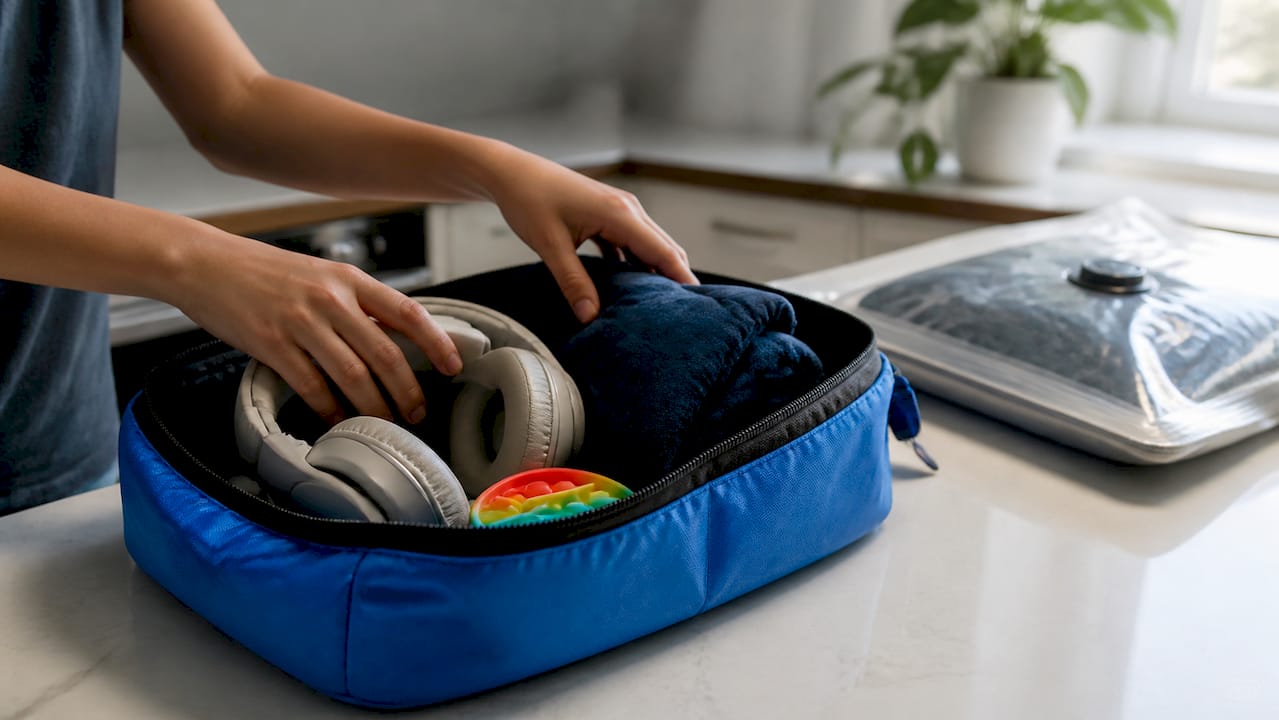
For sensory needs, pack noise-canceling headphones, a familiar weighted item or blanket, and any fidget tools your child relies on at home, since airports and new hotel rooms are exactly the environments that trigger overload. Bring a couple of backup comfort items in case one gets lost, especially for a child who struggles without a specific object.
Dietary restrictions require more front-loading than most families expect. Pack a few days of safe snacks and, if traveling internationally or somewhere with limited allergy-aware dining, a printed allergy card in the local language to hand to restaurant staff. Research one grocery store or pharmacy near your destination before you land, so you’re not scrambling to find safe food or medication substitutes on day one. A short note describing your child’s needs, kept with your documents, also helps if you need to explain the situation quickly to school staff, camp counselors, or a pediatrician abroad.
Doing Laundry on the Road Instead of Overpacking
Planning for laundry, even briefly, lets you pack noticeably lighter. A small travel-size detergent packet or sheet takes almost no space and turns any sink into a laundry station for underwear, socks, or a swimsuit that needs a quick rinse.
Quick-dry fabrics make this realistic. Merino wool and technical synthetics used in travel-specific kids’ and adult clothing dry overnight on a hotel towel rack, while heavy cotton can take two days, which matters if you’re relying on a same-night rinse. If you’re renting a house or apartment, check for an in-unit washer before you go. If you’re at a hotel, most properties either have a guest laundry room or offer wash-and-fold service, usually for a per-bag or per-pound fee.
For longer trips, treat laundry as part of the packing math, not an afterthought. Packing seven days of clothes and doing one load midway through a two-week trip is lighter and cheaper in baggage fees than trying to pack fourteen full outfits. Bring a mesh or fold-flat laundry bag to separate worn clothes from clean ones in your suitcase, and keep it away from anything electronic or food-related to avoid odor transfer.
Keeping Kids Calm (and Helpful) During Packing
Packing day goes smoother when kids have a job instead of a countdown. Give each child their own small checklist, even a picture-based one for younger kids, and let them check off items as they go into the bag. It turns a chore into something they have some control over, which cuts down on the meltdowns that come from feeling rushed or ignored.
Start packing two or three days before departure instead of the night before. Rushed packing is when meds get left on the counter and chargers get forgotten, and it’s also when parents run out of patience fastest. Spreading the process out gives kids time to pick their one comfort item without a fight and gives you time to catch gaps calmly.
Turn a repetitive task into a game where it makes sense: let a toddler match socks into pairs, or have a school-age kid count out how many days-worth of clothes are in their pile. Keep snacks and a screen or book nearby for downtime between tasks so nobody’s melting down from hunger or boredom while you’re still sorting toiletries.
If a kid gets overwhelmed mid-process, let them step away and finish their section later rather than pushing through. A ten-minute break rarely delays a departure that’s still two days out, but a packing-day fight can sour the mood for the whole trip before it even starts.
A Few Rules I’ve Never Skipped Since Learning Them the Hard Way
Color-coded packing cubes per child are the single change that’s saved the most arguments in hotel rooms at 7 a.m. The other rule: always build that carry-on arrival kit, no exceptions, even on short trips. Delayed bags don’t check your itinerary first. Use the category checklist above and adjust it by age before you zip anything shut.
— Hugh
Fitting More Family Gear Into One Carry-On
Bulky winter layers, a stack of kids’ clothes, and one shared suitcase rarely add up cleanly, which is exactly the gap Stoiqstorage’s compression bags are built to close. The Stoiq Carry-On Solution 25L uses a built-in rechargeable USB-C pump to compress clothing without a separate vacuum device, which matters when you’re packing for four people on a hotel checkout deadline and don’t want to hunt for an outlet and a hand pump at the same time.
This is a publisher product recommendation, not an unbiased test result, and it’s worth saying plainly: Stoiqstorage sells the bags this article describes. That said, families juggling winter coats, swim gear, and four sets of clothes in one carry-on are the exact use case compression solves best. Check sizing against your trip’s clothing volume on the Stoiq Carry-On Solution 25L product page before you fly, and pack a test load at home first so packing day itself goes faster.
Sources
Medical packing guidance in this article draws primarily from Children’s Hospital of Philadelphia’s pediatrician-authored family vacation checklist. For a downloadable age-based template, see Endless Travel Plans’ printable packing list and the kids’ wardrobe checklist from Baby Goes Retro.
This article is general information, not a substitute for advice from a qualified doctor. Consult a qualified healthcare professional about your own circumstances before acting on anything here.
- A Pediatrician’s Family Vacation Packing Checklist: What You Need When Traveling with Kids | Children’s Hospital of Philadelphia
