



Pack These 5 Long Flight Essentials: Compression Socks and More
For any long-haul flight, three things decide whether you land refreshed or wrecked: sleep, hydration, and circulation. Pack a supportive neck pillow and blackout mask, a flight-legal power bank with the right chargers, compression socks, and a refillable water bottle, and you’ve covered most of what actually matters. Everything else on this list builds around those five items.
TL;DR:
- A supportive neck pillow paired with a blackout mask and warm layer significantly improves sleep quality during long flights.
- Carry a power bank under 100Wh, a USB-C charger with a long cable, and offline entertainment options to stay charged and entertained.
- Graduated compression socks rated 15 to 20 mmHg effectively reduce swelling and lower the risk of blood clots on flights longer than four hours.
- Hydrate with about 8 ounces of water per hour, supplement with electrolyte packets, and choose low-odor, protein-rich snacks to combat dry cabin air.
- Use an integrated compression bag with a rechargeable pump to maximize carry-on space, avoiding checked baggage fees and easing packing logistics.
Table of Contents
- Comfort and Sleep Essentials for Long Flights
- Tech and Power: Staying Charged Without Getting Stopped
- Health and Circulation on a Long Flight
- Hydration and Snacks That Actually Help
- Packing Smart: Cubes, Compression, and What Stays Within Reach
- Your In-Seat Routine for a Long Flight
- The Compact Long Flight Packing Checklist
- Why the Right Packing System Changes Everything
- One Editor’s Take on What Actually Mattered at Hour Ten
- Consider an Integrated Compression Bag for Your Next Trip
- Sources
Comfort and Sleep Essentials for Long Flights
A neck pillow alone won’t get you real sleep on an overnight flight. Pair it with a blackout sleep mask and one warm layer, and you block the three things that keep travelers awake: cabin light, an unsupported neck, and a cabin temperature that swings colder than most people expect. Memory foam pillows support better than inflatable ones, but they take up more space, so look for a compressible version that packs flat when you’re not using it.
- Inflatable pillows win on packability; memory foam wins on support
- Window seats let you lean against the wall; aisle seats trade sleep quality for easier bathroom access
- A large scarf or wrap works as a neck warmer, an eye cover, or an improvised blanket
Pro Tip: Roll a hoodie or thin jacket into a C shape and wedge it between your headrest and shoulder. It stabilizes your head almost as well as a dedicated pillow and takes zero extra packing space.
Tech and Power: Staying Charged Without Getting Stopped
Every flight-legal power bank has a ceiling. Under FAA and IATA rules that most U.S. carriers follow, most consumer power banks up to 100Wh travel freely in carry-on baggage, while anything above that watt-hour rating may need airline approval or gets left at the gate. Check the rating printed on the bank itself before you fly, not after.
- One multiport USB-C charger covers a phone, tablet, and headphones without hunting for outlets
- One long cable (six feet or more) reaches seatback outlets that never sit where you expect
- A single power bank under 100Wh, kept in your carry-on only, never checked baggage
Download shows, podcasts, and e-books before boarding. Airlines rarely guarantee working seatback screens or Wi-Fi that streams reliably, and a well-charged tablet or eReader with offline content beats gambling on the entertainment system. Some airlines also block in-seat USB ports from powering an external battery, so treat your power bank as a backup, not your primary charge source.
Health and Circulation on a Long Flight
Sitting still for eight, ten, or fourteen hours slows blood flow through your legs, and that’s the real risk behind the swelling and stiffness long-haul travelers complain about. Graduated compression socks rated 15 to 20 mmHg reduce swelling and lower blood-clot risk far more effectively than loose athletic socks, because the graduated pressure pushes blood back toward your heart instead of letting it pool.
By the numbers: compression socks rated 15 to 20 mmHg are the range most consistently linked to lower swelling and clot risk on flights over four hours, according to Thrombosis UK’s compression stocking guidance.
- Put the socks on before boarding, not after your legs have already started swelling
- Stand and walk the aisle every 60 to 90 minutes, even if it’s just to the galley and back
- Pack wipes, a compact dental kit, hand sanitizer, and lip balm for a hygiene refresh mid-flight
Hydration and Snacks That Actually Help
Cabin air runs drier than almost any room you’ve been in, and most people don’t drink enough to offset it. Aim for roughly 8 ounces (240 milliliters) of water every hour you’re in the air, and consider adding an electrolyte packet once or twice during a long flight, since plain water alone doesn’t replace the sodium and potassium lost to dry cabin air.
- Carry an empty bottle through security, then fill it at a water fountain past the checkpoint
- Pack one or two electrolyte packets rather than a full box, since one serving usually covers a long-haul leg
- Choose protein-rich, low-odor, low-crumb snacks that won’t bother the passenger next to you
- Eat lighter than usual before boarding to reduce the GI sluggishness that comes with hours of sitting
Packing Smart: Cubes, Compression, and What Stays Within Reach
Your personal item should hold everything you’ll need without opening the main carry-on mid-flight: passport, phone charger, medication, the sleep mask, a pen for customs forms, and one snack. Practitioner travelers often build this into a small dedicated pouch inside the personal item, so nothing gets buried under a laptop or jacket during a nap.
Packing cubes and compression sacks solve different problems. Cubes keep categories separate and let you grab a shirt without unpacking the whole bag; compression squeezes out air to fit more volume, which matters most when you’re trying to avoid a checked bag altogether. For carry-on liquids, remember the TSA rule: containers must be 3.4 ounces (100 milliliters) or less and fit inside a single quart-sized, clear resealable bag, with prescription medications generally exempt from that limit.
- Roll clothing inside cubes by category: tops, bottoms, undergarments
- Reserve one cube or compression sack specifically for anything you’ll want at your destination within the first hour
- Keep liquids in the required quart bag at the very top of your bag for quick removal at screening
Travelers managing beard care or grooming routines in a carry-on can trim bulk significantly with a compact travel grooming kit built around multi-use, travel-size products instead of full-size bottles.
Your In-Seat Routine for a Long Flight
- Settle in first. Stow your bag, get your personal item positioned, and put on compression socks before takeoff.
- Attempt sleep during the flight’s dark window, using your mask and pillow, ideally timed to your destination’s nighttime hours if you’re chasing jet lag recovery.
- Hydrate on a rolling schedule. Drink when the cart passes, and refill your bottle at the galley between service rounds.
- Walk or stretch every 60 to 90 minutes, even a short lap to the back of the cabin resets circulation.
- Save entertainment for after your sleep window, since starting a movie marathon right at boarding often pushes bedtime later than it should be.
Keep noise and light considerate of your neighbors: dim your screen, use headphones rather than speakers, and recline slowly.
The Compact Long Flight Packing Checklist
Pack in this order and you’ll rarely dig through your bag mid-flight looking for something urgent.
- Neck pillow and blackout sleep mask
- Compression socks (15 to 20 mmHg)
- Power bank under 100Wh, plus USB-C charger and long cable
- Downloaded entertainment on a tablet or eReader
- Refillable water bottle (empty through security)
- One or two electrolyte packets
- Protein-rich, low-odor snacks
- Quart bag of TSA-compliant liquids
- Compact hygiene kit: wipes, dental kit, sanitizer, lip balm
- Packing cubes or a compression bag for the main carry-on
- Travel documents and boarding passes (digital and printed backup)
- One warm layer or scarf
| Category | Must-access (personal item) | Can stow (carry-on) |
|---|---|---|
| Documents | Passport, boarding pass | Copies of itinerary |
| Comfort | Sleep mask, socks | Extra layers |
| Tech | Power bank, headphones | Spare cables |
| Health | Medications, sanitizer | Full-size toiletries |
Why the Right Packing System Changes Everything
Carry-on space is the tightest constraint in long-haul travel, and most delays in packing come from trying to force too much volume into too little bag. Stoiq built its carry-on compression bags with a built-in rechargeable pump specifically to solve that, letting travelers compress clothing and soft goods without hauling a separate vacuum device to the airport.
- The built-in pump removes air on demand, no external vacuum or hose required
- More usable volume in the same carry-on footprint can mean fewer checked bags and lower fees
- Less time spent repacking at the airport when a bag runs tight
Over 20,000 travelers have used Stoiq bags on trips ranging from weekend hops to multi-week backpacking routes, according to Stoiq’s customer reviews. For long-haul flights especially, where you’re already juggling a neck pillow, tech pouch, and hygiene kit, a compression system that frees up carry-on room solves a real logistical problem rather than just a comfort one.
One Editor’s Take on What Actually Mattered at Hour Ten
On a fourteen-hour nonstop, three things saved the flight: compression socks, an electrolyte packet at hour six, and a scarf doing triple duty as pillow, blanket, and eye cover. Noise-canceling headphones came close but ranked fourth. Next flight, pack fewer entertainment options and more of what keeps your body functioning. Comfort compounds; boredom doesn’t.
— Hugh
Consider an Integrated Compression Bag for Your Next Trip
If overpacking is the recurring headache on every trip, an integrated compression bag solves the space problem directly instead of asking you to pack less. Stoiq’s bags use a built-in rechargeable pump, so you compress clothing right at your bedroom floor without a separate vacuum device or a trip to find one.
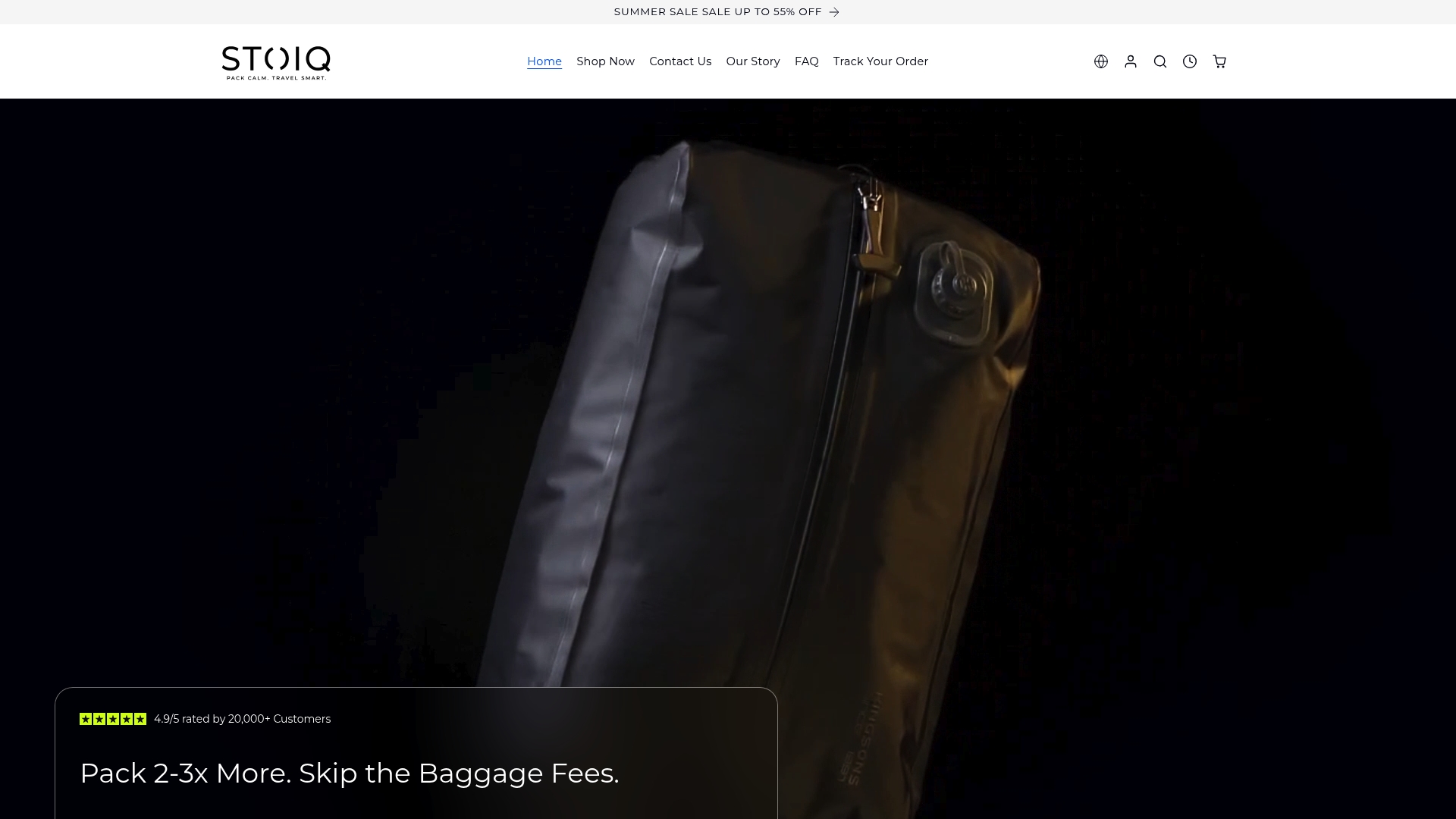
That extra volume can mean the difference between checking a bag and carrying everything on, which adds up fast in baggage fees over a year of travel. The Stoiq Carry-On Solution 20L fits most standard carry-on dimensions, and the 25L version suits longer trips needing extra room. Browse the product details and see whether an integrated compression system fits how you actually pack.
Sources
- Compression stockings: benefits, types and how to choose the right fit — Thrombosis UK
- TSA — Liquids, aerosols and gels (3-1-1) rule
- What to pack for a long-haul flight — Travel + Leisure
- What to pack for long-haul flights — Finding the Universe
