



How to Fix and Prevent Odor Control in Luggage
Empty the suitcase, air it out for a few hours, and drop in an absorber. That three-step sequence clears most suitcase odors without any special products. For quick neutralization, a baking soda pouch works fast; for smells that keep coming back, activated charcoal does the heavier lifting over multiple trips.
- Unzip every compartment and pull out liners, pouches, and packing cubes.
- Let the empty bag air out somewhere with sunlight and airflow for 3 to 4 hours.
- Add an absorber and leave the case open overnight before you pack it again.
Pro Tip: Recharge a charcoal sachet by setting it in direct sunlight for a few hours every couple of months — it works like new again without buying a replacement.
The habit that prevents most odors before they start: never pack a damp item next to clean clothes, and always bag sweaty or wet gear separately.
TL;DR:
- Using activated charcoal for persistent odors offers the benefit of reusability up to two years with proper sun recharging, unlike baking soda which needs regular replacement.
- Airing out the empty suitcase in sunlight and airflow for several hours before packing is crucial to prevent moisture buildup that causes odors.
- Deep cleaning mold or mildew requires targeted treatments like vinegar and enzyme cleaners, along with thorough drying, rather than relying on masking scents alone.
- Only fully dry items should be compressed with vacuum bags, and pairing them with sachets helps prevent moisture entrapment that worsens odors.
- Regularly replacing or recharging odor absorbers every one to three months prevents the buildup of stale smells and keeps luggage fresh over time.
Table of Contents
- What Causes Odor Control in Luggage to Fail?
- What Are the Fastest Ways to Fix Luggage Smells Today?
- How Do You Deep-Clean a Suitcase That Still Smells Musty?
- Which Odor Absorber Actually Works Best?
- How Do You Keep Suitcase Smells From Ever Coming Back?
- How Does Vacuum Compression Affect Odor Risk?
- Key Takeaways
- Where Can You Learn More About Luggage Odor Prevention?
- What Actually Matters Most in Odor Control?
- Sources
What Causes Odor Control in Luggage to Fail?
Odors don’t appear from nowhere. They form when moisture, warmth, and low airflow combine inside a zipped bag, creating exactly the conditions bacteria and mold need to grow. A suitcase closed for even a few hours after a sweaty gym session or a rainy commute becomes a small, dark incubator.
Three things drive most luggage smells:
- Trapped moisture. Damp swimsuits, sweaty running shoes, or a rain-soaked jacket keep humidity locked inside the shell.
- Organic residue. Skin oils, spilled toiletries, and food crumbs feed bacteria long after the trip ends.
- Material and design. Soft fabric linings absorb odors deep into the weave, while hard plastic shells trap smells at the seams and zippers.
Knowing which of these is at play matters because a musty, mildew smell needs cleaning, not just masking, while a sweaty-gym-bag smell often responds to a simple absorber.
What Are the Fastest Ways to Fix Luggage Smells Today?
You don’t need a lab or a weekend to knock out most odors. Here’s the routine that works whether you’re standing in a hotel room or your own closet:
- Strip the bag completely. Remove every item, including liners and side pockets, so nothing traps residual moisture.
- Hang anything damp. Garments, shoes, and wet gear go on hangers or a shower rod, not back in the suitcase.
- Air the empty case. Open every zipper fully and let it sit in a well-ventilated spot, ideally near a window with sunlight, for several hours.
- Place your absorber. A folded baking soda pouch or a charcoal sachet goes in the main compartment, not loose powder scattered on fabric.
- Leave it open overnight. Odors need time and airflow to actually leave the fibers, not just get covered up.
Baking soda works best inside a breathable pouch rather than sprinkled directly on lining, since loose powder is a pain to vacuum out of seams later. Charcoal sachets do better tucked into a side pocket or mesh compartment where air can circulate around the pouch.
Dryer sheets and cotton balls dabbed with essential oil are fine for a quick fragrance boost before a business trip, but they mask smell rather than remove it. Skip them entirely if the odor is musty or mildew-based. That smell means moisture is still present, and fragrance on top of dampness just delays the real fix.
How Do You Deep-Clean a Suitcase That Still Smells Musty?
A quick airing won’t touch mold or set-in mildew. If the smell lingers after a full day open with an absorber inside, treat it as a cleaning problem, not a freshening one.
- Inspect first. Look for dark spotting on fabric or a slick film inside a hard shell. Visible mold spreading across a large area is worth a professional cleaner rather than a DIY fix.
- Clean fabric linings with a mild detergent solution and a soft brush, working in small sections so the lining doesn’t stay soaked.
- Treat hard shells with diluted white vinegar wiped along seams and zipper tracks, where grime tends to collect.
- Use an enzyme cleaner on any residue with a protein or food source, since detergent alone won’t fully break it down.
- Dry aggressively. Air the case in shade, not direct sun on the lining fabric, and point a fan into the open compartments to speed evaporation.
- Recheck after 24 hours. If the smell is still noticeable, repeat the cleaning and drying cycle rather than reaching for a heavier scent to cover it.
Combining cleaning with adsorption is the reliable combination here. Charcoal alone rarely resolves mold-based odors that have already set into the lining. Silica gel packets tucked into corners during the drying phase pull residual humidity out of tight seams that a fan can’t reach directly.
Which Odor Absorber Actually Works Best?
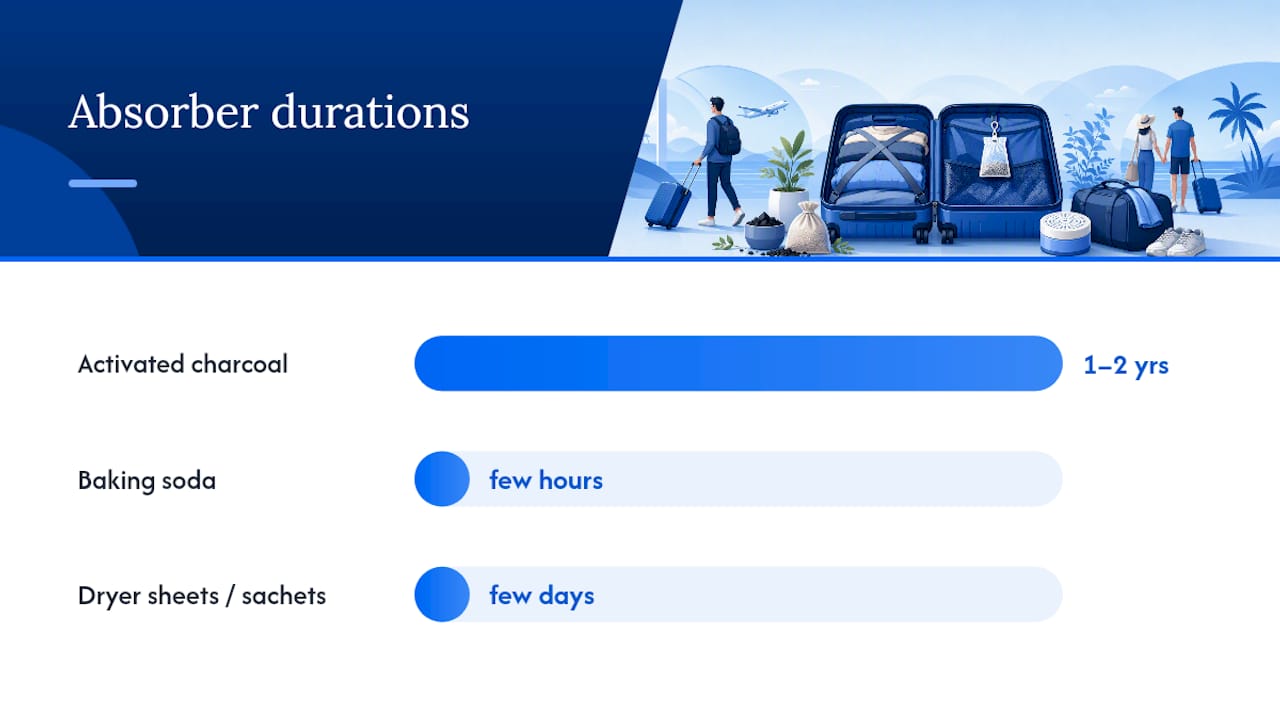
Not every absorber does the same job, and picking the wrong one for the situation wastes both time and money. Activated charcoal works through adsorption, physically trapping odor molecules on a porous surface rather than covering them with scent. A bamboo-charcoal bag can last one to two years with occasional sun recharging.
Baking soda is the faster, cheaper option for everyday freshness. It handles mild to moderate smells well but needs several hours of contact time to work, and it does little against odors rooted in mold. Dryer sheets and essential-oil sachets sit in a different category entirely: they add fragrance without neutralizing anything, which is fine for a quick refresh but a poor substitute for actual cleaning.
| Absorber | Best For | Duration |
|---|---|---|
| Activated charcoal | Persistent, recurring odors | Reusable 1 to 2 years with sun recharging |
| Baking soda | Quick, mild odor neutralization | Effective for a few hours per use, replace regularly |
| Dryer sheets / essential-oil sachets | Fragrance boost, not odor removal | A few days before scent fades |
Some commercial baking-soda products advertise 30 to 60 days of odor control, though real-world performance depends heavily on the size of the bag and the strength of the original smell. When shopping, look for a breathable pouch (not a sealed plastic shell), a formula that won’t leach residue onto fabric, and a design you can recharge instead of tossing after one trip.
How Do You Keep Suitcase Smells From Ever Coming Back?
Prevention beats remediation every time, and most of it comes down to habits you can build into a normal packing routine rather than special products.
- Separate dirty laundry into its own bag the moment clothes are worn, since drying and isolating sweaty items stops bacteria from spreading to clean garments nearby.
- Hang wet swimsuits or workout gear to dry fully before they go anywhere near the suitcase.
- Use packing cubes for clean clothes and a separate moisture-wicking or waterproof bag for anything damp.
- Store the empty case with zippers partly open in a dry, ventilated spot rather than a sealed closet corner.
- Add a charcoal sachet or silica packet to long-term storage, since airtight plastic bins trap humidity instead of letting it escape.
- Skip the vacuum-sealed storage bag for anything that isn’t bone dry. Trapped moisture behind plastic is a mildew problem waiting to happen.
Pro Tip: Set a recurring reminder to swap or recharge your absorber every one to three months, and every time you return from a trip. A stale charcoal sachet left in a closed bag for a year does almost nothing.
How Does Vacuum Compression Affect Odor Risk?
Compression bags solve a real problem: fitting more into a carry-on without checking a bag. They also squeeze out most of the air pocket that would otherwise let a damp item breathe, which means moisture has nowhere to go once the seal closes.
- Only compress items that are fully dry. A damp shirt sealed under vacuum pressure stays damp far longer than one left loose.
- Pair a charcoal or silica sachet with any compressed bag, tucked in before you seal it, as a backup against trapped humidity.
- Rotate and recharge your absorbers between trips rather than assuming last month’s sachet still has capacity.
Compression works best as a volume tool, not a drying tool. If it went in wet, it comes out wet, just packed tighter.
Stoiqstorage builds its vacuum compression bags around that reality, with a built-in rechargeable pump that lets you compress dry clothing fast without hunting for a separate vacuum device. The efficiency gain is real. It just works best when paired with the drying and absorber habits above, not as a replacement for them.
Key Takeaways
Odor control in luggage comes down to removing moisture first, adsorbing residual smell second, and keeping the bag dry and ventilated between trips.
| Point | Details |
|---|---|
| Air before you absorb | Empty and air out the suitcase for hours before adding any absorber. |
| Match the absorber to the odor | Use charcoal for recurring smells, baking soda for quick mild fixes. |
| Deep-clean mold, don’t mask it | Musty smells need detergent, vinegar, or enzyme cleaner plus full drying. |
| Never compress wet gear | Vacuum-sealed bags trap humidity, so only compress fully dry items. |
| Recharge on a schedule | Sun-recharge charcoal and replace baking soda every one to three months. |
If you want a compression bag built to travel with dry, well-organized packing, check the Stoiq Carry-On Solution 20L, backed by feedback from over 20,000 travelers on the Stoiq reviews page.
Where Can You Learn More About Luggage Odor Prevention?
For deeper reading, the charcoal versus baking soda breakdown and OXXO’s fresh-luggage maintenance guide cover absorber mechanics in more depth. Pairing odor-resistant clothing, like sweat-proof breathable socks, with a Stoiq compression bag tackles both the source and the storage.
What Actually Matters Most in Odor Control?
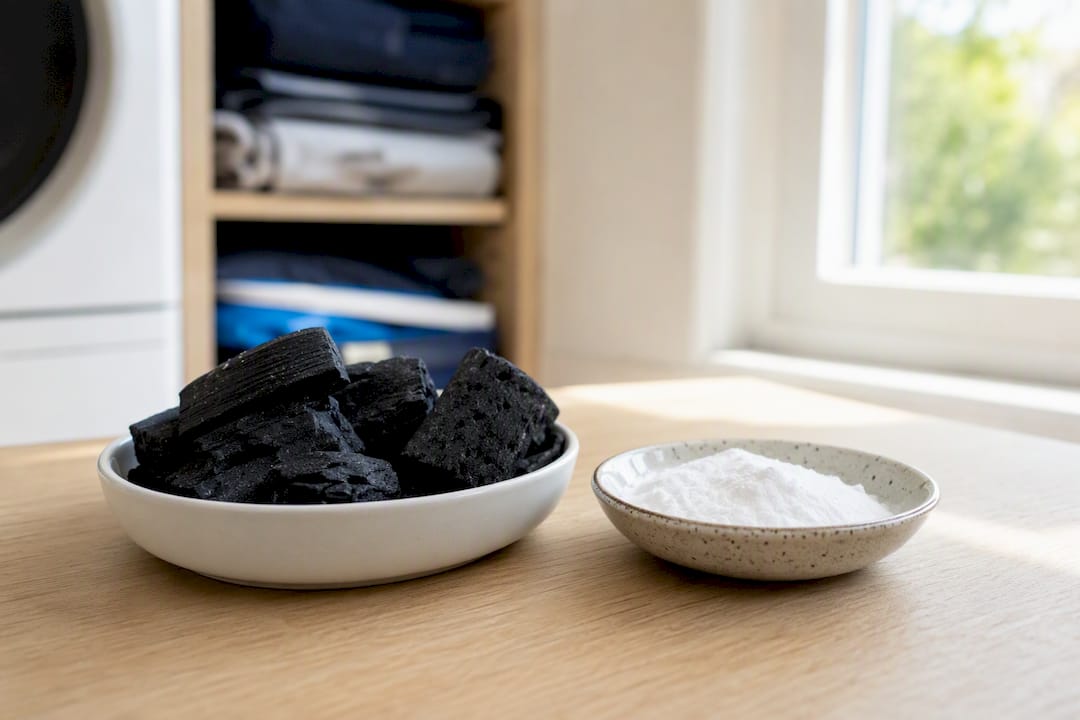
Most advice on this topic overcomplicates a problem that has a simple fix. The internet is full of specialty sprays and scented gadgets promising to solve suitcase smell, but the research keeps pointing back to two ingredients you already own: baking soda and charcoal, paired with the discipline to dry things out before you zip the bag shut.
Where conventional advice falls short is treating fragrance as a solution. Dryer sheets and essential-oil sachets feel like progress because you can smell the change immediately, but they do nothing for the bacteria or mold actually causing the smell. That’s a real gap, and it’s why some travelers end up fighting the same odor trip after trip.
If you’re buying into compression packing, the priority shifts slightly. Dry everything first, always. A vacuum bag makes a damp problem worse by removing the airflow that might have let it evaporate on its own. Get the drying habit right, and compression becomes a genuine packing upgrade instead of a moisture trap waiting to happen.
— Hugh
Sources
- Odor Absorbers For Luggage: Charcoal Vs Baking Soda Vs Sachets — LuggageJar
- How to Keep Your Luggage and Travel Bags Fresh & Odor-Free — OXXO
- How to keep dirty clothes from smelling in a suitcase — Journey Fanatics
