



One Bag Travel Packing: One Week System That Uses Vacuum Compression
Yes, you can reliably travel with just one bag for almost any trip length. The system comes down to four habits: a capsule wardrobe built around one week of clothing, a packing organization method you repeat every time, a carry-on bag with the right shape and features, and a willingness to do laundry on the road. Get those four right, and you gain mobility, skip baggage fees, and cut the pre-flight stress that comes with dragging a checked suitcase through security lines.
TL;DR:
- Most airline carry-on policies vary, especially with budget airlines, so pack to the strictest size and weight limits encountered on any segment of the trip.
- Packing a capsule wardrobe for one week, with versatile clothing that resists odors and dries quickly, enables extended travel without extra luggage.
- Using a clamshell-opening bag with compression straps and internal organization makes access easier and maximizes space efficiency within airline size restrictions.
- For longer trips, plan to do laundry weekly instead of packing more clothes, and choose activity-specific items rather than adding bulk for outlier days.
- Vacuum compression bags can significantly increase packing capacity on the return trip but are best used for bulky layers and laundry, not essential outfit pieces.
Table of Contents
- What Goes in a One Bag Travel Packing Checklist?
- How Do You Choose the Right One-Bag Travel Bag?
- Which Fabrics Let You Pack Fewer Clothes?
- What’s the Best Way to Organize a Carry-On Bag?
- How Do You Pack Differently for a Weekend vs. a Three-Week Trip?
- How Do You Handle Airline Carry-On Rules Without Getting Caught Off Guard?
- Where Does Vacuum Compression Fit Into a One-Bag System?
- An Honest Take on Chasing the “Perfect” Bag
- Pack Smarter With Stoiq Vacuum Compression Bags
- A Few More Guides Worth Reading
- Sources
- FAQ
What Goes in a One Bag Travel Packing Checklist?
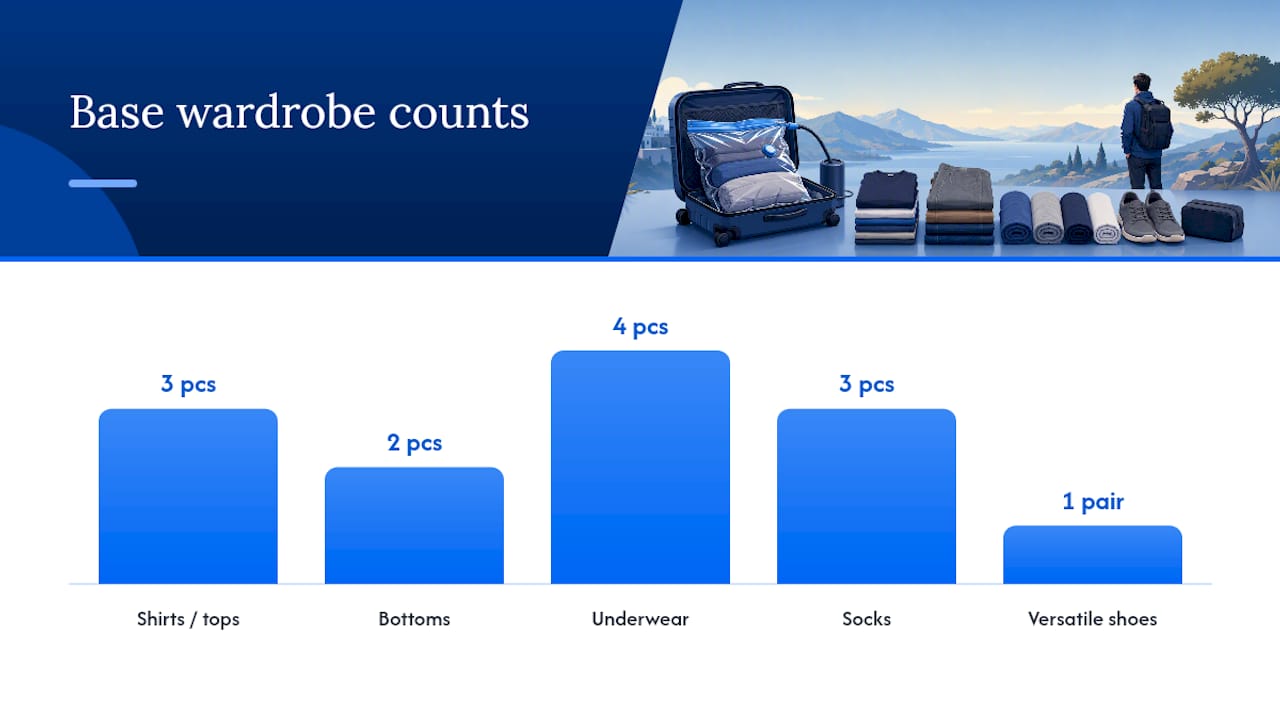
A workable one-bag kit starts with a base wardrobe sized for one week, not for every day of your trip. That single decision, backed by the idea that a carry-on paired with a capsule wardrobe can cover a week or longer with periodic laundry, is what makes everything else possible.
Here’s a base list that fits most warm-to-mild climate trips:
- 3 shirts or tops (mix of short and long sleeve)
- 2 bottoms (one pair of pants, one pair of shorts or a second pair of pants)
- 4 pairs of underwear and 3 pairs of socks
- 1 versatile pair of shoes that works for walking and a casual dinner
- 1 light layer (fleece or packable sweater) plus a packable rain shell
- Sleepwear doing double duty as loungewear
Wear your bulkiest outfit and shoes on travel day. That single move frees up real space inside the bag.
For toiletries, go solid where you can: shampoo bars, solid deodorant, and a bar of soap cut weight and eliminate leak risk. Anything liquid goes in travel-sized bottles inside a clear, leakproof pouch. Round out the kit with a phone charger, a universal adapter, any prescription medication in original packaging, and copies of key documents.
Add climate or activity items last: swimwear for a beach trip, a base layer for cold weather, hiking socks for a trekking leg. Once packed, run two quick tests. Walk around your house or block with the bag fully loaded, and if you’re unsure about size, check it against an airline sizer before you leave.
How Do You Choose the Right One-Bag Travel Bag?
Bag choice determines whether one-bag travel feels effortless or like a daily wrestling match. The single biggest factor is opening style. A clamshell (suitcase-style) bag unzips flat like a briefcase, giving you access to anything inside without digging past everything else. A top-loader forces you to unpack from the top down, which gets old fast when you need a charging cable buried at the bottom. Clamshell-opening bags are the preferred format for most one-bag travelers for exactly that reason. They turn a bag into something closer to an organized drawer than a sack you have to excavate.
Size matters too, though airlines don’t all agree on the same number. Most carry-on bags run somewhere between 35 and 45 liters, with external dimensions typically capped around 22 x 14 x 9 inches. Airline policies vary enough that it’s worth checking your specific carrier before you buy, especially if you fly budget airlines that enforce stricter sizers at the gate.
Beyond size, look for:
- Compression straps inside the main compartment to cinch down volume once packed
- At least one external pocket for items you need without opening the whole bag -S towable backpack straps if the bag doubles as carry-luggage and a wearable pack
- Durable, weather-resistant fabric on the base and corners
- A padded, adjustable suspension system if you’ll wear it as a backpack for more than a few minutes
Once you’ve packed it, walk with it loaded for 15 to 20 minutes. That short test surfaces comfort problems and balance issues long before you’re sprinting for a connection.
Which Fabrics Let You Pack Fewer Clothes?
Fabric choice is the quiet variable that determines how many outfits you actually need. Merino wool and high-performance synthetics resist odor and dry fast, which means you can wear the same shirt two or three days running without anyone noticing. That single property is why quality fabric, not a longer packing list, is the real lever behind a small wardrobe.
Build the wardrobe around a tight color palette so every top pairs with every bottom:
- Stick to two or three neutral colors (navy, charcoal, olive) with one accent color for variety
- Choose bottoms that work for both daytime activity and a casual dinner out
- Pick one layering piece that adds warmth without adding bulk, like a merino quarter-zip
- Wear your heaviest jacket and shoes on the plane instead of packing them
Pro Tip: Lay out every planned outfit combination before you pack. If a shirt only pairs with one pair of pants, it’s not earning its space in the bag.
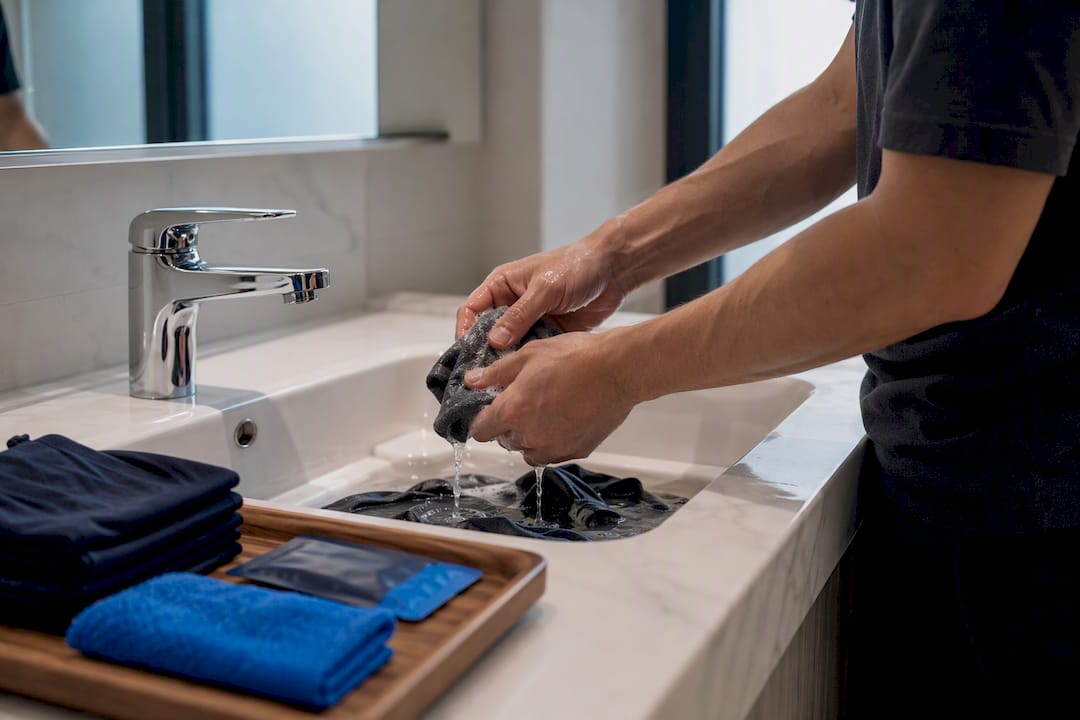
For laundry on the road, a hotel sink and a small packet of travel detergent handle socks and underwear overnight. For a longer stretch, a laundromat once a week keeps the whole kit fresh, which lines up with the one-week packing and laundry habit that experienced light travelers rely on more than any gadget.
What’s the Best Way to Organize a Carry-On Bag?
Packing cubes turn a jumbled bag into a system you can find your way through half asleep. Assign each cube a job: one for tops, one for bottoms, a small one for underwear and socks, and a separate bag entirely for dirty laundry so it never touches clean clothes.
Rolling clothes, particularly with a Ranger roll (fold then roll tight), saves more space than folding and resists wrinkles better for casual fabrics. Save flat folding for structured items like a blazer or dress shirt that wrinkle badly when rolled.
- Soft packing cubes compress moderately and keep items separated, but they don’t shrink bulky items like a puffy jacket much
- Vacuum or compression bags squeeze air out entirely, which frees up meaningfully more room but can add wrinkles to delicate fabric and takes slightly longer to pack and unpack
- Use compression for bulky layers you won’t need until arrival; skip it for items you’ll want quick access to mid-flight
A hanging toiletry bag with clear, leakproof compartments keeps your carry-on liquids compliant and easy to pull for security screening, and separating solids from liquids inside it speeds up the whole process.
How Do You Pack Differently for a Weekend vs. a Three-Week Trip?
The one-week wardrobe is your baseline, and trip length changes almost nothing about the core list. Here’s how to adjust:
- 3-day trip: Cut the base list roughly in half. Two tops, one bottom, and the outfit you’re wearing covers most weekend trips without a single load of laundry.
- 7-day trip: Use the full base list as written. This is the sweet spot the whole system is built around.
- 21-day trip: Keep the same base list and plan for two laundry stops, roughly one per week. Do not pack three weeks of clothes; pack one week and wash twice.
Activity-specific add-ons matter more than duration. A hiking leg calls for moisture-wicking base layers and one pair of proper trail socks. Business meetings call for one wrinkle-resistant outfit you keep separate from the rest. Beach days need only a swimsuit and a light cover-up, since beach towels and snorkel gear are almost always cheaper to rent locally than to carry.
For trips crossing multiple climates, pack for whichever climate dominates the itinerary and plan to buy or rent gear locally for the outlier days. A single cold evening on an otherwise warm trip doesn’t justify a whole extra layer taking up bag space for three weeks.
How Do You Handle Airline Carry-On Rules Without Getting Caught Off Guard?
Airline carry-on limits are not standardized, and budget carriers in particular enforce tighter sizers than legacy airlines. When your trip involves multiple flights or airlines, pack to the strictest limit you’ll encounter on any leg, not the most generous one.
- Weigh your loaded bag at home with a luggage scale before you leave; most overhead-bin allowances top out between 15 and 22 pounds depending on the carrier
- Check your bag against a sizer frame at home, either a store display or a simple cardboard template, if you’re borderline on dimensions
- Wear your bulkiest jacket and shoes through security rather than packing them
- Keep chargers, medication, and one spare outfit in your personal item, not your main bag, in case you’re separated from it briefly
If your bag is ever delayed or lost, that personal item becomes your lifeline for the next day or two. A change of underwear, any daily medication, a phone charger, and basic toiletries in your personal item mean a delayed bag is an inconvenience, not a crisis.
Where Does Vacuum Compression Fit Into a One-Bag System?
A bag with a built-in, rechargeable pump lets you compress soft items and pull the air out in seconds. That extra density typically means fitting two to three times more into the same carry-on space, which matters most on the return leg of a trip when souvenirs and dirty laundry both need somewhere to go.
- Compress bulky layers, like a packed-away jacket, once you land somewhere warmer
- Use it to make room for souvenirs or gifts without upgrading to a bigger bag
- Skip compressing anything you need mid-flight, since a vacuum-sealed bag takes a minute to reopen and can leave light wrinkling on delicate fabric
Reserve one packing cube or the bag’s main compartment for items you’ll need quick access to, and compress everything else.
An Honest Take on Chasing the “Perfect” Bag
Most people spend more time hunting for the ideal one-bag setup than they spend actually practicing packing it. That’s backward. The gear itself matters less than the habit of returning to the same base wardrobe and the same packing order every single trip.
Where I think most advice gets it wrong is treating one-bag travel as a gear problem first and a behavior problem second. It’s the opposite. A $40 duffel packed with a disciplined one-week wardrobe beats a $300 bag stuffed with two weeks of “just in case” clothing every time. The bag should match your packing style, not fix a habit you haven’t built yet.
Try this before your next real trip: pack for a 48-hour weekend using only what fits in your bag, and actually live out of it for those two days without raiding a closet. If that feels manageable, scaling the same system up to a week or three weeks is a matter of adjustment, not reinvention.
— Hugh
Pack Smarter With Stoiq Vacuum Compression Bags
Everything in this guide gets you most of the way to a genuinely light carry-on. The one thing a capsule wardrobe and packing cubes can’t do is shrink the actual volume of what you’re bringing home, which is where a lot of one-bag systems break down on the return flight. The extra capacity is built directly into the bag with a rechargeable, built-in pump, so you compress bulky layers or a week of laundry without hunting for an outlet or a separate vacuum device.
The trade-off is honest: compressed items take an extra minute to unpack and can pick up light wrinkling, so it’s a tool for laundry and bulk layers, not for the outfit you need at your next gate. For souvenir-heavy return trips or bulky seasonal jackets that would otherwise force you to check a bag, that density gain solves a real problem. Many travelers have already built it into their kit, based on customer reviews on packing efficiency and easier organization.
If you’re ready to test it on your next trip, start with the Stoiq 20L vacuum compression carry-on, sized to work as the main bag in the exact system this guide just walked through.
A Few More Guides Worth Reading
For deeper reading on the fabrics, testing methods, and packing logic behind this system, check Rick Steves on packing light, the case for merino and performance synthetics, and ultralight packing principles. For outfit ideas that pack light and travel well, see the airport outfit formula.
Sources
- Merino wool vs synthetic: which fabric should you wear outdoors?
- Packing Smart and Traveling Light
- My 5-4-3-2-1 packing guide
- Ultralight Packing List: How to Pack Light & Travel With 1 Bag
FAQ
What Is the 5-4-3-2-1 Packing Trick?
It’s a base-count method: five tops, four bottoms, three pairs of shoes maximum, two dressier outfits, and one swimsuit or activewear set, all built to mix and match into many outfit combinations from a small item count.
What Is the 3-3-3 Rule for Travel Packing?
The 3-3-3 rule caps your wardrobe at three tops, three bottoms, and three pairs of shoes (including the ones you’re wearing), which forces the same color-coordinated, mix-and-match discipline as the one-week baseline covered above.
What Is the Best One-Bag Travel Bag?
The best one-bag travel bag is a carry-on-sized clamshell bag, generally 35 to 45 liters, since the flat-opening design gives full access to your packed items without unpacking everything else first. A bag with built-in compression, like a Stoiqstorage vacuum-compression carry-on, adds extra usable space within that same size limit.
What Is the 1-2-3-4-5-6 Packing Rule?
Definitions of this rule vary across packing guides, and there’s no single agreed-upon version. Stick with a proven system like the one-week baseline or the 5-4-3-2-1 method instead, since both are well documented and easy to apply consistently.
