



Pack Bulky Jackets for Travel: Use a Built In Pump Bag
Wear a bulky jacket for trips of one to three nights to skip the packing problem entirely. For longer trips, prep it properly and compress it with a rolling technique or a vacuum bag, since that’s how you reliably pack bulky jackets into a carry-on without eating your whole suitcase. Just avoid long-term vacuum compression on down insulation, since it can flatten the loft that keeps you warm.
TL;DR:
- Rolling is preferred for down and synthetic jackets to reduce creases and maintain loft, while folding better preserves structured coats and wool blends.
- Vacuum compression bags offer greater space savings but should only be used for short-term transit, as long-term use can damage insulation, especially in down jackets.
- Proper jacket preparation, including complete drying and emptying pockets, is essential to prevent damage and maintain insulation quality after compression.
- Placement of a compressed jacket in the bag affects both space efficiency and weight distribution, with best results achieved by positioning it against the back panel or at the bottom.
- An integrated pump in compression bags simplifies packing, eliminates the need for extra gear, and is ideal for quick, on-the-go compression for frequent travelers.
Table of Contents
- Wear It, Carry It, or Check It? How to Decide
- Get Your Jacket Ready Before You Roll or Compress
- Folding or Rolling: Which Technique Fits Your Fabric?
- Compression Sacks vs. Vacuum Bags: Matching Tool to Trip
- Where to Put a Compressed Jacket in Your Bag
- How to Restore Loft After Compression
- What Frequent Travelers Get Wrong About Bulky Coats
- Why an Integrated Pump Beats a Separate Vacuum Device
- Sources
Wear It, Carry It, or Check It? How to Decide
Your jacket doesn’t belong in your suitcase by default. That’s the mistake most travelers make before they’ve even opened their bag.
- Wear it for trips of one to three nights, when baggage fees matter, or when you’ll want it the moment you land. Wearing your coat through security also doubles as an in-flight blanket, which is a nice bonus on a cold red-eye.
- Carry it compressed in a soft compression sack when you need it mid-trip but not immediately, and you’re protecting carry-on space.
- Check it in a garment bag on longer trips where breathable storage beats airtight compression, since long-term vacuum sealing can compromise structural integrity over time.
If you do check it, layer it flat between softer clothing rather than jamming it into a corner. That single habit prevents most of the crushed-collar, bent-zipper damage travelers blame on airlines.
Get Your Jacket Ready Before You Roll or Compress
A damp or cluttered jacket ruins even the best packing technique. Run through this checklist first:
- Dry it completely. Follow the care label, and never seal a damp jacket, since trapped moisture in a vacuum bag invites mildew.
- Empty every pocket. Forgotten receipts, lip balm, or coins create pressure points that cause creases or punctures during compression.
- Zip and snap everything closed. A closed jacket compresses into a smoother, more even shape than one with flapping zippers.
- Smooth out the fabric. Lay it flat and press out wrinkles by hand before you roll or fold.
- Use the hood and interior pockets as storage. Tuck socks, gloves, or a charging cable into the hood to reduce wasted air space elsewhere in your bag.
Ten seconds of prep saves you from unpacking a wrinkled, lumpy jacket at your destination.
Folding or Rolling: Which Technique Fits Your Fabric?
Rolling and folding aren’t interchangeable, and picking the wrong one for your fabric is how bulky coats end up with permanent crease lines.
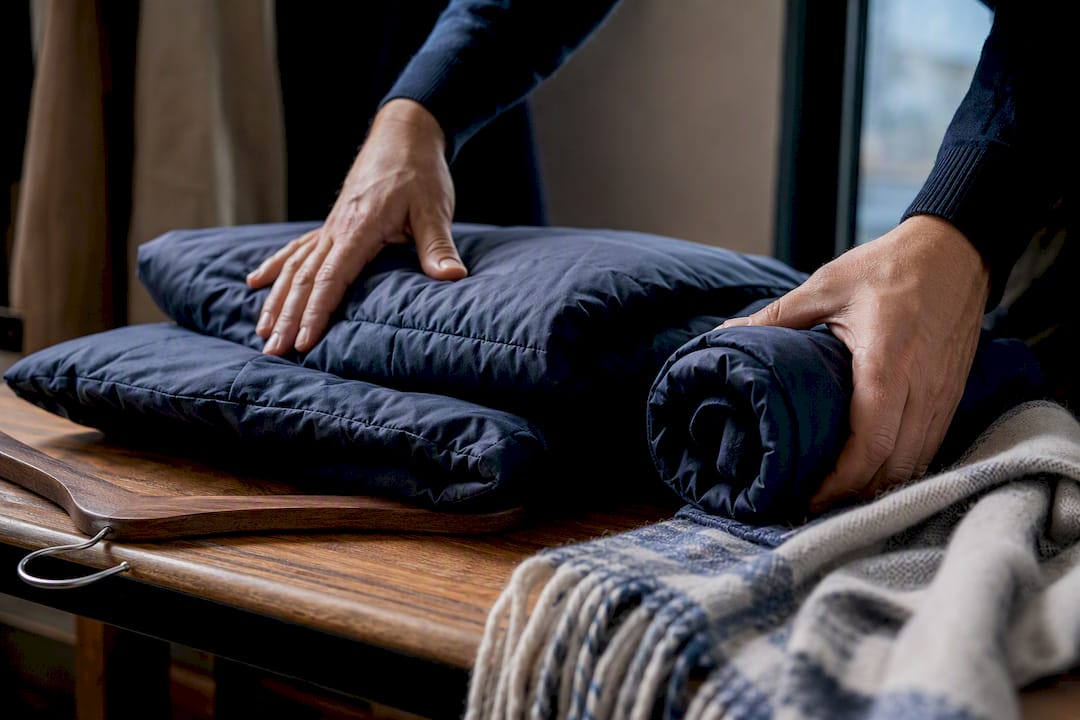
For puffers and down jackets, rolling is almost always the better call. Lay the jacket face down, tuck the sleeves in toward the center, and roll from the hem up toward the collar in one smooth motion. Rolling tends to produce fewer hard creases than folding, which is why it’s the go-to method for knits, fleece, and most synthetic-fill jackets too.
Structured coats, wool blends, and anything with shoulder padding behave differently. Folding along the natural seams preserves the shape better than rolling, which can crush structured shoulders into an odd curve that’s hard to press out later.
- Down and puffers: roll tightly, sleeves tucked first.
- Wool and structured coats: fold along seams, avoid tight rolling.
- Hybrid or heavily insulated jackets: roll loosely, then secure with a strap or rubber band to stop unrolling in transit.
Pro Tip: Roll your jacket around a smaller item, like a rolled pair of jeans, and it holds its shape better in a bag than an empty roll that flattens the moment you sit on your suitcase.
Compression Sacks vs. Vacuum Bags: Matching Tool to Trip
Not every compression tool delivers the same space savings, and picking the wrong one for the wrong trip is where travelers waste money and damage garments.
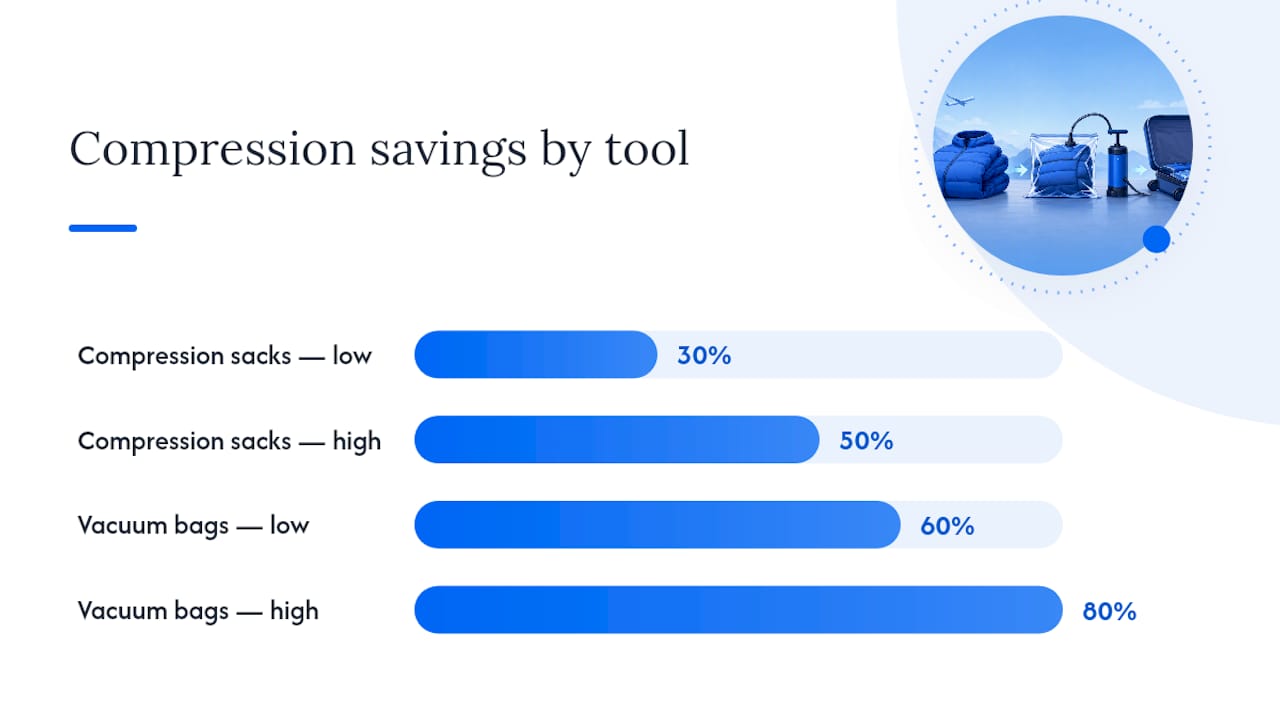
Compression sacks, the kind with straps you cinch by hand, typically shrink bulky items by about 30 to 50 percent. Vacuum-sealed bags push that further, compressing garments by up to 60 to 80 percent depending on how much loft the fabric has to begin with. That gap matters if you’re trying to fit a ski jacket and two sweaters into a single carry-on.
Vacuum compression earns its keep on short transit windows and carry-on maximization, not as a long-term storage solution. Here’s how to choose gear that actually holds up:
- Pick a medium-sized bag sized to the jacket. Oversized bags trap excess air pockets that never fully compress and end up wasting the space they were supposed to save, according to Southern Living’s packing guidance.
- Choose a durable, jacket-rated bag for coats with metal zippers or stiff hardware, since cheap plastic punctures easily.
- Favor a built-in pump over a separate hand pump or plug-in vacuum. One less accessory to pack is one less thing to forget.
A reliable compression bag can flat-pack even a down jacket, turning a bulky coat into something roughly the thickness of a laptop.
Where to Put a Compressed Jacket in Your Bag
Placement matters almost as much as compression. A perfectly flattened jacket shoved in the wrong spot still throws off your bag’s balance and wastes the space you just fought to reclaim.
- Put it against the back panel or at the bottom of your suitcase or backpack. In backpacks, this keeps weight close to your spine, which makes a heavier pack far more comfortable to carry through an airport.
- Reserve the lid or top compartment for items you need first, like a phone charger, boarding pass, or travel pillow.
- Use side pockets for small accessories such as gloves or a hat, freeing the main compartment for compressed garments.
- Cinch every external compression strap your bag has. Loose straps let compressed items re-expand slightly over a long flight.
- Fill remaining gaps with soft items, like rolled socks or a scarf, so nothing shifts and throws your pack off balance.
A compression backpack with a built-in vacuum system handles most of this arrangement automatically, since the compression panel sits exactly where structured weight distribution needs it.
How to Restore Loft After Compression
Compression is a means to an end, not a permanent state, and treating it otherwise damages the exact insulation that keeps you warm.
- Unpack within 24 to 48 hours of arrival. Leaving a jacket vacuum sealed for days flattens the down clusters that trap warm air.
- Shake or tumble per the care label to help the fill redistribute and re-loft. A few minutes in a dryer on low heat with a couple of clean tennis balls works for most down jackets.
- Never seal a damp jacket, even briefly. Trapped moisture breeds mildew and odor that no amount of shaking will fix.
- Know your insulation type. Synthetic fill tolerates repeated compression far better than high-fill down, which loses loft faster under sustained pressure.
If your jacket still smells faintly of suitcase after unpacking, hang it somewhere ventilated for a few hours before wearing it. Odor clings to compressed fabric more than people expect, and fresh air does more than febreze ever will.
What Frequent Travelers Get Wrong About Bulky Coats
Most people treat their winter coat as an afterthought. They shove it in last, compress it however seems fastest, and wonder why it comes out crushed on the other end.
The smarter approach: own one genuinely versatile, packable jacket instead of hauling multiple bulky coats on every trip. That single decision does more for your packing efficiency than any compression technique. From there, the trade-off is simple. Wear your coat for short trips to sidestep the whole problem. For longer trips, compress it carefully, respect the fabric, and treat vacuum sealing as a short-term transit tool, not permanent storage.
…
— Hugh
Why an Integrated Pump Beats a Separate Vacuum Device
Most vacuum compression systems make you pack a second gadget just to use the first one. Stoiqstorage builds the pump into the bag itself, so there’s nothing extra to charge, carry, or lose in a hotel room three cities from home.
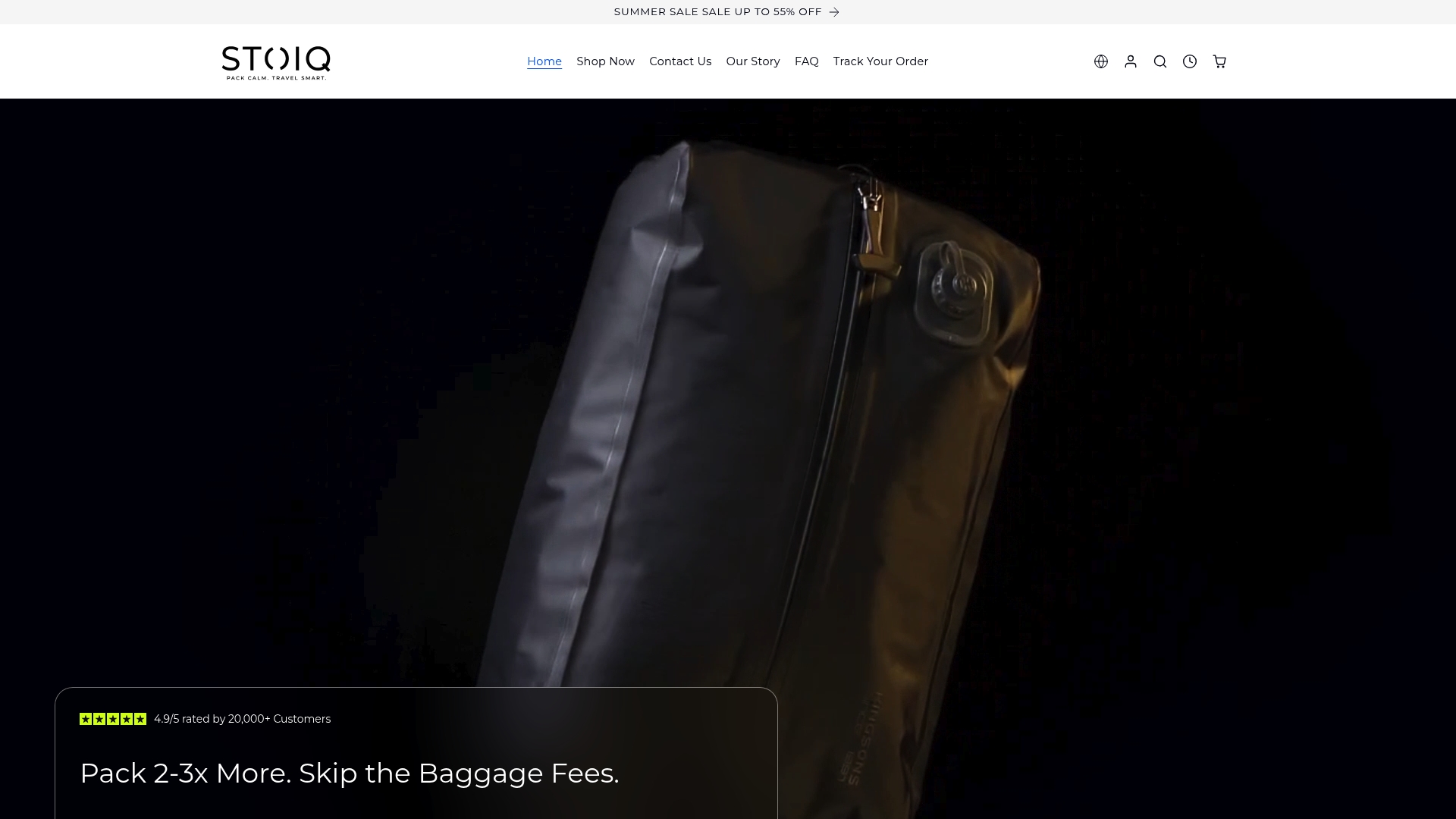
That matters most for people packing under pressure. Frequent business travelers who need a jacket compressed in the time it takes to board. Parents managing multiple kids’ layers with zero patience left for fiddly gear. Backpackers trying to convert a duffel’s worth of bulk into something that fits under an airline seat. The Stoiq Carry-On Solution handles all three scenarios with a rechargeable pump built directly into the seal, and travelers who want both compression and structured carrying comfort can pair it with the Stoiq Compression Backpack.
One honest limit worth repeating: skip vacuum sealing for long-term storage of delicate down, and always follow the jacket’s care label once you unpack. Used the way it’s designed, an integrated-pump bag turns a bulky coat from a packing headache into a flat, manageable layer. Check sizing and availability on the Stoiq Carry-On Solution page before your next trip.
Sources
- Saving space: How to pack your bulky winter clothing
- How to pack bulky sweaters and jackets efficiently
- How to fit a winter coat in your suitcase like a pro
- This Amazon vacuum bag can flat-pack even a down jacket
