



Pack Dress Shirts Wrinkle Free for Business Trips in 10 Minutes
The best way to keep structured dress shirts wrinkle-free for travel is to flat-fold each one with collar and cuff support, stack them in a protected top layer or packing cube, and hit any leftover creases with steam once you land. Save rolling for wrinkle-resistant or synthetic blends only. Brands like Stoiqstorage build packing systems around this exact logic, and it’s backed by feedback from over 20,000 travelers.
TL;DR:
- Flat-folding dress shirts with collar and cuff support keeps them wrinkle-free during travel, especially when stored in a top layer or packing cube.
- Folding preserves the shirt’s structure better than rolling, which can twist collars and create stubborn creases that are hard to iron out.
- Fabrics with stretch or wrinkle-resistant finishes, such as merino wool or performance blends, handle rolling and compression better than standard cotton or linen.
- Proper placement in the suitcase, with shirts kept away from heavy or dense items, prevents deep creases that steam or ironing cannot fully remove.
- Using tissue paper or dry-cleaning plastic between folds reduces friction and creasing, while steaming or using hot water can immediately relax any light wrinkles upon arrival.
Table of Contents
- How Do You Pack Dress Shirts Without Wrinkles?
- When Should You Roll Instead of Fold?
- Which Fabrics Travel Best Without Wrinkling?
- How Should You Place Shirts in Your Suitcase?
- What’s the Fastest Way to Fix Wrinkles After You Arrive?
- Why This Packing Method Actually Works
- A Business Traveler’s Night-Before Routine
- How Stoiq Products Fit Into This Routine
- Sources
How Do You Pack Dress Shirts Without Wrinkles?
Flat-folding beats rolling for anything with structure. Rolling a woven dress shirt spreads pressure across the fabric, but it also twists the collar and cuffs into uneven creases that don’t fall out easily. Folding preserves the shirt’s built-in shape, which is exactly why retailers fold shirts for display instead of rolling them into tubes, according to Mizzen+Main’s packing guide.
Here’s the sequence to practice until it takes under a minute:
- Button the shirt completely, including the top button, and lay it face down on a flat surface.
- Smooth out the fabric across the back and gently support the collar so it doesn’t crease at an angle.
- Fold one sleeve across the back diagonally, then repeat with the other, creating an X or V shape behind the shirt.
- Fold each side panel inward toward the center, squaring off the shirt into a narrower rectangle.
- Fold the bottom hem up in thirds until you have a compact, even rectangle.
- Tuck any loose cuff fabric under the fold and smooth the seams flat with your palm.
This retail-style fold creates a tight, stable shape that holds up during transit, according to Tortuga Backpacks. Once you’ve done it five or six times, muscle memory takes over and you’ll be folding a shirt in 30 to 60 seconds without thinking about it.
Pro Tip: Slide a sheet of tissue paper across the collar and chest before you fold. It cuts down on the friction between fabric layers that causes fine creasing, especially on lighter cottons.
When Should You Roll Instead of Fold?
Folding wins for anything structured because it protects the collar and cuffs, the two spots that show wrinkles first and are hardest to fix without an iron. Rolling only makes sense in specific situations:
- Wrinkle-resistant performance fabrics with a bit of stretch, since blends with 2 to 3 percent elastane recover their shape after being rolled, per Tortuga’s fabric breakdown.
- Tight space situations where you’re stuffing a shirt into a side pocket rather than a main compartment.
- Casual or knit button-downs with no stiff collar interfacing to worry about.
If you want a middle ground, bundle-wrapping (folding soft items around a core garment) or a folding board can tighten up your fold without the drawbacks of a full roll, similar to the precise tailoring seen in Suits | Elegance By Design.
Which Fabrics Travel Best Without Wrinkling?
Not all dress shirts are built the same, and fabric choice matters as much as your folding technique. Ranked roughly from most to least wrinkle-resistant:
- Merino wool dress shirts resist creasing naturally and breathe well, though they cost more than cotton options.
- Performance blends with a small percentage of elastane bounce back fast after folding or rolling.
- Treated non-iron cotton resists wrinkles through a chemical finish, sometimes a formaldehyde derivative, which makes the fabric stiffer to the touch, notes Tortuga’s guide.
- Standard cotton looks and feels great but wrinkles the fastest, especially at high thread counts.
- Linen breathes beautifully in hot climates but wrinkles almost on contact.
If you travel often, look for shirts with a small percentage of stretch fiber woven in. Skip thin, high-thread-count cotton for business trips unless you’re fine touching it up daily.
How Should You Place Shirts in Your Suitcase?
Where a folded shirt sits in your bag matters almost as much as how you folded it. Heavier items sitting directly on top of a shirt are the main cause of deep, stubborn creases that steam won’t fully fix.
Follow this packing order:
- Pack shoes, toiletries, and other dense items at the bottom or in a separate compartment.
- Lay folded shirts in a dedicated packing cube or garment folder, stacked no more than three or four deep.
- Place that cube near the top of the suitcase or in its own layer, away from anything heavy.
- Add lighter items (socks, underwear, a light jacket) on top if you need to fill space.
Professional packers consistently recommend top placement or an isolated compartment specifically to keep shirts safe from crushing, according to MarianKemp’s packing breakdown. Packing cubes also stop shirts from sliding around mid-flight, which is what causes fresh creases to form even in a carefully folded shirt.
Compression bags are a different story. They’re excellent for bulky items like sweaters or jeans, but squeezing a structured dress shirt in a vacuum bag without protection can press deep folds into the collar and cuffs. If you’re using a Stoiq compression system, keep shirts inside their own packing cube or a sheet of dry-cleaning plastic first, then apply light to moderate compression rather than maxing it out.
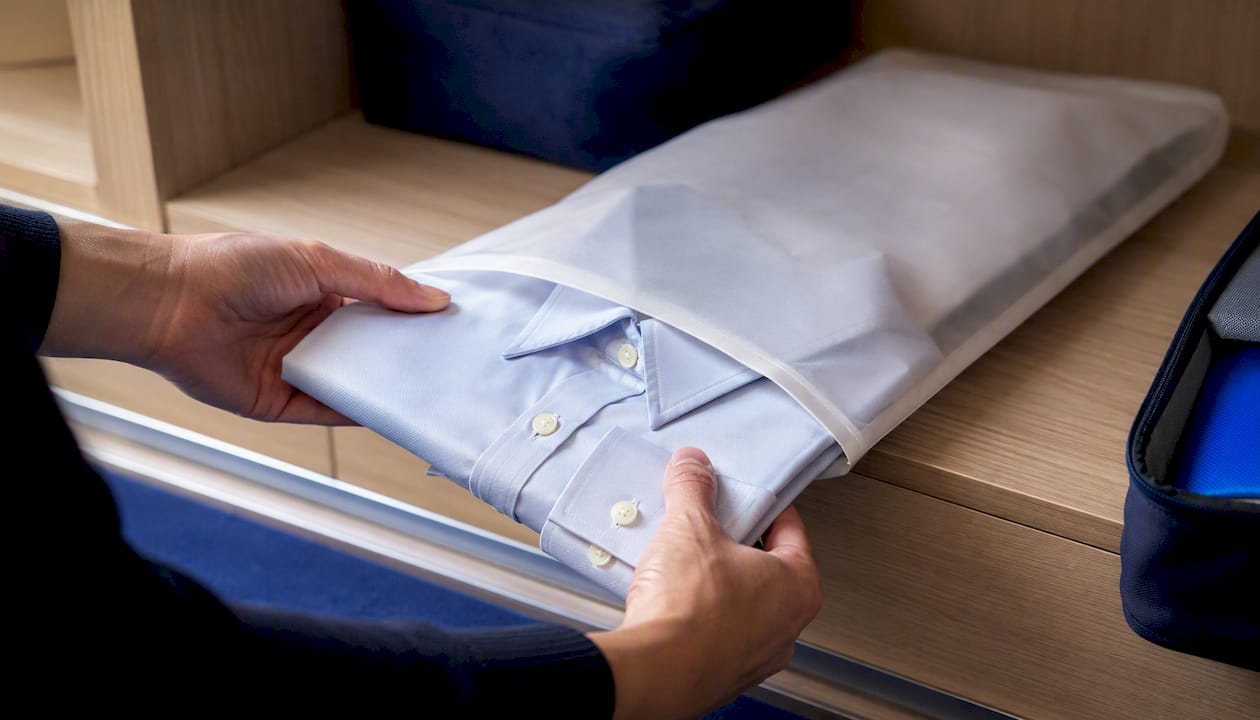
Pro Tip: If you’re short on packing cubes, a dry-cleaning bag works almost as well. Slide the folded shirt inside before placing it in your suitcase, and the plastic reduces friction the same way tissue paper does.
What’s the Fastest Way to Fix Wrinkles After You Arrive?
Even a perfect fold picks up minor creases after a long flight. Here’s what actually works once you’re in the hotel room:
- Steam it out. Hang the shirt on a hook in the bathroom, run the shower on hot, and close the door for 10 to 15 minutes. The ambient steam relaxes most light creases without any equipment, a method Articles of Style recommends for exactly this reason.
- Use a travel steamer or the hotel iron for anything stubborn, working the collar, cuffs, and front placket first since those show the most.
- Reach for an anti-wrinkle spray as a quick touch-up between meetings, or lightly dampen a crease and hit it with a hair dryer on a hot setting if you don’t have an iron handy.
Why This Packing Method Actually Works
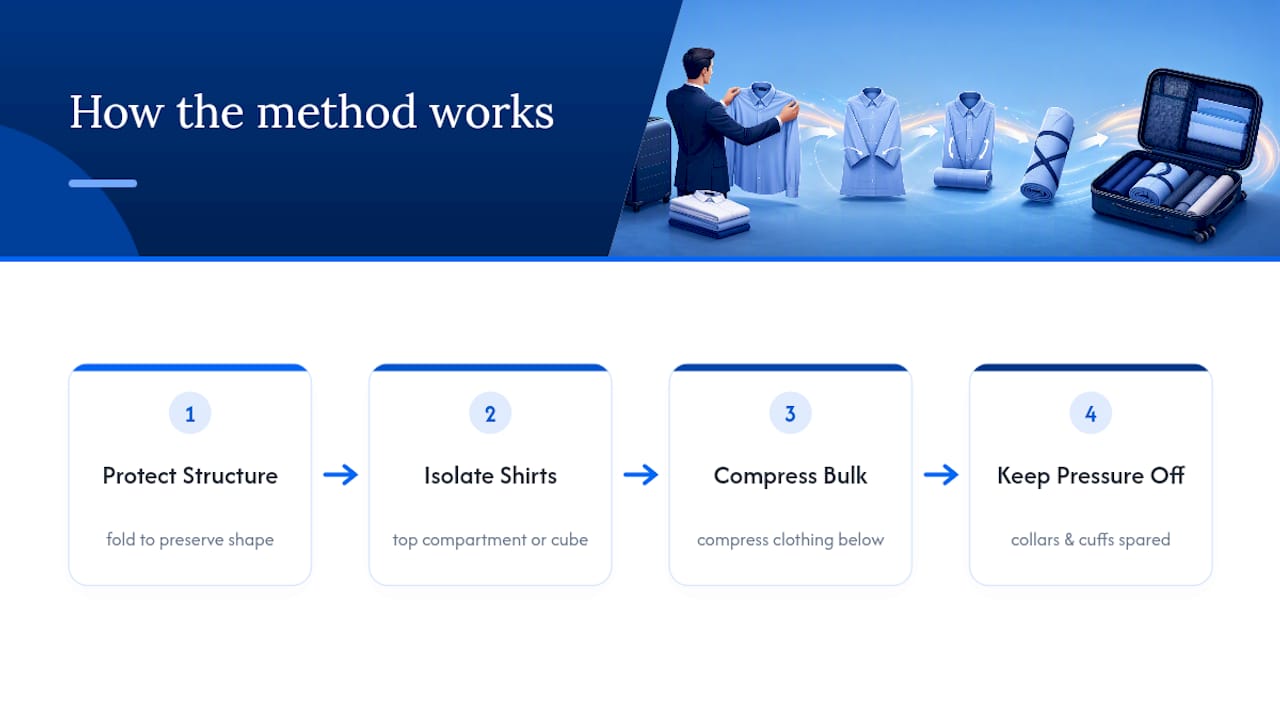
None of this is guesswork. Stoiqstorage built its vacuum compression bags around the same principle these folding techniques rely on: protect structure first, then compress what’s left. Keeping folded shirts in their own top compartment or packing cube inside a compression bag avoids the deep set creases that come from unprotected pressure. Feedback from more than 20,000 travelers who’ve used Stoiq’s system points to the same conclusion: structure survives compression when it’s protected first.
A Business Traveler’s Night-Before Routine
Here’s the workflow worth copying: launder and iron your shirts the night before, then let them cool completely for 15 to 20 minutes before folding. Packing a warm shirt traps moisture that sets new wrinkles as it cools inside your bag, a mistake plenty of travelers make without realizing it. Fold two shirts at once to save time, and slide tissue between folds if you’re working with a delicate weave. Pack the stack directly into a cube, place it on top, and you’re done in under ten minutes.
— Hugh
How Stoiq Products Fit Into This Routine
Once your shirts are folded and protected, a Stoiq Carry-On Solution 20L vacuum compression bag lets you compress the rest of your luggage without touching the shirts themselves. Keep folded shirts in their own packing cube or a layer of dry-cleaning plastic, place that layer on top, and compress everything below it. That’s the difference between smart compression and flattening your collars into oblivion.
For business travelers juggling a laptop, toiletries, and a week of shirts in one bag, the Stoiq Compression Backpack works the same way, with a dedicated top section that keeps shirts away from the compressed main compartment. The built-in rechargeable pump means you’re not hunting for an outlet or a separate vacuum device at 6 a.m. before a flight.
If you want to see how this plays out for real travelers, the Stoiq reviews page covers feedback from more than 20,000 people who’ve packed this way. And if you’re still deciding between a compression bag and traditional cubes, this breakdown walks through exactly when each makes sense, so you can pick the setup that keeps your shirts sharp instead of compromising on space.
Sources
- How to Pack a Dress Shirt (Mizzen+Main)
- How to Pack Dress Shirts (Tortuga Backpacks)
- How To Pack A Shirt In A Suitcase (MarianKemp)
