



Travelers: Fix Leaks, Clean, and Reuse Vacuum Travel Bags
Yes — most travel vacuum bags are reusable if you clean, inspect, and reseal them correctly. A bag with intact seams, a working valve, and no lingering odor is fair game for another trip. Toss anything with torn stitching, a stuck valve, or a smell that won’t quit, and follow the repack routine below the moment you get home.
TL;DR:
- Reusable vacuum bags should be checked for tears, smells, and a fully functioning valve before reuse, especially avoiding damp or heavily hardware-laden items.
- Proper cleaning involves wiping with a damp cloth and air drying in a shaded area, avoiding harsh chemicals, abrasive scrubbers, and machine washing.
- Small repairs with tape and seal testing by listening for hissing or bubbles can extend a bag’s life, but seam damage or repeated seal failures warrant replacement.
- Thicker nylon bags with reinforced zippers and industrial-grade valves last significantly longer across dozens of trips when handled carefully.
- Investing in high-quality, built-in pump bags from brands like Stoiq improves durability and environmental impact by enabling multiple reuses and reducing waste.
Table of Contents
- How to Reuse Vacuum Travel Bags on Return Trips: A Step-by-Step Checklist
- Cleaning and Drying: Safe, Travel-Friendly Methods
- Inspecting, Repairing, and Testing Seals and Valves
- How Long Can You Realistically Reuse Travel Vacuum Bags?
- Packing Do’s and Don’ts to Avoid Damaging Bags
- Troubleshooting Common Problems: Quick Fixes at the Hotel or Airport
- Why Stoiq’s Design Holds Up to Repeat Travel
- Environmental Benefits of Reusing Vacuum Travel Bags
- Do Vacuum Travel Bags Work With Any Vacuum Cleaner or Pump?
- Is It Safe to Reuse Vacuum Bags for All Types of Clothing?
- What Frequent Travelers Get Wrong About Vacuum Bag Reuse
- Ready for a Vacuum Bag Built to Survive More Than One Trip?
- Sources
- FAQ
How to Reuse Vacuum Travel Bags on Return Trips: A Step-by-Step Checklist
The way you handle a vacuum bag in the first ten minutes after opening it determines whether it makes it to trip number two. Most damage happens not from the vacuum itself but from rushed repacking, damp clothes trapped inside, or zippers forced shut over lumpy piles.
Here’s the sequence worth following every time:
- Open slowly and check for moisture. Unzip fully and let the bag breathe for a few minutes before touching anything inside.
- Pull out anything damp or dirty first. Sweaty gym clothes or a swimsuit left inside will trap humidity against the plastic and invite mildew.
- Fold flat, not bunched. Flat folds distribute pressure evenly across the seams; bunched fabric creates stress points that wear out zippers faster.
- Leave a finger’s width of headroom before you zip. Overfilling strains the seal the moment you start compressing.
- Double check the zipper track is fully closed on both passes, then seat the valve firmly before compressing.
- Compress with whatever’s on hand. A bag with a built-in rechargeable pump skips the search for an outlet or a household vacuum attachment, which matters when you’re compressing in a hotel room an hour before checkout.
Skip reuse entirely if you’re packing damp swimwear, wet hiking boots, or anything with metal hardware, buckles, or exposed zippers that could dig into the plastic from the inside. Leather items also need a pass, since natural oils and moisture exchange differently than synthetic fabrics and can leave the bag’s interior tacky.
Pro Tip: Pack your bulkiest, softest item (a sweater or fleece) against the valve side. It cushions the area travelers most often crease or crack when compressing at an angle.
Cleaning and Drying: Safe, Travel-Friendly Methods
Cleaning a vacuum bag doesn’t require anything you can’t find in a hotel bathroom or under your kitchen sink. What it does require is restraint. Harsh chemicals degrade the plastic laminate faster than normal wear does.
- Wipe the interior and exterior with a damp cloth and a drop of mild dish soap.
- Avoid bleach, ammonia-based cleaners, and any solvent. These break down the polyethylene lining that gives the bag its airtight seal.
- Skip abrasive sponges or scrub pads. They create micro scratches that turn into leak points over time.
- Run a cotton swab along the zipper track and around the valve housing to clear lint, dust, or dried residue that can compromise the seal.
- Rinse only if soap residue remains, then wipe dry immediately.
Drying matters as much as cleaning. Hang the bag over a shower rod or lay it flat in a shaded, ventilated spot until it’s completely dry to the touch, inside and out. Folding a bag while it’s even slightly damp is one of the fastest ways to grow mold between the layers, and once that starts, the bag is done. A comprehensive guide on vacuum bag care notes that proper cleaning and drying are among the biggest factors separating a bag that lasts one trip from one that lasts twenty.
Machine washing and full submersion are generally not appropriate for travel-grade vacuum bags. The heat and agitation of a washing machine can warp seams and stress the valve mechanism, and prolonged submersion can force water past the zipper track into the seams themselves.
Pro Tip: Keep a small travel pack of unscented baby wipes in your toiletry kit. They’re gentle enough for the bag’s interior and double as a quick wipe down for shoes or dirty zipper pulls.
Inspecting, Repairing, and Testing Seals and Valves
A thirty-second inspection before you pack saves you from a bag that fails mid-compression at the airport. Run your fingers along every seam, not just a glance from a foot away.
- Check seams for splitting, fraying, or any spot where the fabric feels thinner than the rest.
- Slide the zipper slowly from end to end, feeling for skipped teeth or a track that’s gone loose.
- Press on the valve flap. It should snap back firmly, not sag or wobble.
- Look for pinholes, especially near corners where the bag folds most often.
Small punctures are fixable. Clear packing tape or dedicated plastic repair tape applied to both sides of a pinhole (inside and outside) can seal minor damage well enough for another trip or two. A repair is not safe once you’re dealing with a seam that’s actually split open. Tape over a structural seam failure and you’re just delaying the moment the bag lets go entirely, usually at the worst possible time.
To test airtightness, compress the bag partway, press firmly across the surface, and listen for hissing near the seams or valve. If you have access to a sink or tub, a light submersion test (partially compressed, watching for bubbles) confirms a leak’s exact location. Retire any bag with seam damage or one that’s failed the same seal twice in a row.
How Long Can You Realistically Reuse Travel Vacuum Bags?
There’s no fixed number, but reviewers testing kits with reinforced construction report bags holding up across dozens of trips when handled with basic care, according to a hands-on review of rechargeable pump travel bags. The bags that fail early almost always share the same story: thin material, a single zipper track, and rough handling rather than a defined shelf life.
Construction quality does more to determine lifespan than any other single factor. Thicker nylon and polyethylene blends resist punctures and stretching far better than the flimsy bags bundled with budget luggage sets. A reinforced double zipper and a solid valve housing matter just as much as the bag material itself.
Usage patterns shorten life fast. Someone traveling monthly and over-compressing every bag to squeeze in one more sweater will wear out seals within a year. A once-or-twice-a-year vacationer who packs carefully and stores bags flat in a closet, away from direct sun and heat, can realistically stretch the same set across several years of trips. UV exposure and heat both accelerate plastic breakdown, so a bag left in a hot car trunk ages faster than one stored indoors.
Packing Do’s and Don’ts to Avoid Damaging Bags
What goes inside the bag matters as much as how you seal it. Some habits protect a bag for years; others wear it out in a single trip.
- Do pack soft, dry garments as your base layer. T-shirts, sweaters, and folded pants compress evenly without creating pressure points.
- Do use a separate pouch for shoes, belts, and anything with buckles. Hardware pressed directly against the plastic under compression is a leading cause of punctures.
- Do leave slight headroom before zipping, even when you’re tempted to cram in one more item.
- Don’t pack studded accessories, jewelry with sharp clasps, or anything with exposed metal edges directly against the bag’s interior.
- Don’t compress wet items. Trapped moisture under vacuum seal is a fast track to mold and odor that no amount of cleaning fully reverses.
- Do position the vacuum bag in the center of your suitcase, wrapped in a soft layer like a jacket or packing cube, rather than against the hard shell where zippers can catch during handling.
Compression works best in moderation. Squeezing every last cubic inch out of a bag stretches the seams and stresses the zipper far beyond what it’s built for. Compress until the air is out and the load feels snug, not until the plastic is stretched tight like a drum.
Troubleshooting Common Problems: Quick Fixes at the Hotel or Airport
Most reuse failures come down to three issues: an air leak, a stuck zipper, or a valve that won’t hold. Diagnosing them takes less time than repacking your suitcase.
- Air leak: Compress partway, press along the seams, and listen for a hiss. A visual sweep for pinholes near the corners usually finds it fast.
- Zipper won’t seal: Check for trapped fabric caught in the track, then reseat it by running the slider back and forth slowly rather than forcing it.
- Valve won’t hold compression: Confirm the cap or flap is seated flush; grit or a stray thread under the flap is the usual culprit.
A strip of clear tape over a pinhole or a wipe of the valve area with a cloth solves most on-the-road problems well enough to finish the trip. Retire the bag once you’re home if the fix is anything more than temporary. A patched bag protecting your clothes for one more flight is fine; one protecting them for a whole season isn’t worth the risk of a mid-trip failure.
Pro Tip: Keep a small roll of repair tape in your toiletry bag. It weighs nothing and turns a potential packing disaster into a two-minute fix.
Why Stoiq’s Design Holds Up to Repeat Travel
Every recommendation in this guide comes from watching what actually fails on real trips, not from a lab shelf. Bags with a built-in rechargeable pump remove one of the biggest failure points travelers run into: fumbling with a household vacuum attachment that doesn’t quite fit the valve, forcing it, and cracking the seal in the process. Stoiq’s integrated USB-C pump seats consistently every time, which matters more than it sounds like when you’re compressing in a dim hotel room at 6 a.m.
Material choice backs this up too. Thicker nylon and reinforced double zippers are what separate a bag that survives a dozen trips from one that splits after two, a pattern echoed across travel gear reviews and confirmed on Stoiq’s customer review page, where more than 20,000 travelers have logged repeated use across multiple trips. That combination of dependable hardware and sturdier fabric is exactly what turns “reusable” from a marketing claim into a practical, trip-after-trip reality.
Environmental Benefits of Reusing Vacuum Travel Bags
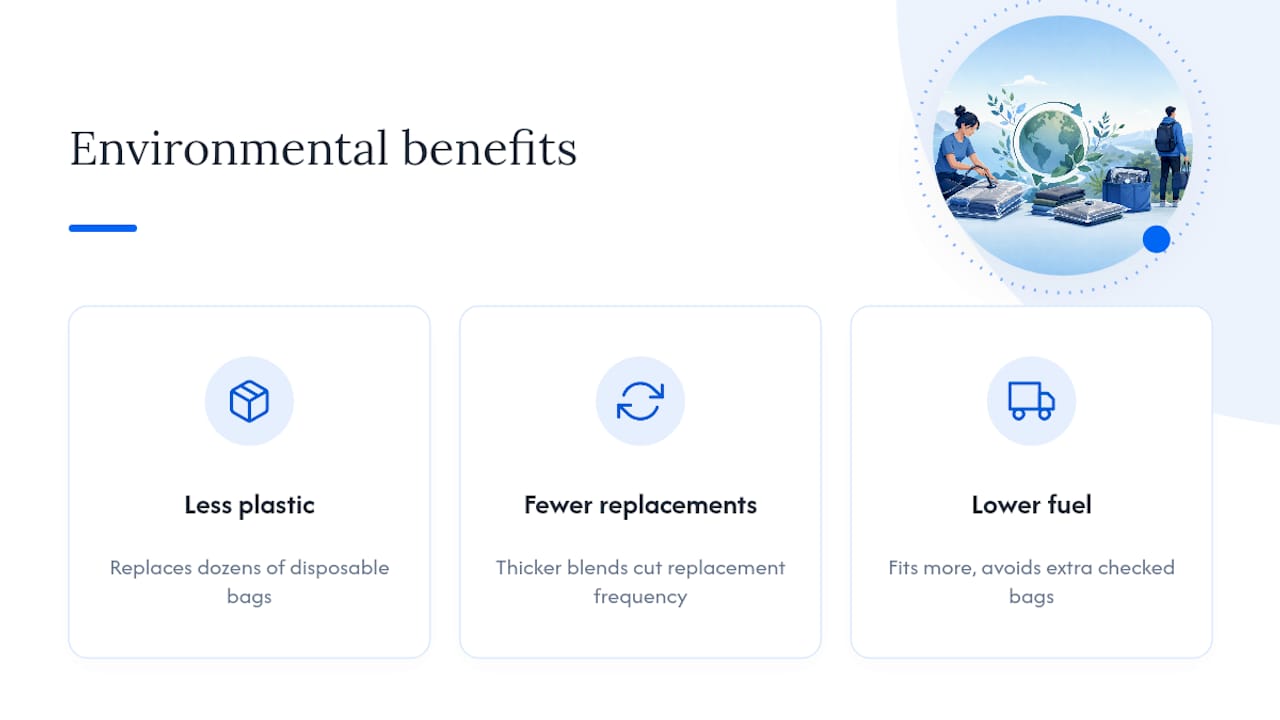
Every vacuum bag you reuse is one fewer single-use plastic bag, garment bag, or packing liner headed to a landfill. Airlines and hotels generate enormous volumes of disposable plastic through laundry bags, shoe covers, and packing liners, and a durable vacuum bag replaces dozens of those over its working life.
The math is straightforward even without a precise figure attached to it. A single travel-grade vacuum bag used across years of trips displaces the equivalent of a large stack of disposable compression sacks or grocery-style packing bags that would otherwise be used once and discarded. Thicker nylon and polyethylene blends, the same materials that extend a bag’s lifespan, also mean less frequent replacement, which cuts down on both plastic waste and the packaging that comes with buying a new set every year.
There’s a secondary environmental angle too: compression itself. Fitting more into a single carry-on instead of checking a second bag reduces the number of flights carrying extra luggage weight, which has a real, if indirect, impact on fuel use per traveler. It’s not a dramatic fix, but it’s a habit that compounds every time you travel. Choosing a bag built to survive years of reuse, rather than one designed to be replaced after a season, is one of the simplest sustainable swaps a frequent traveler can make without changing how they pack at all.
Do Vacuum Travel Bags Work With Any Vacuum Cleaner or Pump?
Most vacuum travel bags use a standard one-way valve designed to accept either a handheld vacuum nozzle or a household vacuum’s hose attachment, but fit varies more than people expect. Some budget bags include a narrow valve that only works with the specific pump bundled in the box, which becomes a problem the moment that pump breaks or gets left at home.
Bags with a universal valve opening tend to work with most canister and upright vacuum hoses, plus handheld models, without an adapter. This is where a built-in rechargeable pump has a real practical edge: it removes the compatibility question entirely, since the pump is attached to the bag itself and charges over USB-C rather than depending on finding a vacuum cleaner in a hotel room or an Airbnb.
Manual pumps and hand-operated bellows also work with most standard valve bags, though they take noticeably longer and more physical effort to reach full compression than an electric pump. If you’re traveling with a bag that requires an external vacuum, always test the valve fit before your trip. Nothing derails a packing session faster than discovering the nozzle doesn’t seal against the valve the night before a flight.
Is It Safe to Reuse Vacuum Bags for All Types of Clothing?
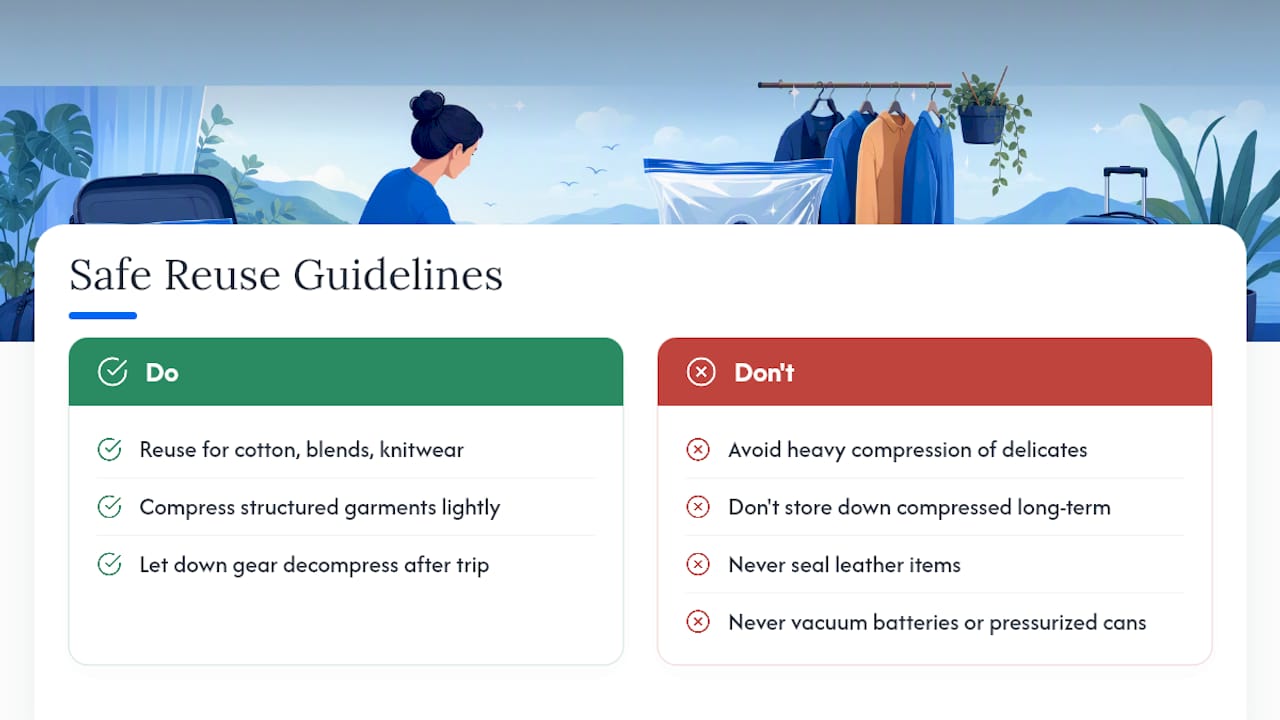
Reusing vacuum bags is safe for most everyday clothing, but certain items and fabrics need extra caution. Cotton, synthetic blends, and most knitwear compress and decompress without issue across dozens of cycles.
Delicate fabrics like silk, fine wool, and structured garments with padding or shoulder shaping can lose their shape under repeated heavy compression. If you’re packing a blazer or a dress with built-in structure, keep compression light or skip the vacuum bag for that item entirely and pack it flat on top instead.
Down jackets and sleeping bags are a special case. Vacuum compression works well for occasional trips, but frequent heavy compression can flatten the fill’s loft over time, reducing insulation. If you travel with down gear often, reserve full compression for the trip out and let it decompress fully during the return rather than storing it compressed for weeks.
Leather items, as mentioned earlier, don’t belong in a reused vacuum bag. Natural oils can transfer to the plastic lining, and moisture trapped against leather encourages mildew faster than it does on synthetic fabric. And never vacuum seal anything with a battery, aerosol, or pressurized container inside. It’s not just a durability issue. It’s a genuine safety risk if the item is punctured or compressed unevenly.
What Frequent Travelers Get Wrong About Vacuum Bag Reuse
The biggest misconception isn’t about whether these bags are reusable. It’s about what actually kills them. Most people assume compression itself wears out a vacuum bag, so they baby the pump and ignore everything else. In practice, the damage almost always comes from what’s packed inside and how carelessly the bag gets tossed into a suitcase, not from the compression cycle itself.
Conventional packing advice treats vacuum bags as disposable travel accessories, something you use once for a big trip and toss when you get home. That’s backwards. A bag built with decent nylon and a solid valve is a piece of gear, not a consumable, and treating it that way changes how you pack. You start leaving headroom instead of stuffing it to the seams. You start separating shoes and hardware into their own pouch instead of tossing everything in together. You start drying it properly instead of shoving it, still damp, into a drawer.
If there’s one thing worth prioritizing above the rest, it’s material quality at the point of purchase. A thicker bag with a reinforced zipper costs a little more upfront but saves you from replacing a flimsy one every year.
— Hugh
Ready for a Vacuum Bag Built to Survive More Than One Trip?
If the biggest threat to a vacuum bag’s lifespan is thin material and a valve that doesn’t fit your pump, the fix is choosing gear built around that problem from the start. Stoiq’s vacuum compression bags come with a built-in, USB-C rechargeable pump, so you’re never stuck hunting for an outlet or a compatible vacuum hose in a hotel room, and the reinforced construction is designed to hold up across repeated trips rather than one big vacation.
The Stoiq Carry-On Solution comes in sizes suited to both carry-on-only travel and larger checked bags, so you can match the bag to the trip instead of forcing one size to do everything. Pair it with the Stoiq Compression Backpack if you want the compression system built directly into your daypack, or add the Toiletry Bag - Matt Black to keep the rest of your kit as organized as your clothes. Every order also has the option to add Shipping Protection for extra peace of mind on delivery. Browse the full lineup and pick the size that matches how you actually travel.
Sources
For deeper material and testing detail, see the vacuum bag reuse guide on cleaning and lifespan, the BlazeHold hands-on review on nylon durability, and this carry-on packing feature for pairing compression with a lighter packing list. For compression fabric context, see this partner piece on compression basics.
- Can Vacuum Storage Bags Be Reused? A Comprehensive Guide
- BlazeHold Travel Vacuum Storage Bags With Rechargeable Cordless Pump Review
- Ekster Travel Pack Vacuum Kit review
FAQ
How many times can you reuse vacuum seal bags?
There’s no fixed number, but bags made with thicker nylon or polyethylene blends and reinforced zippers have been reported to hold up across dozens of trips when cleaned and dried properly between uses, according to hands-on testing of rechargeable pump kits. Thin, single-zipper bags tend to fail much sooner, often within a handful of uses.
Can you reuse vacuum sealed travel bags?
Yes, most travel-grade vacuum bags are designed for repeated use, not one-time compression. Check the seams, zipper, and valve before each trip, and retire the bag only if you find a seam split, a broken valve, or an unresolved leak.
Does TSA approve vacuum bags?
Vacuum compression bags themselves aren’t a restricted item, but everything packed inside still follows standard TSA liquid and carry-on rules. Compressing your clothes doesn’t change what’s allowed through security, so pack liquids and gels separately as usual.
Is it worth using vacuum bags for travel?
For most frequent travelers, yes. Vacuum compression lets you fit noticeably more clothing into a carry-on, and reviewers note kits can compress clothing volume by up to roughly 60%, though that saves space rather than weight, so heavy items still count toward airline limits. A bag with a built-in pump makes that compression easier to do on the road without extra gear.
