



Three Zone Road Trip Packing List for Fast Access and Safety
Every road trip packing list boils down to seven categories: documents, an emergency kit, chargers and navigation gear, water and snacks, basic toiletries, clothing layers, and a small organization system to hold it together. The trick isn’t buying more gear. It’s sorting what you own into three zones: cabin (within arm’s reach), trunk (bulk items), and emergency (packed once, checked twice a year). Below, you’ll find the printable checklist logic behind each zone.
TL;DR:
- Keep essential documents, vehicle papers, and emergency contacts in a separate sealed pouch in the glovebox for quick access and security.
- Pack a well-selected emergency kit with a jump starter, first-aid supplies, and a spare tire, stored in a labeled bin in the trunk for easy retrieval.
- Use the zone-and-bin system to organize items into cabin, trunk, and emergency zones, preventing unnecessary digging and ensuring quick access.
- Compress bulky items like bedding with rechargeable vacuum bags to maximize trunk space, but only for gear not needed during the trip.
- Adopt a one-bag-per-person rule for overnight stops to streamline packing, saving time and reducing stress during hotel check-in or rest breaks.
Table of Contents
- Road Trip Packing List Essentials: Documents and Vehicle Papers
- Car Safety and Emergency Gear You Actually Need
- Clothing and Layers for the Trunk Zone
- Toiletries, Health Items, and Motion Sickness Fixes
- Food, Hydration, and Cooler Strategy
- Comfort Items and Bedding for Long Drives
- Tech, Navigation, and Charging Setup
- The Zone-and-Bin System: Cabin, Trunk, Emergency
- Space-Saving Packing Techniques That Don’t Sacrifice Access
- Before You Go: Quick Car Checks That Prevent Breakdowns
- Why Compression Bags Solve the Trunk Space Problem
- Packing habits that actually change the trip
- Pack Smarter With Stoiq’s Built-In Pump System
- Sources
Road Trip Packing List Essentials: Documents and Vehicle Papers
Your glovebox is prime cabin-zone real estate, and it should hold exactly one thing: a clear zipper pouch with every document you’d need if a cop, a rental clerk, or a tow truck driver asked for it on the spot.
Here’s what belongs in that pouch:
- Driver’s license and vehicle registration
- Proof of insurance (current, not last year’s expired card)
- Roadside assistance number and policy ID
- Rental agreement, if you’re driving a rental
- Printed hotel or campsite confirmations
- Emergency contact list, written on paper (phones die)
Keep a photocopy of your license and insurance card tucked in a separate bag, not the glovebox. If your car gets broken into or the pouch goes missing at a gas station, you’re not stuck rebuilding your identity from memory.
Crossing an international border adds a layer that most road trip packing lists skip: passports, and depending on the country, additional vehicle paperwork. The U.S. Department of State’s driving and road safety guidance is the right place to check requirements before you leave, since rules vary by destination and change without much warning. If your route touches a national park, toss the annual pass or day-use permit into the same pouch. You’ll thank yourself at the entrance gate when three cars are backed up behind you.
Car Safety and Emergency Gear You Actually Need
This is the zone you pack once and hope you never open. That’s exactly why it needs to be built right the first time.
A road trip emergency kit that covers the situations most likely to strand you includes:
- Jumper cables or, better, a portable lithium jump starter
- A first-aid kit with sufficient pieces for real wound care, not a tin of six bandages
- A tire repair and inflator kit, or a full spare with the tools to mount it
- A flashlight or headlamp with fresh batteries
- A reflective triangle or road flares
Pro Tip: A portable lithium jump starter beats jumper cables for one big reason: you don’t need a second car. Cables require a good Samaritan willing to pop their hood in a parking lot. A jump starter works solo, and most double as a tire inflator and SOS flashlight in one unit.
That combination approach matches what Car and Driver’s road trip essentials checklist recommends: jumper cables or a jump starter, a comprehensive first-aid kit, and a tire repair or inflation tool as the three pillars of any real emergency kit.
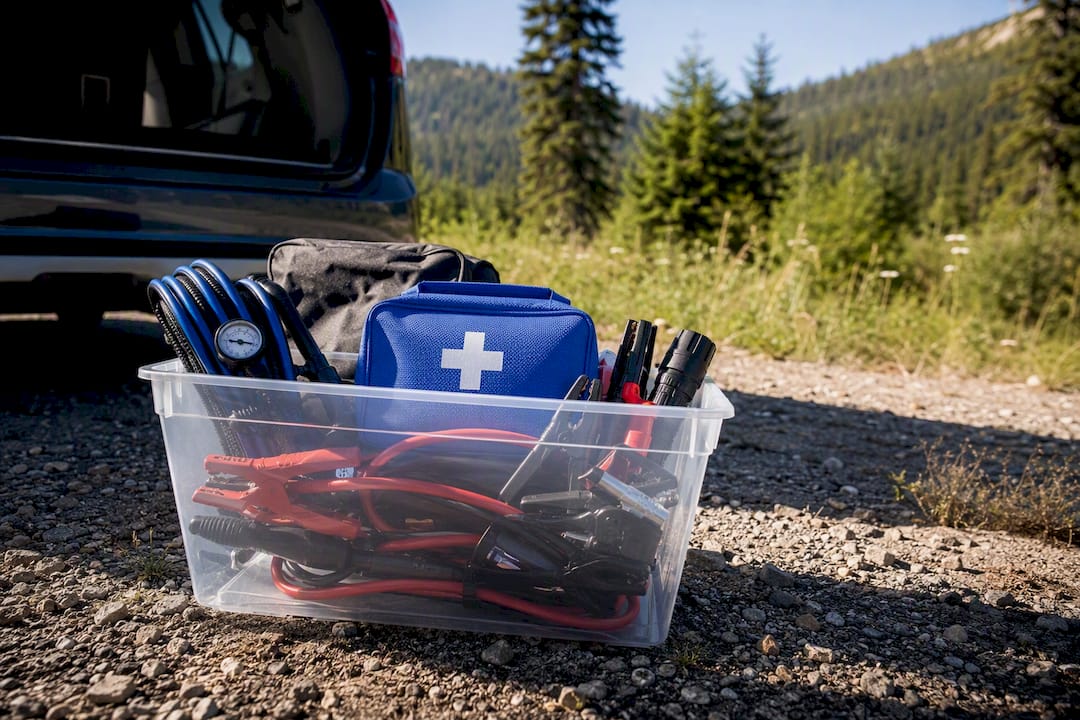
On the sealant-versus-spare question: a can of tire sealant with an inflator is lighter and faster for a small puncture, but it won’t save a sidewall blowout or a shredded tread. If your trip includes long rural stretches or unpaved roads, a proper spare and the tools to change it beat convenience every time.
Pack all of it into one labeled, sealed bin in the trunk. Check the batteries and expiration dates on the first-aid supplies twice a year, ideally when you change your clocks for daylight saving.
Clothing and Layers for the Trunk Zone
Pack for the temperature range you’ll actually hit, not the biggest suitcase you own. A trip that starts in cool mountain mornings and ends in a hot valley afternoon needs layers, not volume.
The system that works for multi-day trips:
- One bag per person for overnight stops, so nobody digs through a shared trunk pile at 10 p.m.
- A base layer, a mid layer (fleece or light sweater), and a packable outer shell to cover most climate swings
- Packing cubes or compression sacks for bulky items like sweatshirts and jackets
- A dedicated laundry bag to keep worn clothes separate from clean ones
- One easy-access spare outfit in the cabin zone, in case of a spill, a diaper blowout, or a surprise rainstorm
Footwear matters more than people plan for. Bring one pair built for walking and one for anything wet or muddy, and skip the third “just in case” pair. It just eats trunk space you’ll want later for groceries or souvenirs.
Toiletries, Health Items, and Motion Sickness Fixes
Multi-day travel means multi-day hygiene, and cramming everyone’s stuff into one shared bag is how things go missing at hotel checkout.
Pack these per person, in a small travel toiletry bag each:
- Toothbrush, toothpaste, deodorant, and basic skincare
- Prescription medications, with a printed copy of the prescription in case you need a refill on the road
- Motion-sickness remedies (bands, tablets, or ginger chews, depending on what works for your family)
- Hand sanitizer and a pack of wet wipes
- Small tissue packs for the cabin door pocket
Individual bags mean a fast turnaround at a hotel stop. Nobody’s rummaging through one giant shared kit looking for the toothpaste while everyone else waits in the hallway.
Food, Hydration, and Cooler Strategy
The right food setup on a road trip isn’t about eating well. It’s about not stopping every 45 minutes because someone’s hungry, sticky, or thirsty.
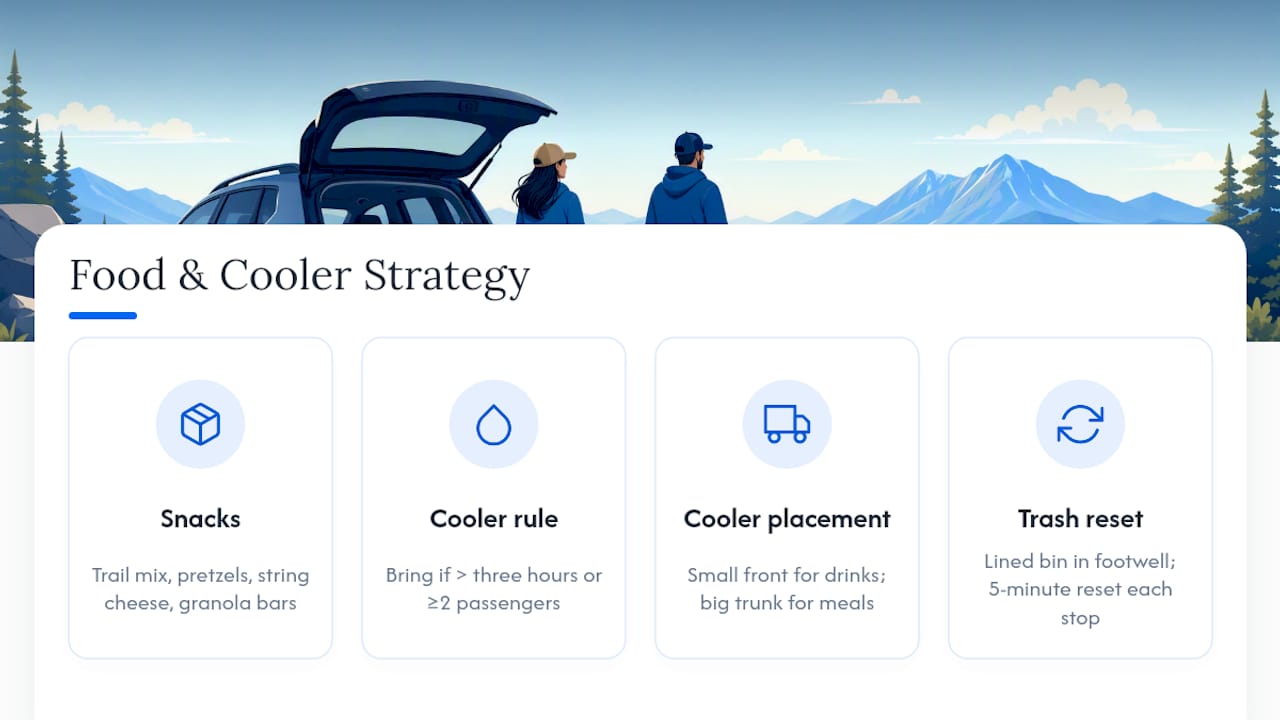
Stock non-messy snacks that survive heat and bumps: trail mix, pretzels, string cheese, granola bars, and pre-cut fruit in sealed containers. Skip anything that melts, crumbles into the seats, or needs a fork.
On the cooler question, the decision rule is simple: bring one for trips longer than about three hours or with two or more passengers; for a quick solo hop, gas-station stops usually cover it. Pack a small front-seat cooler for drinks and snacks you’ll reach for constantly, and save the big cooler in the trunk for meal-prep items and backup ice.
Pro Tip: Line a small bin or bag with a trash liner and stash it in a footwell from day one. Do a five-minute reset every time you stop for gas: empty wrappers, wipe cup rings, restack the snack bag. It keeps a three-day trip from turning into a rolling landfill by hour twelve.
Comfort Items and Bedding for Long Drives
Bedding and comfort gear are the bulkiest things you’ll pack, and also the easiest to compress when you’re not using them.
Bring these for real comfort on long legs:
- A travel pillow for whoever’s not driving
- A compressible blanket or two, useful for naps and cold rest stops
- A window shade for kids or anyone sleeping against the glass
- A small towel for spills, beach stops, or sweaty foreheads
Keep one blanket and one pillow loose in the cabin zone for immediate use. Everything else, especially extra bedding for overnight stays, can go compressed in the trunk until you actually need it at a campsite or cabin.
Tech, Navigation, and Charging Setup
Dead phones and no signal are a bad combination three hours from the nearest town, so this zone deserves real thought before you pull out of the driveway.
Build your in-cabin tech kit around:
- A sturdy phone mount that doesn’t drift with every bump
- A multiport car charger so nobody’s fighting over the one outlet
- Extra charging cables (pack two more than you think you need)
- A portable power bank for when you’re out of the car and away from an outlet
Download offline maps before you leave cell coverage behind. REI’s road trip checklist recommends offline maps and a portable power bank as core essentials, especially for routes through mountains or desert stretches where signal disappears for miles. If your trip runs through truly remote territory, a portable hotspot is worth the rental fee. Keep loose cables and SD cards in one labeled pouch instead of loose in a cupholder, where they vanish fast.
The Zone-and-Bin System: Cabin, Trunk, Emergency
Every item in your car fits into one of three zones, and sorting them correctly is what separates a smooth trip from a trunk-diving nightmare at every stop.
- Cabin zone: anything you’ll use more than once between fuel stops. Phone charger, snacks, sunglasses, wipes, the day’s clothing layer. Test: if you’d need it twice before your next gas stop, it belongs here.
- Trunk zone: bulk items you access once or twice a day. Overnight bags, the big cooler, extra bedding, spare shoes.
- Emergency zone: the sealed bin you never touch unless something goes wrong. Jump starter, first-aid kit, tire tools, flares.
This three-zone approach is exactly what Pack Lightly’s road trip packing guide recommends, and the reasoning holds up: mixing emergency gear with daily-use items means you’re digging through jumper cables to find a granola bar, or worse, digging through luggage for a flashlight during an actual roadside emergency.
Organizers that make the system stick: clear bins for visibility, a trunk divider to keep the emergency zone physically separate, a seatback organizer for kids’ items, and labeled pouches for anything smaller than a shoebox.
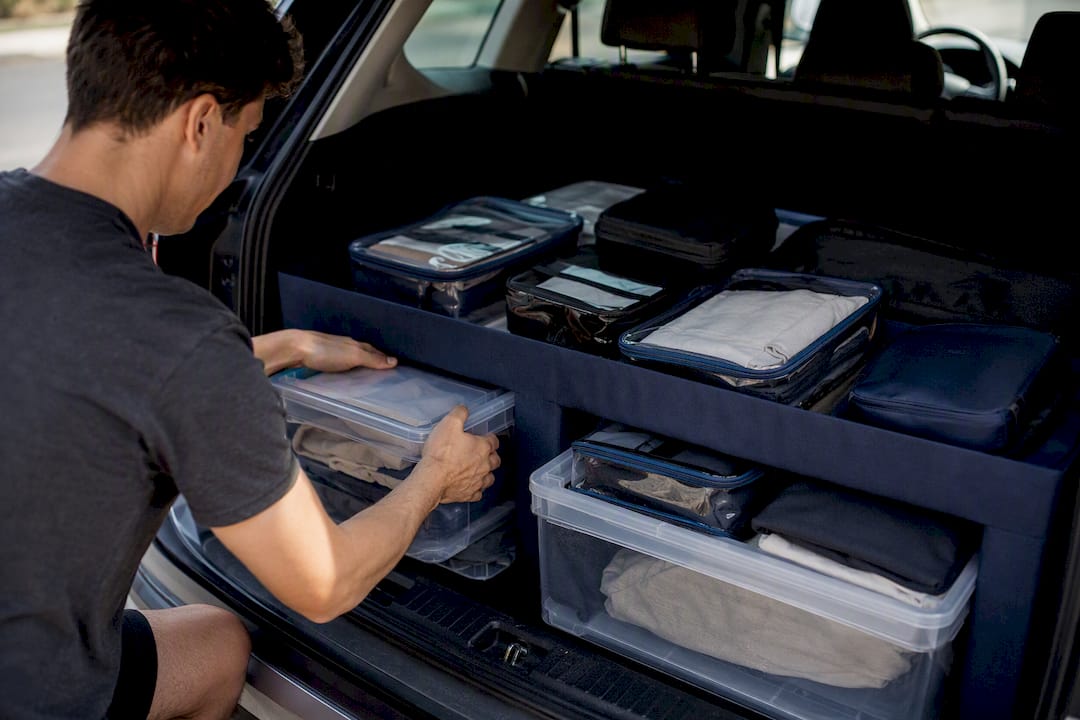
Pro Tip: Load the trunk in reverse order of need. Emergency bin goes in first, dead last to touch. Overnight bags go on top, first to touch. When you’re tired and pulling into a motel at 9 p.m., you want your bag on top, not buried under three days of gear.
Space-Saving Packing Techniques That Don’t Sacrifice Access
The biggest packing mistake on a road trip isn’t overpacking. It’s packing everything the same way, so a five-second grab turns into a full trunk excavation.
Match the tool to the job:
- Use packing cubes for items you’ll need mid-trip, since they organize without sealing things away
- Use vacuum or compression bags for bulky items you won’t touch until you arrive, like extra bedding or off-season layers
- Group gear by role: one bag for overnight stays, one day bag for snacks and entertainment, one activity bag just for the kids
- Label every bag and bin. “Kids” and “Overnight” save more arguments than any packing hack
Before you load the car, do one pass and pull out anything you added “just in case.” A road trip car has real space limits, and every extra item you bring is trunk room you can’t use for the stuff you actually reach for daily.
Before You Go: Quick Car Checks That Prevent Breakdowns
Five minutes in the driveway can save you five hours on the shoulder of a highway.
- Check tire pressure against the PSI listed on your driver’s door sticker, not the tire’s sidewall number.
- Check oil level, coolant, and washer fluid; top off anything low.
- Test your wipers and all exterior lights, including turn signals and brake lights.
- Check your battery for corrosion on the terminals and confirm it’s holding a charge.
- Confirm your spare tire is inflated and the jack and lug wrench are actually in the car, not left in the garage from last winter.
If your battery is more than four years old or your tires are near the tread-wear bars, get a mechanic to look before you commit to a long trip rather than after you’re stranded. Driving a rental car? Photograph every panel and the interior before you pull out of the lot. It’s a two-minute habit that saves an argument over a scratch you didn’t cause.
Why Compression Bags Solve the Trunk Space Problem
Trunk space is finite, and bulky items like bedding and off-season clothing eat it fastest. Vacuum compression bags address that directly by squeezing the air out of soft goods, shrinking their footprint without changing what’s inside them.
Compression makes the most sense in specific situations:
- Multi-night trips with extra bedding or pillows for a cabin or campsite
- Family trips where every extra passenger means another bag competing for the same trunk footprint
- Camping trips where sleeping bags and layers take up disproportionate space relative to their weight
The tradeoff is access. Compressed items take a minute or two to reopen, so they’re best for gear you won’t need mid-drive: the extra blanket for night three, not the sweater you’ll want at the next rest stop. Plan your compression around what you’ll actually reach for during the drive itself, not just what saves the most space on paper.
Stoiqstorage built its vacuum compression bags around exactly this problem, using a built-in rechargeable pump so you’re not hunting for a separate vacuum or an outlet at a rest stop. For families packing bedding, jackets, and towels for a multi-night trip, that’s the difference between a trunk that closes easily and one you’re sitting on to latch. Compare the tradeoffs of compression bags versus packing cubes before deciding how to split your gear between the two systems.
Packing habits that actually change the trip
The single biggest shift in how a road trip feels comes down to habits, not gear. The zone system works because it forces a decision at the moment you pack, not at 65 miles per hour when you’re rummaging through the back seat for sunscreen.
The one-bag-per-person rule for overnight stops is the habit worth adopting first. It sounds almost too simple, but it eliminates the single most common friction point on multi-day trips: five people, one shared duffel, and a hotel room full of clothes at 11 p.m. Give everyone their own bag, even a small one, and overnight stops take minutes instead of turning into a group project.
Buying more organizers won’t fix a trip packed with a flight mindset, worried about weight limits instead of reachability. A road trip has different math. Space and access matter more than ounces.
— Hugh
Pack Smarter With Stoiq’s Built-In Pump System
Bulky bedding and off-season layers are the items that force families to leave the cooler at home or strap a duffel to the roof. Stoiqstorage’s vacuum compression bags solve that specific problem: a built-in USB-C rechargeable pump shrinks soft goods on the spot, no separate vacuum, no hunting for an outlet at a rest stop.
Families managing multi-night trips or camping gear get the most out of the 20L compression bag, while anyone who wants bedding and clothing compression built into one carry solution should look at the compression backpack. The honest tradeoff still applies here too: compressed items take a minute to reopen, so save this for gear you won’t need mid-drive. Over 20,000 travelers have used Stoiqstorage’s system, and you can read what they said about packing bulkier trips in less trunk space on the Stoiqstorage reviews page. If your next trip involves more than an overnight bag per person, start there and see what fits.
Sources
- Car and Driver — Road trip essentials checklist
- HGTV — 39 road trip packing list essentials
- REI Expert Advice — Road trip checklist
- Pack Lightly — Road trip packing list
- U.S. Department of State — Driving and road safety
