


Skip the 3.4 oz Rule: Solid Toiletries vs Liquids for Carry On Travel
For most carry-on trips, solid toiletries beat liquids, and yes, solids that hold their shape are exempt from the TSA 3-1-1 liquids rule. A shampoo bar, deodorant stick, or toothpaste tablet doesn’t count as a liquid at security. The exceptions: contact lens solution, prescription liquids, and full-body sunscreen still need a bottle, and if you’re only gone a night or two, decanting a small liquid might just be less hassle.
TL;DR:
- Switching to solid toiletries can free up nearly half of your liquids bag space and eliminate leak risks during travel.
- TSA classifies solid toiletries that hold their shape, like shampoo bars and deodorant sticks, as non-liquids, avoiding the 3.4-ounce limit.
- Testing new solid products at home for at least one to two weeks can prevent unpleasant surprises during a trip.
- Proper storage of bars by air-drying and using separate compartments extends their lifespan and prevents crumbling.
- For trips longer than three days, a mixed approach or solid-first packing is recommended, except for prescription liquids and full-body sunscreen.
Table of Contents
- Solid Toiletries vs Liquid Toiletries: Pros and Cons at a Glance
- Does Solid Shampoo Count as a Liquid at TSA?
- Which Solid Toiletries Should You Swap First?
- How Do You Choose and Test Solid Toiletries Before a Trip?
- How Do You Store Solid Toiletries So They Actually Last?
- When Should You Decant Liquids Instead of Switching to Solids?
- A Copyable Solid-First Packing Checklist
- How Do Solid and Liquid Toiletries Compare on Sustainability?
- Are Solid Toiletries Actually Cheaper Than Liquids Over Time?
- Author Perspective: Converting to Solids for a Two-Week Carry-On Trip
- How Stoiq Gear Rounds Out a Solid-First Kit
- Official Rules and Practical Explainers to Check Before You Pack
- Sources
- FAQ
Solid Toiletries vs Liquid Toiletries: Pros and Cons at a Glance
Switching your kit to solids changes three things immediately: how much room you have left in your bag, how much you worry about leaks, and how fast you’ll need to restock. Here’s the honest breakdown.
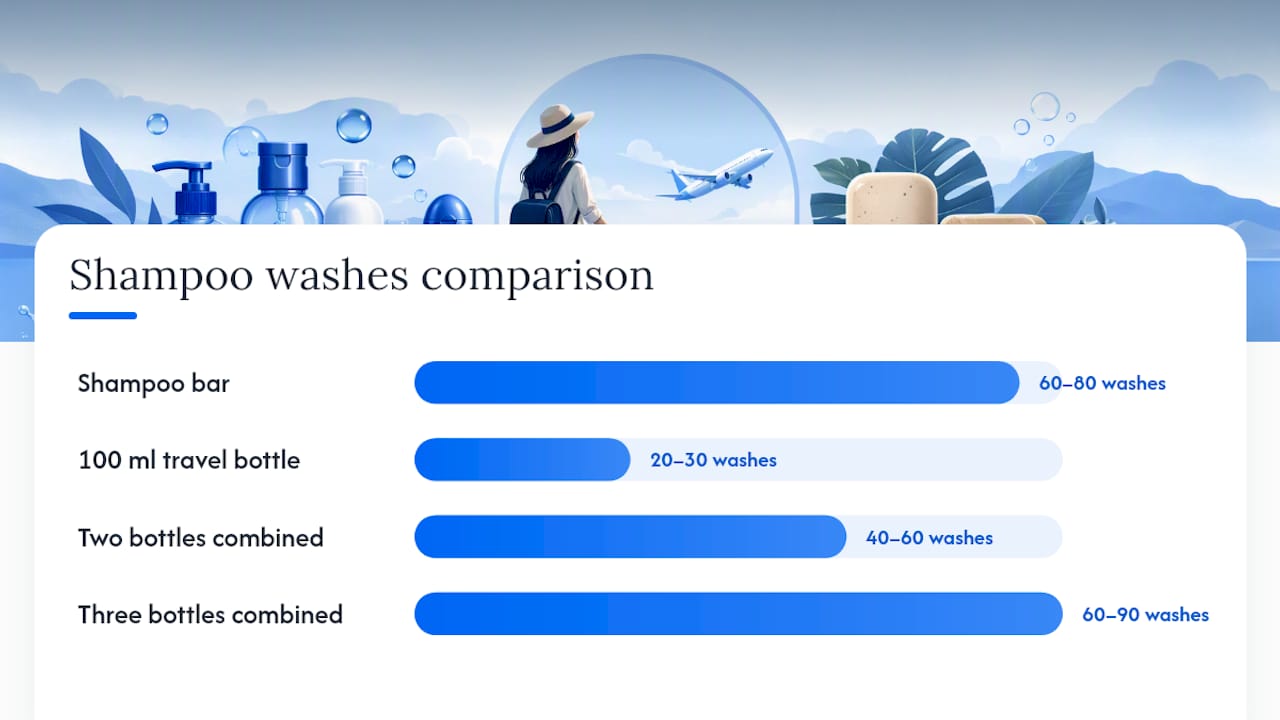
A shampoo bar typically delivers 60 to 80 washes, compared to roughly 20 to 30 washes from a standard 100 ml travel bottle. That’s the core math behind why one bar so often replaces two or three bottles in your carry-on.
Pro Tip: If you’re only converting one item to test the waters, make it shampoo. It’s the bulkiest liquid in most kits and the one with the clearest wash-count payoff.
What you gain:
- More usable space: swapping shampoo, soap, and deodorant to solids can free up roughly half of a typical 1-liter liquids bag.
- Zero leak risk: no cracked caps soaking your shirts mid-flight.
- No TSA quart-bag math: solids skip the 3.4 oz container limit entirely.
- Longer shelf life per ounce of luggage space, since bars don’t evaporate or spill.
What you risk:
- A transition period: some bars leave hair feeling waxy for the first week, especially in hard water.
- Fewer resupply options: not every corner store abroad carries shampoo bars or toothpaste tablets.
- Performance variance: cheap soap-based bars can strip hair, while pH-balanced formulas work closer to a liquid shampoo.
Does Solid Shampoo Count as a Liquid at TSA?
No. TSA’s 3-1-1 rule governs liquids, aerosols, gels, creams, and pastes: each container capped at 3.4 ounces (100 ml), all fitting into a single quart-size bag, one bag per passenger. Solid toiletries that hold their form, meaning shampoo bars, bar soap, deodorant sticks, and toothpaste tablets, fall outside that definition entirely.
TSA’s operational test is simple: if it pours, pumps, or spreads, it’s a liquid. If it holds its shape on its own, it’s not. That’s why a firm bar sails through screening while a soft balm or a melted deodorant stick can draw a second look.
A few edge cases worth knowing before you fly:
- A shampoo bar that’s gone soft and mushy from humidity may get flagged at an officer’s discretion.
- Balms and butters that liquefy in heat sometimes get treated as gels, even if they were solid at home.
- Duty-free liquids bought after security typically get an exception, sealed in their original tamper-evident bag.
- Keep original packaging or labeling handy for anything borderline, and always double-check rules for medical liquids like insulin or saline before you travel.
Which Solid Toiletries Should You Swap First?
Not every liquid needs a solid replacement to see a real difference in your bag. These five give you the most carry-on space for the least effort.
- Shampoo bar. This is the highest-impact swap, often replacing two to three bottles. Choose a syndet (synthetic detergent) or pH-balanced bar rather than an old-style soap bar, which can leave hair dull or straw-like.
- Bar soap. Reliable, mess-free, and there’s no learning curve. It’s the easiest solid to adopt on day one.
- Solid deodorant stick. An instant swap with no transition period. Most solid deodorants perform identically to their roll-on or spray counterparts.
- Toothpaste tablets. Compact and TSA-friendly, though the chalky texture takes some getting used to compared to paste.
- Sunscreen stick. Great for face and touchups, but a full beach day usually still calls for a liquid or lotion sunscreen in enough volume to cover your whole body.
How Do You Choose and Test Solid Toiletries Before a Trip?
Picking the wrong bar is the single biggest reason people give up on solids after one bad trip. The fix starts before you ever pack.
Look for shampoo bars labeled syndet or pH-balanced, ideally sitting in the 4 to 5.5 range, close to your scalp’s natural pH. Older, soap-based bars run much more alkaline, which is what causes that waxy, filmy feeling on hair, especially in hard water.
Test any new bar at home for at least one week, ideally two, before you travel. That window covers the normal adjustment period your hair and scalp go through when switching formulas, and it gives you time to catch a bad match before you’re stuck with it on the road.
- Wash with the bar daily and track how your hair feels day by day.
- If residue builds up, try a clarifying rinse (diluted apple cider vinegar works for many people) before writing off the bar entirely.
- Patch-test any face bar or sensitive-skin product for 24 to 48 hours on your inner arm before using it on your face.
- Pack a small backup liquid, a 30 ml decanted bottle of your usual shampoo, for your first trip if you’re still unsure about a new bar.
Pro Tip: Keep a travel journal note (even a one-line memo on your phone) logging how each bar performed. It saves you from repeating the same trial-and-error before every trip.
How Do You Store Solid Toiletries So They Actually Last?
A bar that never gets to dry out is a bar that dissolves fast, and that’s the single most common complaint from first-time converts.
- Let bars air-dry on a drainage tin, mesh soap bag, or ventilated tray before you pack them, not after you zip the bag shut.
- Never seal a wet bar into an airtight pouch. Trapped moisture speeds up dissolution and can turn a $12 bar into mush within days.
- Carry deodorant sticks and sunscreen sticks upright and away from heat sources like a laptop compartment or a car dashboard, since both soften above room temperature.
- Store toothpaste tablets in a small rigid tin rather than loose in a pocket, where they crumble.
- A dedicated toiletry compartment, ideally one with separate wet and dry sections like the Stoiq 3-compartment toiletry bag, keeps bars from crushing against your phone charger or crumbling into your other gear.
When Should You Decant Liquids Instead of Switching to Solids?
Trip length changes the math more than any other factor.
- 1 to 3 nights: Decanted liquids are usually the simplest choice. The transition risk of a new solid isn’t worth it for a weekend.
- 3 to 7 days: A mixed approach works well: keep your usual liquid for one or two products while trialing a bar for another, like deodorant or soap.
- A week or longer, or carry-on-only multi-country travel: Go solid-first. The space and reliability advantages compound with every extra day and every extra security line.
Exceptions apply regardless of trip length: contact lens solution, prescription liquids, and full-body sunscreen for beach-heavy itineraries usually stay liquid no matter how long you’re gone.
A Copyable Solid-First Packing Checklist
Save this list in your notes app before your next trip.
- Shampoo bar (syndet or pH-balanced)
- Bar soap or body bar
- Solid deodorant stick
- Toothpaste tablets
- Small rigid travel tin for bars
- Ventilated mesh bag for drying and transport
- Backup 30 ml liquid shampoo or conditioner (if still testing a new bar)
- Prescription and medical liquids packed separately in your carry-on for quick access at security
How Do Solid and Liquid Toiletries Compare on Sustainability?
Solid toiletries generally produce less plastic waste per use than their liquid counterparts. Most bars skip the plastic bottle entirely, using paper wrap or a cardboard box instead, and a bar delivering 60 to 80 washes means far fewer containers thrown away over a year of travel compared to a rotation of 100 ml travel bottles.
Liquid toiletries also carry a heavier shipping footprint. Water is often the primary ingredient in shampoo, conditioner, and body wash, adding weight that solids skip since concentrated bars carry little to no added water. That translates into lower fuel costs per unit shipped, though the gap depends heavily on formulation and packaging choices from brand to brand.
The honest caveat: not every solid bar is automatically greener. Some use palm oil sourced from unsustainable plantations, and a poorly made bar that dissolves fast because it wasn’t stored properly ends up creating just as much waste, just faster, as a half-used liquid bottle left behind at a hotel. The sustainability advantage of solids is real, but it depends on picking bars with responsibly sourced ingredients and taking care of them so they actually deliver their full wash count.
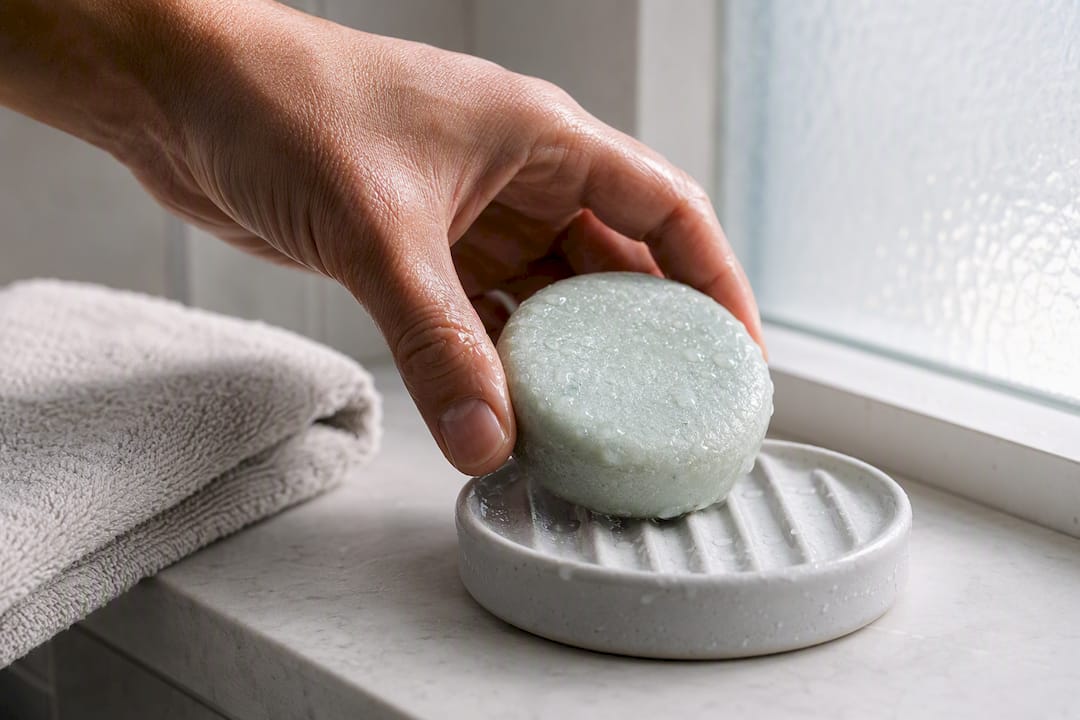
For travelers weighing solid vs liquid shampoo purely on environmental grounds, the bar wins on packaging and shipping weight, but ingredient sourcing still matters more than the format itself.
Are Solid Toiletries Actually Cheaper Than Liquids Over Time?
Per-use cost tends to favor solids once you look past the sticker price. A shampoo bar often costs more upfront than a single travel-size bottle, sometimes double, but its 60 to 80 wash count against a 100 ml bottle’s 20 to 30 washes means the cost per wash usually lands lower for the bar.
Frequent travelers see the bigger savings elsewhere: fewer purchases of duplicate travel-size bottles for every trip, less product left behind at security when a bottle exceeds the 3.4 oz limit, and less product wasted to evaporation or spillage in transit. Liquid toiletries in small travel bottles also tend to run out faster relative to their price, since travel sizes carry a premium per ounce compared to full-size bottles.
The tradeoff shows up in resupply. If you run out of a specialty solid bar mid-trip in a country where it isn’t sold, you may end up paying more for a substitute or falling back on a liquid anyway. Budget travelers who stick to common formats, bar soap and basic deodorant sticks, rarely hit this problem. Travelers using niche syndet shampoo bars or specific skincare formulations should factor resupply risk into their cost comparison, not just the price per bar.
Author Perspective: Converting to Solids for a Two-Week Carry-On Trip
Testing a shampoo bar for two weeks before a trip is what separates a smooth switch from a bathroom-sink disaster mid-vacation. Skipping that step is the single most avoidable mistake in this whole conversion. Better organization, keeping bars dry and separated from everything else, matters just as much as picking the right formula. For anyone still unsure, test at home first and keep a small backup liquid for trip one.
— Hugh
How Stoiq Gear Rounds Out a Solid-First Kit
Switching to solids solves the liquids problem, but it doesn’t solve where those bars actually live in your bag once they’re wet from the shower. A three-compartment layout, like the Stoiq toiletry bag, keeps a damp shampoo bar away from your dry clothes and your electronics in one dedicated section, so nothing crumbles or contaminates the rest of your kit.
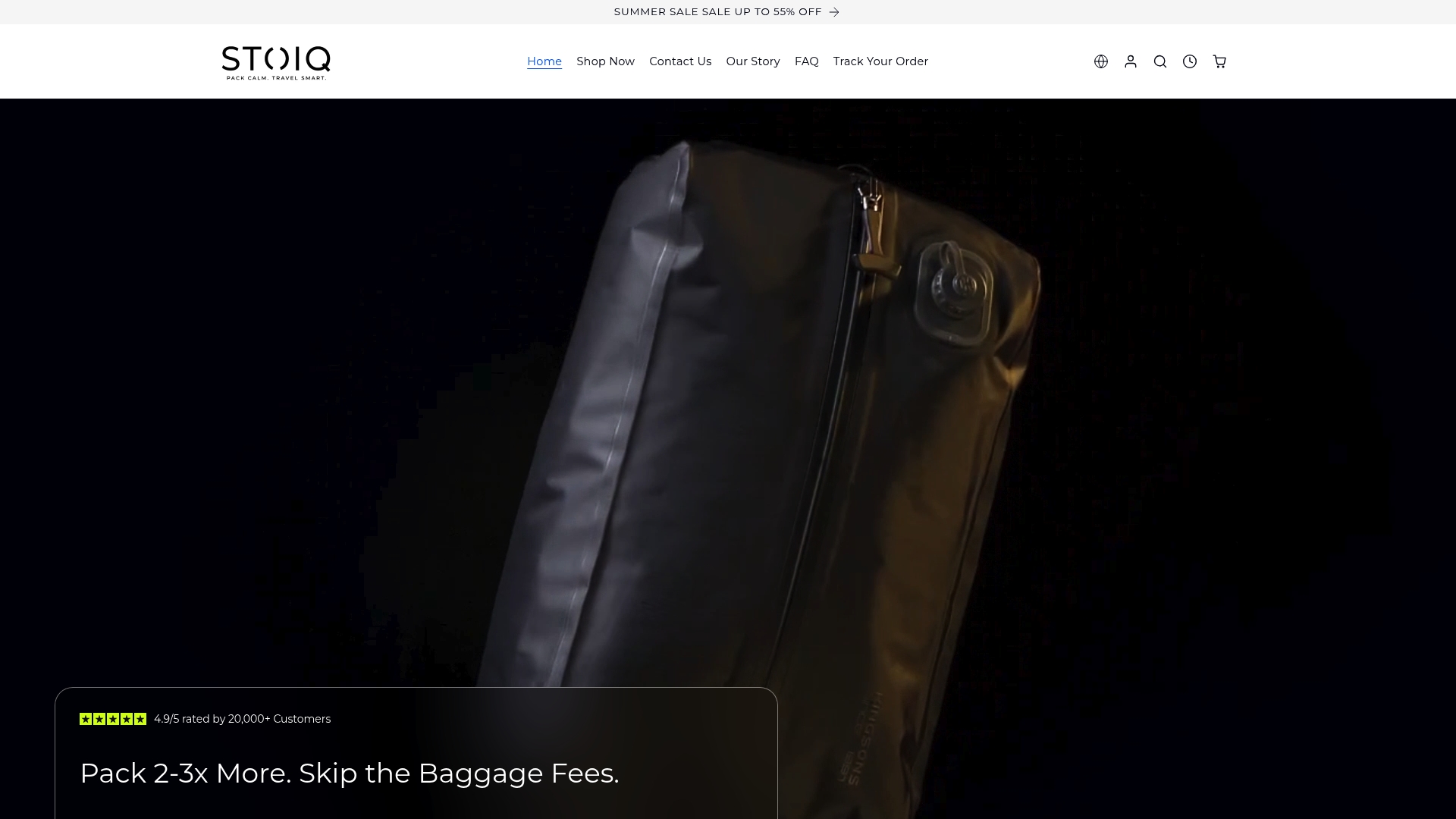
Once your liquids bag shrinks, the space you freed up is only useful if the rest of your carry-on can actually hold more. That’s where a vacuum compression bag with a built-in rechargeable pump earns its place, letting you compress clothes down and pack two to three times more into the same 20-liter carry-on without checking a bag. Pair a solid-first toiletry kit with compressed packing and a two-week trip fits into the same bag you’d normally use for a long weekend. Check out the Stoiq Carry-On Solution to see how much room you actually have left to work with.
Official Rules and Practical Explainers to Check Before You Pack
- TSA’s official liquids, aerosols, and gels rule
- Pack Hacker’s guide to the best solid toiletries for travel
- Always confirm current rules at your departure and connecting airports right before you travel, since enforcement details can shift.
Sources
- Liquids, Aerosols, and Gels Rule | Transportation Security Administration
- Solid Toiletries vs Liquids: Do Shampoo Bars Actually Work - 2026 Pack Lightly
- The Best Solid Toiletries For Travel - Pack Hacker
FAQ
What Are Solid Toiletries?
Solid toiletries are personal care products formulated to hold their shape without a liquid base, including shampoo bars, bar soap, solid deodorant, toothpaste tablets, and sunscreen sticks.
What Toiletries Count as Liquids Under TSA Rules?
Anything that pours, pumps, sprays, or spreads counts as a liquid under TSA’s 3-1-1 rule, including shampoo, lotion, toothpaste, and gel deodorant, each limited to 3.4 ounces (100 ml) per container.
Does Solid Shampoo Count as a Liquid?
No. A shampoo bar holds its form, so TSA does not classify it as a liquid, meaning it’s exempt from the 3-1-1 bag limit entirely.
What Are the Best Solid Toiletries for Travel?
Shampoo bars, bar soap, and solid deodorant sticks are the most reliable starting points, since they replace the bulkiest liquids with the least performance risk, according to Pack Hacker’s travel testing.
Are Ziploc Bags TSA Approved for the 3-1-1 Rule?
Yes, a standard quart-size Ziploc-style zip-top bag meets TSA’s requirement, though a dedicated clear toiletry bag with a sturdy zipper can hold up better across multiple trips than a disposable zip-top bag.
