



Fit More Without a Bigger Bag: 5 Step Suitcase Organization System
Use a packing cube system with a heavy bottom, rolled middle, and folded top load order. This gets you more room, less digging, and liquids you can reach in seconds at security. Pair standard cubes for daily organization with compression cubes or vacuum bags for bulky layers, and you cut both clutter and overpacking without buying a bigger suitcase.
TL;DR:
- Use compression tools like compression cubes or vacuum bags for bulky layers to save space, especially in small or irregularly shaped suitcases.
- Pack items in a specific load order with heavy items at the bottom, rolled clothes in the middle, and delicate or folded items on top to maintain balance and accessibility.
- Match garment folding methods to fabric type, such as rolling casual wear and folding structured shirts, to minimize wrinkles and optimize space.
- Keep liquids, documents, and valuables in the top pocket or hidden compartments for quick access and added security during security checks and travel.
- Following the five-step packing system and maintaining it throughout the trip ensures better organization, easier unpacking, and prevents overpacking.
Table of Contents
- Suitcase Organization Ideas: The 5-Step System
- Prep Work That Prevents Overpacking
- Packing Cubes, Compression Cubes, and Vacuum Bags Explained
- The Load Order That Keeps Your Suitcase Balanced
- Matching the Right Folding Method to Each Garment
- Adjusting the System for Carry-On vs. Checked Bags
- Making the Most of Small or Oddly Shaped Suitcases
- Keeping Chargers, Cables, and Electronics Protected
- Protecting Valuables With Hidden Pockets and Locks
- Staying Organized Once the Trip Actually Starts
- Packing Differently for Business, Leisure, and Adventure Trips
- Keeping Your Suitcase Smelling Fresh
- Why the System Matters More Than Any Single Tool
- How Stoiq Fits Into This System
- Sources
Suitcase Organization Ideas: The 5-Step System
Every well-packed suitcase follows the same basic logic, whether it belongs to a business traveler with one carry-on or a family checking two bags for a beach week. Instead of memorizing dozens of scattered tips, build the routine around five repeatable steps.
- Prep: sort clothes, plan outfits, and build your checklist before anything touches the suitcase.
- Tools: choose the right mix of packing cubes, compression cubes, or vacuum bags for the trip.
- Load order: heavy items at the bottom, rolled clothes in the middle, folded and delicate items on top.
- Garment methods: match the folding or rolling technique to the fabric.
- Lid and access: keep liquids, documents, and anything you need fast in the top pocket.
A system beats a pile of individual hacks because it forces decisions earlier, when you have time to think, instead of at 11 p.m. the night before a flight. It also curbs overpacking. Once your cubes are full, you stop. And when you get to your hotel, unpacking takes minutes because everything already has a “cube home” to return to. Compression tools help most with bulky layers; a short weekend trip in summer clothes rarely needs them at all.
Prep Work That Prevents Overpacking
Dump every item you think you might bring onto the bed before a single thing goes into the suitcase. Seeing the full pile in one place makes it obvious when you have packed five sweaters for a four-day trip. Sort into categories: tops, bottoms, layers, shoes, toiletries, electronics. Then build a mini capsule wardrobe by mixing and matching a handful of pieces into full outfits rather than packing separate items for every possible combination, a method travel packing guides consistently recommend to cut down on dead weight.
- Empty the closet pile onto a flat surface and group by category.
- Plan outfits, not individual garments, and count days against outfits.
- Write a short checklist: documents, medications, chargers, quart bag, and one full outfit for arrival day.
- Set aside one packing cube or bag specifically for dirty laundry before you start.
Travel writer Rick Steves has long argued for packing toward your most likely needs rather than every worst-case scenario, then buying or borrowing specialty items at your destination if something unexpected actually comes up.
Pro Tip: Keep a laundry cube designated from day one of the trip, not just for the flight home. It stops dirty clothes from mixing with clean ones and makes repacking on the last night nearly instant.
Packing Cubes, Compression Cubes, and Vacuum Bags Explained
Not every organizer solves the same problem, and using the wrong one for the job means either wasted space or unnecessary bulk.
- Standard packing cubes group and separate items, so a t-shirt cube stays a t-shirt cube instead of a wrinkled mess mixed with socks.
- Compression cubes add a second zipper that squeezes air out of bulky garments.
- Vacuum compression bags with an integrated pump remove even more air from thick items like winter coats or blankets.
- Small organizers like shoe bags, a jewelry pouch, an electronics case, and a clear quart bag for liquids handle the details cubes can’t.
Compression cubes typically cut fabric volume by about a quarter to a third on bulky items such as sweaters, pajamas, and packable jackets. Standard cubes don’t compress much at all; their job is organization and quick access, not volume reduction. If your trip is mostly lightweight summer clothes, standard cubes handle it fine. If you’re packing a parka, hiking layers, or bringing home souvenirs that need to fit into the same suitcase you arrived with, that’s when compression bags start to earn their place over basic cubes. For jewelry, a padded pouch or dedicated jewelry storage prevents tangles and scratches better than tossing pieces into a side pocket.
The Load Order That Keeps Your Suitcase Balanced
Where each item goes inside the case matters almost as much as what you bring. A reliable load sequence keeps weight low and even, so the suitcase rolls straight instead of tipping.
- Bottom, against the wheels: shoes packed heel-to-toe, plus heavy or rigid items like a toiletry kit or a book. Stuff shoes with socks or a phone charger to save space and protect their shape.
- Fill the gaps: tuck small rolled items, underwear, and socks into the leftover corners around the shoes.
- Middle layer: rolled casual clothes packed in a cube, sitting on top of the heavy base for stability.
- Top layer: folded dress clothes and delicate items that shouldn’t get crushed.
- Lid pocket: your quart bag of liquids, flat documents, and anything you’ll need to pull out fast at security or during a layover.
Padding fragile items in the middle of the case, between the firm bottom layer and the soft rolled layer, protects them without adding a separate hard case. Pack the lid pocket so the zipper faces up when the suitcase is open flat, which keeps liquids and documents within reach without unpacking everything else.
Pro Tip: Pack heavier electronics like a laptop or tablet near the bottom rather than the top. It stabilizes the whole case and reduces the shifting that leads to a lopsided roll through the airport.
Matching the Right Folding Method to Each Garment
Different fabrics behave differently under pressure, so one folding method for everything wastes either space or fabric quality. Packing experts generally recommend matching the technique to the garment rather than defaulting to one style for the whole suitcase.
- Roll casual t-shirts, underwear, and socks. Roll tightly from the bottom, tuck the sides in, and pack rolls upright in a cube for both space savings and visibility.
- Fold structured shirts and blazers using the file-fold method: fold once lengthwise, then in thirds, so each piece stands upright and stays visible without unpacking the whole stack.
- Bundle-wrap suits, dresses, or anything prone to deep creasing. Wrap softer items around a core piece to cushion it and prevent sharp fold lines.
- Stuff socks and small accessories into shoes to reclaim otherwise wasted space.
- Use a tissue paper layer between blazer folds to reduce sharp crease lines.
- Roll small, delicate items into a shirt “burrito” style to keep them contained and protected.
Adjusting the System for Carry-On vs. Checked Bags
The same five-step system works for both, but the details shift depending on weight limits and how much risk you’re willing to take with a checked bag.
For a carry-on, wear your bulkiest shoes and heaviest jacket to the airport instead of packing them; it’s a simple move that frees real space and keeps you under weight and size limits. Move a spare outfit, chargers, and any liquids over 3.4 ounces you can’t bring into your personal item if the suitcase gets tight.
Carry-on essentials to always keep with you:
- Medications and a spare day’s worth of any prescription
- Phone and laptop chargers
- Your quart bag of liquids
- One full outfit, in case checked luggage is delayed
For checked bags, protect breakables in the padded middle layer, leave a little slack space for souvenirs on the return trip, and weigh the bag on a home scale before heading out to avoid a counter surprise and an overweight fee.
Making the Most of Small or Oddly Shaped Suitcases
Compact carry-ons and irregularly shaped hardshells punish sloppy packing fastest, because there’s no wasted volume to hide behind. The load order still applies, but every gap has to earn its place.
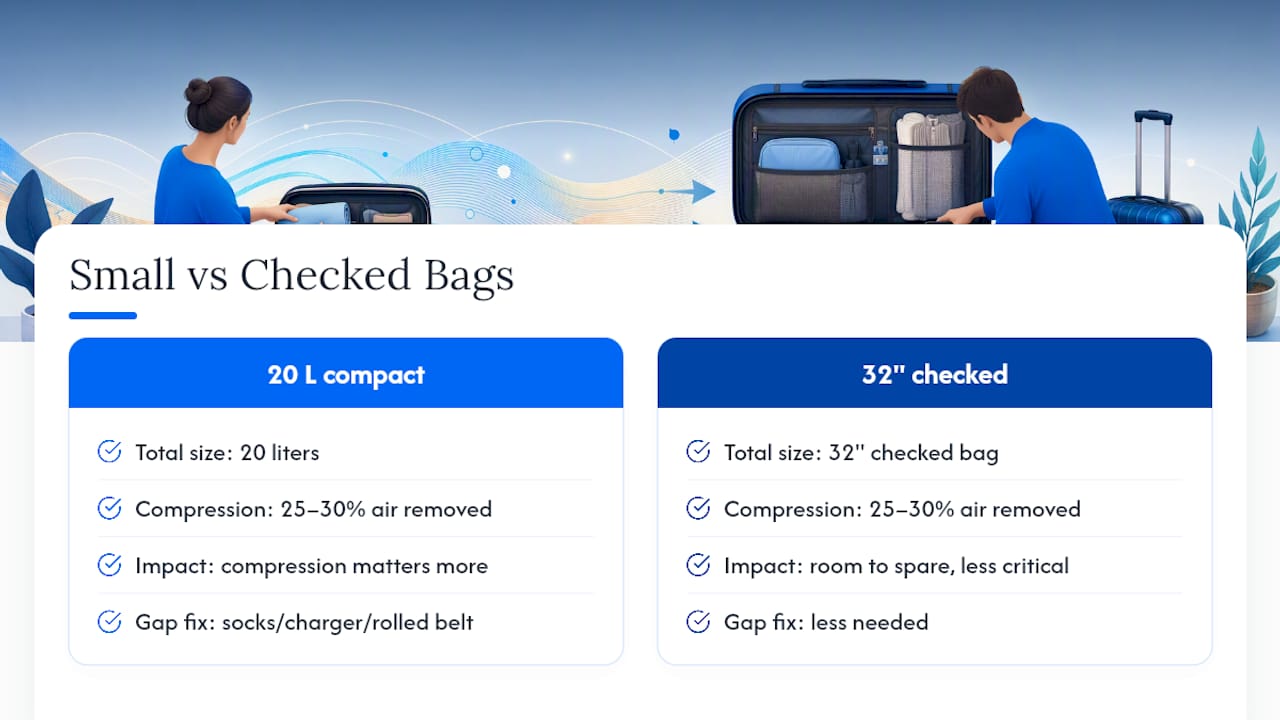
Curved suitcase interiors, common in hardshell spinners, leave awkward pockets near the wheels and corners. Fill those specifically with balled socks, a phone charger coil, or a rolled belt rather than leaving them empty. Standard cubes rarely fit a compact carry-on’s rounded shape well, so measure the interior before buying a set. A cube that’s a half inch too wide will sit crooked and eat space you don’t have.
Compression is where small suitcases benefit the most. Squeezing 25 to 30 percent of the air out of a bulky sweater or packable jacket in a compact bag matters more when you only have 20 liters of total space to work with, compared to a 32 inch checked bag with room to spare. Fill compression cubes to roughly three quarters full before sealing them; overstuffing them creates lumps that won’t sit flat against a curved suitcase wall, and the extra bulk defeats the point of compressing in the first place.
Stack, don’t stand. Odd suitcase shapes usually pack tighter when cubes lie flat in horizontal layers rather than standing on edge, since standing cubes tend to lean into the curved walls and leave triangular gaps at the top. If your case has a divider panel, use one side entirely for rolled clothes and the other for cubes and shoes rather than splitting each category across both sides, which just doubles the number of half-empty pockets you have to hunt through later.
Keeping Chargers, Cables, and Electronics Protected
Loose cables are the single fastest way to turn an organized suitcase into a tangled mess within one flight. A dedicated electronics pouch with individual slots or elastic loops keeps chargers, cables, and small devices separated so you’re not unwinding three cords to find the right one.
Pack a laptop or tablet flat against the firm bottom layer of the suitcase, not loose in the middle where rolled clothes can shift and press against the screen. A padded sleeve inside the electronics pouch adds a second layer of protection without needing a hard case. Wrap headphone cables using the over-under coiling method instead of a tight wrap; it prevents the internal wire from kinking and failing early.
Keep every charging cable with its matching device rather than tossing all cables into one bag and all devices into another. A camera battery charger, phone cable, and watch charger scattered across three pouches is exactly how something gets left in a hotel room. Small silicone cable ties or dedicated pouches, like the earbuds and tracker options in a travel accessories bundle, keep small electronics from migrating loose into the bottom of your bag.
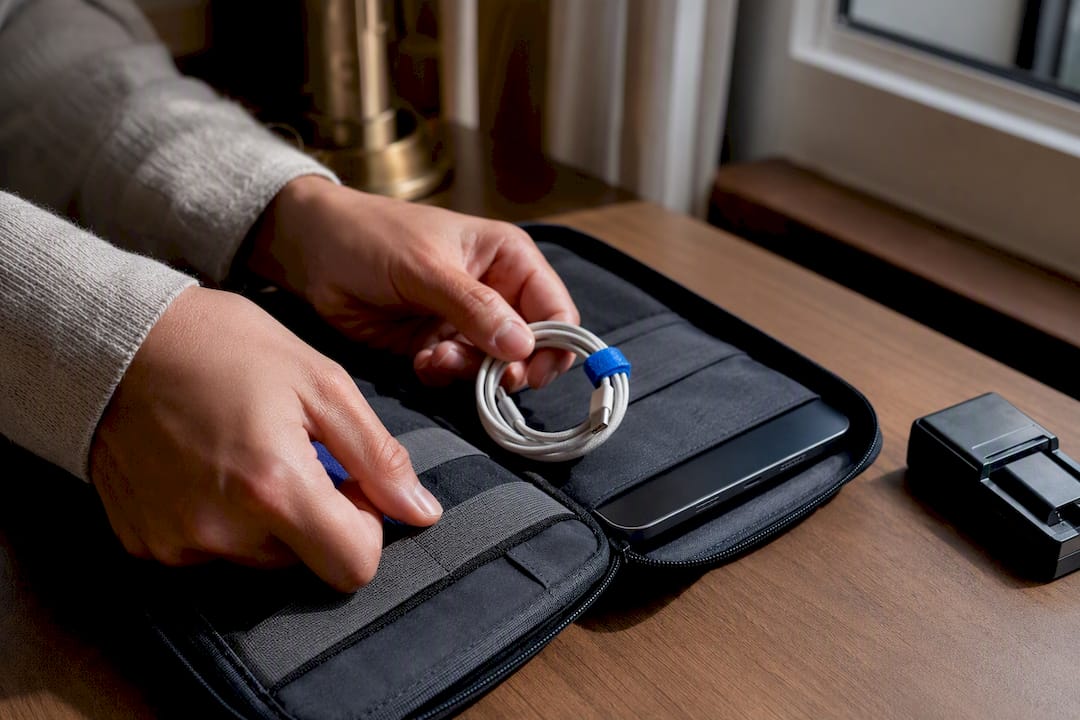
Power banks and spare batteries need their own separate pocket, ideally near the top of the suitcase or in your personal item, since airline rules on lithium batteries generally require them in carry-on reach rather than buried in checked luggage.
Protecting Valuables With Hidden Pockets and Locks
Valuables need a plan that’s separate from your general packing system, because the goal isn’t just organization, it’s deterrence and peace of mind.
Many suitcases include a hidden interior zip pocket, often located under the lid lining or behind the main compartment divider. Use it for a spare credit card, a small amount of backup cash, or jewelry you’re not currently wearing rather than anything you need quick access to, since digging through a hidden pocket at a security line defeats its purpose. A padded jewelry roll or pouch, rather than a plastic bag, keeps chains from tangling and prevents scratching against harder items nearby.
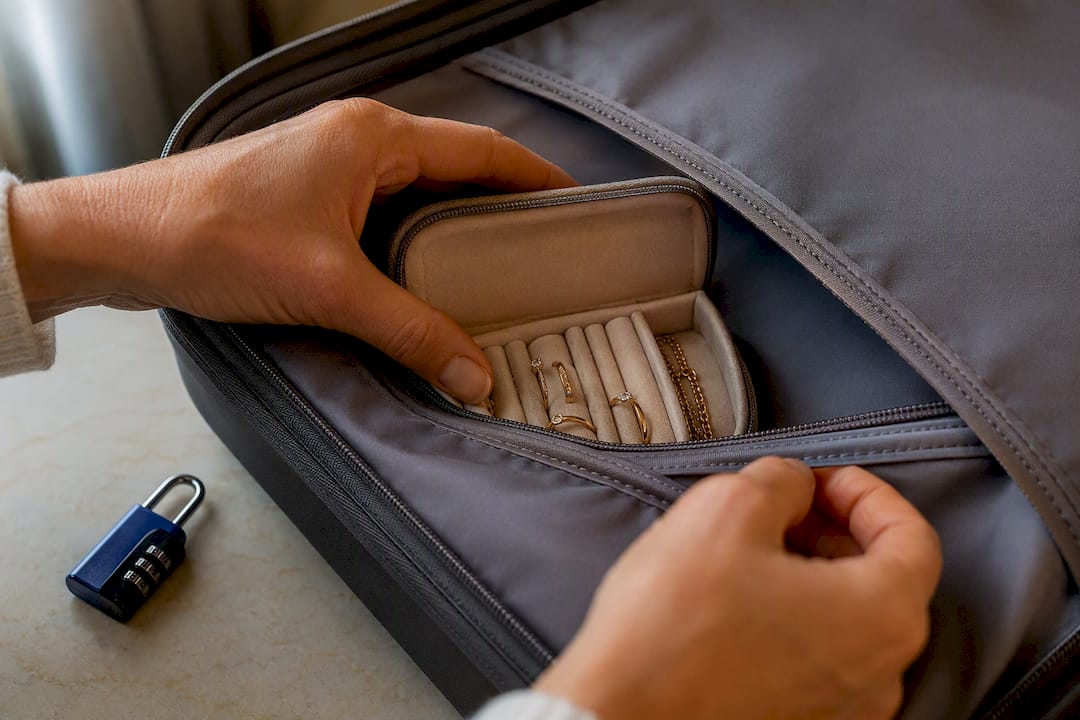
A TSA-approved combination lock lets you secure the main zippers on checked luggage without risking a cut lock if screeners need to open the bag. Standard non-TSA locks can legally be cut off during an inspection, so check the lock’s markings before you rely on it for anything checked rather than carried on. For carry-on bags, a lock deters casual tampering during a gate-check but won’t stop a determined search, so keep passports, cash, and anything irreplaceable in your personal item instead of the suitcase itself.
Staying Organized Once the Trip Actually Starts
The real test of any suitcase organization ideas isn’t how the bag looks the morning you leave. It’s whether it still makes sense on day six, after three hotel unpacks and a beach day.
Keep the cube system intact at each stop rather than dumping clothes into a drawer. If you unpack a cube at a hotel, refold or reroll items the same way before putting them back, and keep the laundry cube separate the entire trip so it never mixes with clean layers. Repack the same load order each morning you’re moving locations: heavy bottom, rolled middle, folded top. It takes under two minutes once the habit sets in, and it means you’re never digging through a jumbled bag at 6 a.m. for a flight.
Reserve one cube specifically as an “arrival kit” holding your first night’s outfit and toiletries bag, an approach organizers recommend so you can grab what you need without unzipping the entire suitcase after a long travel day. As you pick up souvenirs or gifts, designate one empty corner or a spare packing cube for them from the start of the trip, rather than trying to find space for them on the last day when everything else is already packed tight.
Packing Differently for Business, Leisure, and Adventure Trips
The five-step system remains the same across trip types, but what fills each layer changes significantly.
Business trips lean on the folded top layer more than any other category, since dress shirts, blazers, and slacks need to stay wrinkle-free for meetings. Bundle-wrap a suit jacket around a soft layer, keep one cube dedicated to accessories like a tie, belt, and dress shoes, and pack a laptop pouch near the bottom for stability.
Leisure trips, especially beach or warm-weather travel, favor rolled casual clothes and shift the weight balance toward the middle layer. Swimwear and light layers roll well and take up little room, freeing space for sandals or a sun hat that would otherwise eat cube space.
Adventure trips, think hiking, skiing, or multi-day outdoor travel, are where compression tools do the most work. Bulky base layers, a packable puffer jacket, or thermal gear benefit from compression cubes or a vacuum bag far more than a business suit ever would, since insulated gear carries the most trapped air to begin with.
Keeping Your Suitcase Smelling Fresh
A suitcase that smells like the last trip is one of the fastest ways to undo an otherwise organized packing job. Odor control starts with the same separation habits that keep things tidy: dirty laundry stays sealed in its own cube or bag the entire trip, never loose against clean clothes.
Double-bag liquids inside a sealed quart bag or a leakproof toiletry pouch, since a cracked shampoo bottle is one of the most common causes of a suitcase that smells off for weeks afterward. A dryer sheet or a few sachets tucked into shoe bags and laundry cubes absorbs moisture and odor without adding weight. Give shoes their own breathable bag rather than packing them directly against clothing, since shoes typically carry the strongest odor of anything in a suitcase.
Once home, unpack the entire suitcase immediately rather than letting damp gym clothes or worn shoes sit sealed inside for days. Air out the suitcase itself with the lid open for a few hours before storing it, since trapped humidity inside the lining is often the real source of a musty smell that lingers trip after trip.
Why the System Matters More Than Any Single Tool
Most packing advice focuses on individual hacks: roll your shirts, use a quart bag, buy packing cubes. Those tips help, but none of them fix the real problem, which is packing without a plan and hoping it works out.
I’ve watched the same pattern play out with friends heading to the airport: a suitcase that’s technically full but somehow still disorganized, because everything went in as it was picked up rather than in any order. The five-step system fixes that by forcing a sequence. Once you’ve done it correctly one time, on a low-stakes trip at home, it stops feeling like a chore and becomes the default. Try a full dry run before your next trip: lay everything out, pack it in order, and keep the checklist for next time. It’s the difference between packing and just filling a bag.
— Hugh
How Stoiq Fits Into This System
Stoiqstorage built its products around exactly the load order and compression logic covered above, not as an add-on gadget but as the tool that makes the bulky-layer problem disappear. The Stoiq Carry-On Solution uses a built-in rechargeable pump, so you get vacuum compression without hunting for a separate hand pump or an airport outlet, helping travelers maximize carry-on packing space.
If your trips regularly involve winter layers, ski gear, or souvenirs that need to fit back into the bag you arrived with, that’s where the compression case for a Stoiq bag is strongest. Shorter warm-weather trips with light clothing won’t need it as much. Pair the compression bag with a Stoiq toiletry organizer to keep the lid pocket leakproof and grab-and-go. Many travelers have worked Stoiq into their own packing routine, and the full product lineup is worth a look before your next trip.
Sources
- Do packing cubes really help save space? — AAA Club Alliance
- Organizing
- Best packing cubes — Pack Hacker
- How to Pack a Suitcase: Packing Tips from Travel Insiders | DELSEY PARIS
