



Travelers: Avoid TSA Delays; Reseal Vacuum Bags on Planes in 30 Seconds
Yes, vacuum bags are allowed on planes, in both carry-on and checked luggage. The TSA does not ban them, but it does not encourage them either, and a dense, sealed bag can trigger a manual inspection at the checkpoint. The officer working your lane has the final say, so the smart move is packing yours so it opens and reseals fast if flagged.
TL;DR:
- Vacuum bags are allowed on planes but may be flagged during screening because dense compression obscures contents, prompting a manual inspection.
- Opening and resealing a vacuum bag at security often takes longer than packing or compressing, especially if the bag is tightly sealed or has a built-in pump.
- Keeping liquids outside of vacuum bags and leaving a small air gap can reduce inspection delays and make contents easier for officers to identify.
- Carry-on vacuum bags face higher inspection scrutiny, but they offer better control for resealing after a bag is opened during security checks.
- Using vacuum bags with integrated rechargeable pumps, designed for easy resealing, minimizes delays and keeps security hassles to a minimum.
Table of Contents
- Are Vacuum Bags Allowed on Planes? What TSA Actually Says
- Why Vacuum Bags Get Flagged: Screening Risks and Real-World Complaints
- Practical Packing Tips to Avoid Vacuum Bag Delays
- Checked Bags vs. Carry-On: Where Should Your Vacuum Bags Go?
- A Publisher’s Take on Packing Vacuum Bags the Smart Way
- Editorial Perspective: Why the Real Question Isn’t “Allowed” but “Ready”
- Pack Smarter with a Vacuum System Built for the Checkpoint
- Sources
Are Vacuum Bags Allowed on Planes? What TSA Actually Says
The TSA’s own guidance settles the core question directly: vacuum-sealed bags are allowed in both carry-on and checked bags. There’s no rule against compressing your clothes into a dense brick. But the agency’s phrasing carries a deliberate hedge.
Vacuum-sealed bags are permitted through security screening, but they are not recommended, since the compressed contents can obscure what’s inside and may require an officer to open the bag for a closer look.
“Special instructions” at the checkpoint usually means one thing: an officer can’t get a clean read on the bag’s contents through the X-ray, so it gets pulled for a hand check. That applies whether the bag rides in your carry-on tote or your checked suitcase, though the how of the inspection differs, which the next section covers in detail.
Two rules keep applying no matter how tightly you compress your gear:
- The 3-1-1 liquids rule still governs any liquids, gels, or aerosols. Vacuum sealing a bottle of shampoo does not exempt it from the quart-bag requirement.
- Lithium batteries, including the rechargeable ones in electric pumps, stay under standard carry-on battery rules. Sealing one inside a checked vacuum bag is a bad idea regardless of TSA’s vacuum-bag stance.
Why Vacuum Bags Get Flagged: Screening Risks and Real-World Complaints
Compressed clothing reads as a dense, uniform mass on an X-ray screen. Officers can’t distinguish a rolled sweater from something they need to look at twice, and that ambiguity is the main driver behind secondary inspection. It’s not that TSA suspects anything specific. The scanner simply can’t tell.
What happens if yours gets pulled:
- An officer opens the bag, which usually means breaking the seal entirely.
- Contents get handled, unfolded, or removed for a closer look.
- You’re left repacking and, often, without a way to reseal the bag on the spot.
Travel reporting on the viral vacuum-bag packing trend backs this up. Coverage of traveler experiences documents a recurring pattern: bags get opened, travelers lose the space savings they packed for, and the wrinkled clothes and scramble to repack cost more time than the compression saved.
Statistic Callout: TSA doesn’t publish a specific vacuum-bag inspection rate, but its own guidance flags the practice as one it actively discourages, a signal worth weighing against the packing gains.
Practical Packing Tips to Avoid Vacuum Bag Delays
A few adjustments before you leave the house cut your odds of a checkpoint slowdown substantially, including considering a transit travel bag to organize your packing more efficiently.
- Keep documents and valuables out of the vacuum bag entirely. Passports, jewelry, and anything irreplaceable belong in a pocket you control, not sealed inside compressed clothing that might not get resealed.
- Don’t vacuum every last cubic inch of air out. Leaving a thin layer of air preserves the shape of individual items, which makes the contents easier to identify on the scanner and speeds up any hand check.
- Position vacuum bags near the top of your suitcase or in an external pocket. An officer who can pull one bag without unpacking your entire case will do exactly that, and you’re back in line faster.
- Separate your 3-1-1 liquids. Keep them in the standard clear quart bag outside of any compression bag, since liquids and battery rules stay in force no matter how you pack everything else.
- If your pump is electric, keep spare batteries in your carry-on, and pack a manual roll or fold option as backup in case the pump fails or the battery dies mid-trip.
Pro Tip: Test your vacuum bag’s manual rolling method at home before your flight. If the pump ever fails at the airport, you want muscle memory, not a manual you’re reading in the security line.
For travelers weighing compression bags against other space-saving gear, it’s worth comparing compression bags to packing cubes to see which fits your packing style better.
Checked Bags vs. Carry-On: Where Should Your Vacuum Bags Go?
The choice between checked and carry-on comes down to what you value more: speed through the checkpoint or the ability to fix a problem yourself.
Carry-on vacuum bags face a higher chance of a hands-on checkpoint inspection, since they pass through the X-ray right in front of you. The upside is control. If an officer opens your bag, you’re standing there to reseal it or repack it immediately, rather than discovering the damage at baggage claim.
Checked vacuum bags sometimes draw less immediate scrutiny at the counter, but they’re screened separately, out of your sight, and airline handlers or TSA agents can open them without you present to reseal anything.
A few other things worth flagging for checked bags specifically:
- Concerns about vacuum bags bursting from cargo-hold pressure changes are largely overblown. Modern cargo holds are pressurized, and failures typically come from cheap zippers or poor seals, not altitude.
- International travelers should double-check customs rules on perishable food items before vacuum-sealing snacks or produce for a checked bag, since food restrictions vary by destination and have nothing to do with TSA policy.
A Publisher’s Take on Packing Vacuum Bags the Smart Way
Some companies have built vacuum compression gear specifically for air travel, addressing common traveler complaints. They’re the same complaints we hear from travelers every week: a bag gets opened at security, and there’s no easy way to reseal it before the next flight.
That’s the exact problem an integrated rechargeable pump solves. Instead of hunting for a separate vacuum device or resorting to a slow manual roll after an inspection, you reseal on the spot and move on.
One major issue with vacuum-sealed packing is what happens after an officer opens your bag and you have no easy way to get the air back out.
Positioning matters here too. A bag with its pump built directly into the seal kept in an accessible outer pocket turns a five-minute repacking scramble into a thirty-second fix.
Editorial Perspective: Why the Real Question Isn’t “Allowed” but “Ready”
Most coverage of this topic treats “are vacuum bags allowed on planes” as the whole story, and then stops. That’s the wrong finish line. TSA settled the legality question years ago. What separates a smooth checkpoint experience from a fifteen-minute delay is entirely about how the bag is packed, not whether it’s permitted.
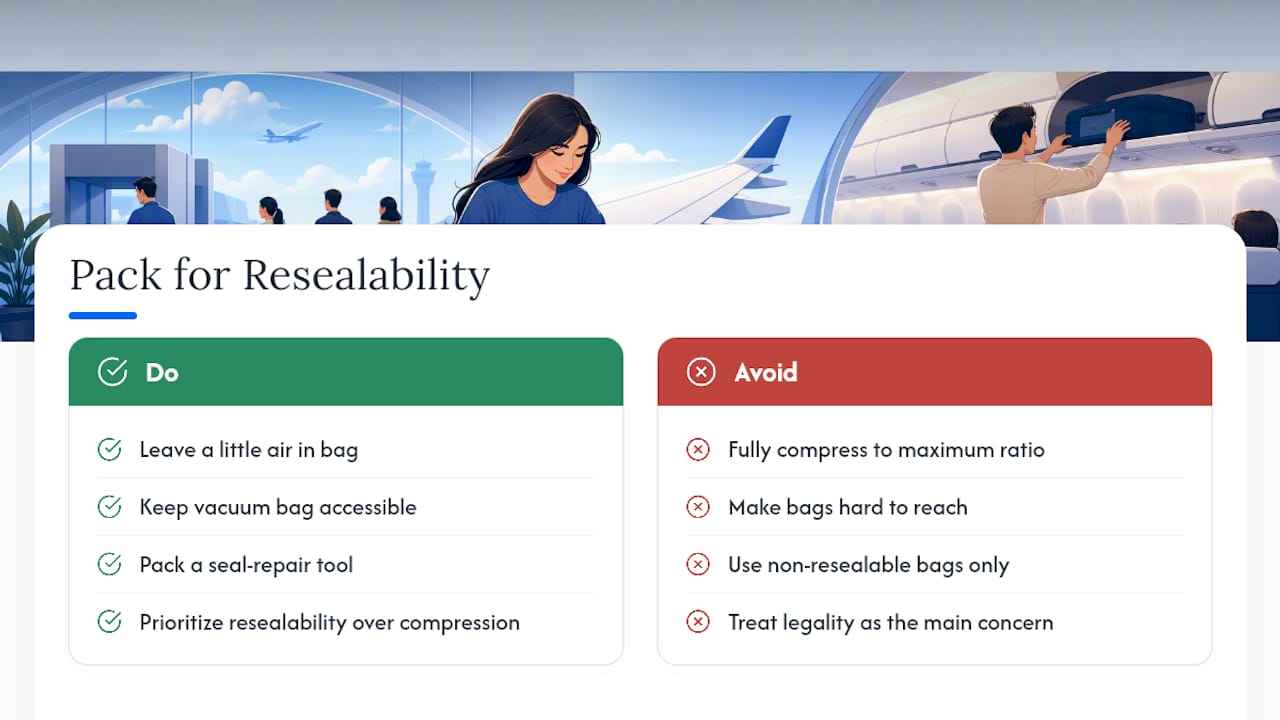
The conventional advice, “just vacuum-seal everything and save space,” ignores the tradeoff travelers actually feel: maximum compression makes contents harder to identify on X-ray, which raises the odds of a hand inspection. The travelers who avoid delays aren’t the ones who skip vacuum bags. They’re the ones who leave a little air, keep the bag accessible, and pack tools that let them fix a broken seal fast.
If you take one thing from this guide, prioritize resealability over raw compression ratio. A bag you can’t reseal after an inspection costs you more time and more wrinkled clothes than the space it saved you at check-in.
— Hugh
Pack Smarter with a Vacuum System Built for the Checkpoint
Everything in this guide points to one practical truth: the bags that cause the least hassle at security are the ones you can open and reseal in seconds, not the ones that require a separate hand pump buried in your carry-on. The Stoiq Carry-On Solution 20L pairs a USB-C rechargeable pump with an airtight seal, so if an officer opens your bag for a look, you reseal it at your gate instead of stuffing wrinkled clothes back into your suitcase.
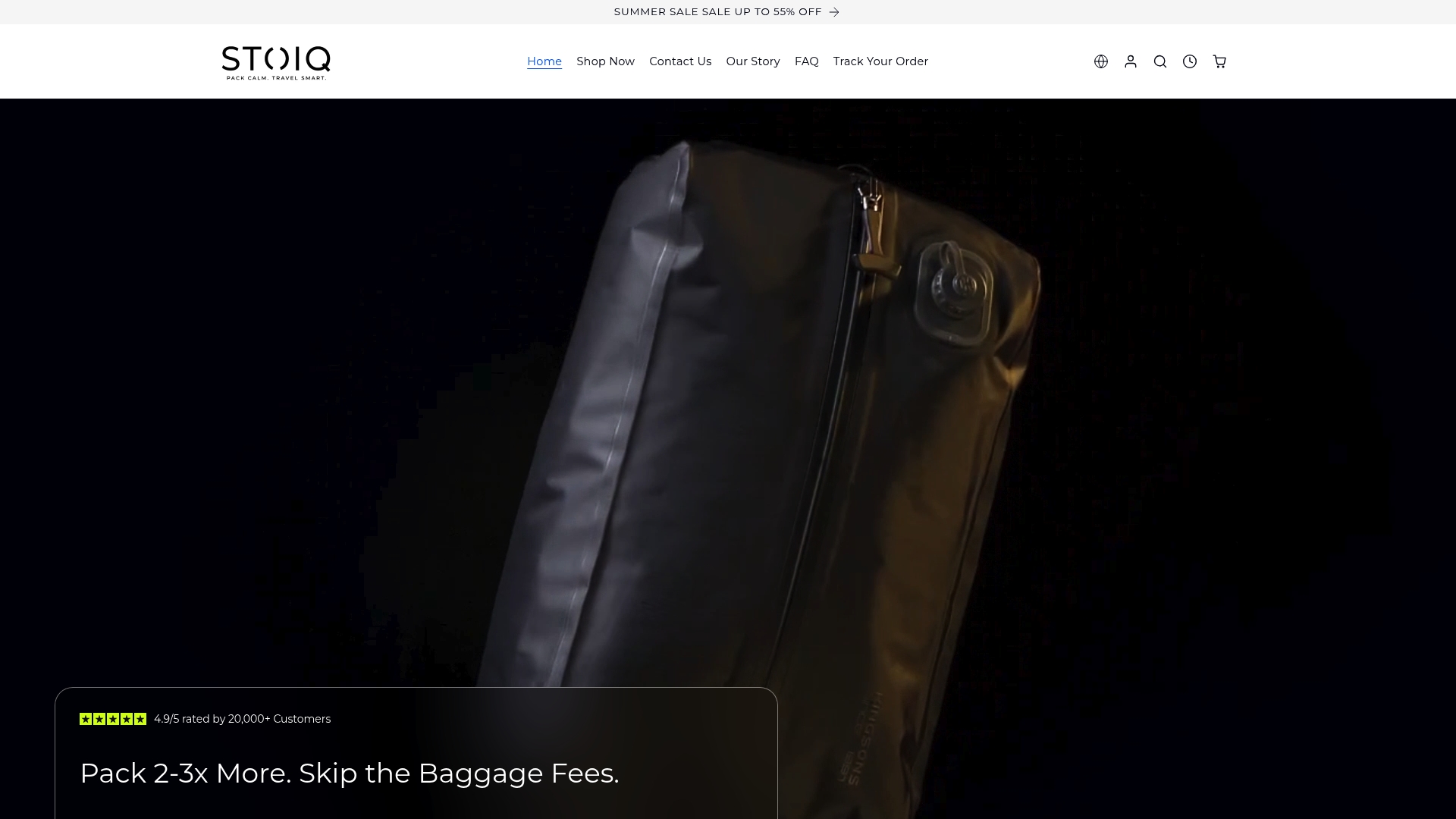
If you’re packing for a longer trip or checking a bag instead, the Stoiq Compression Backpack gives you the same integrated vacuum system in an all-in-one carry format. Over 20,000 travelers have already put these bags through real airport security lines. Check the Stoiq Carry-On Solution 20L product page to see which size fits your next trip, and pack knowing you can reseal fast if your bag gets a second look.
Sources
- Vacuum-sealed bags | Transportation Security Administration
- This Viral Clothing Packing Method Probably Isn’t Worth Risking A TSA Mishap
- Are Vacuum Bags Allowed On Planes? Your Ultimate Guide
